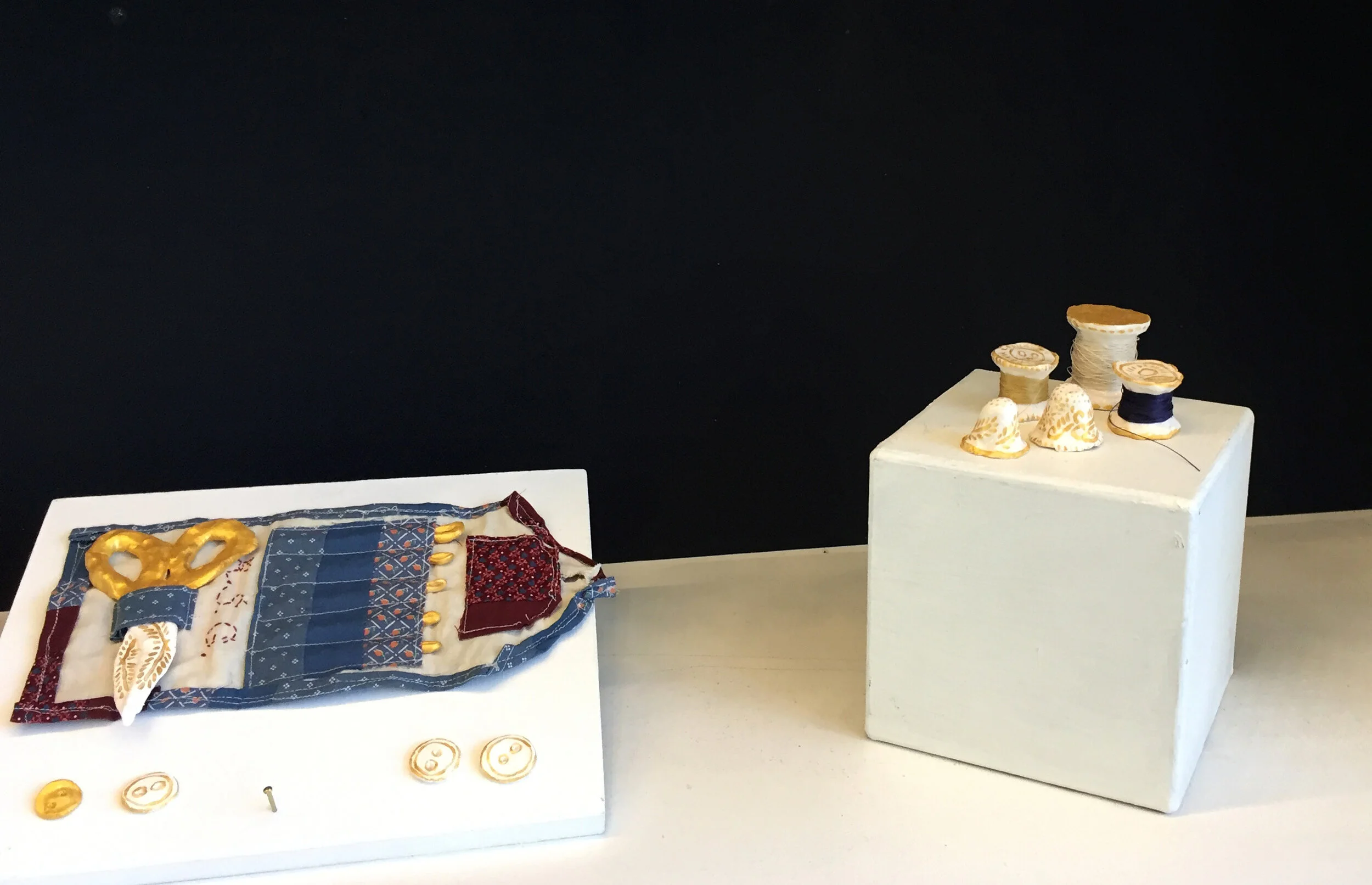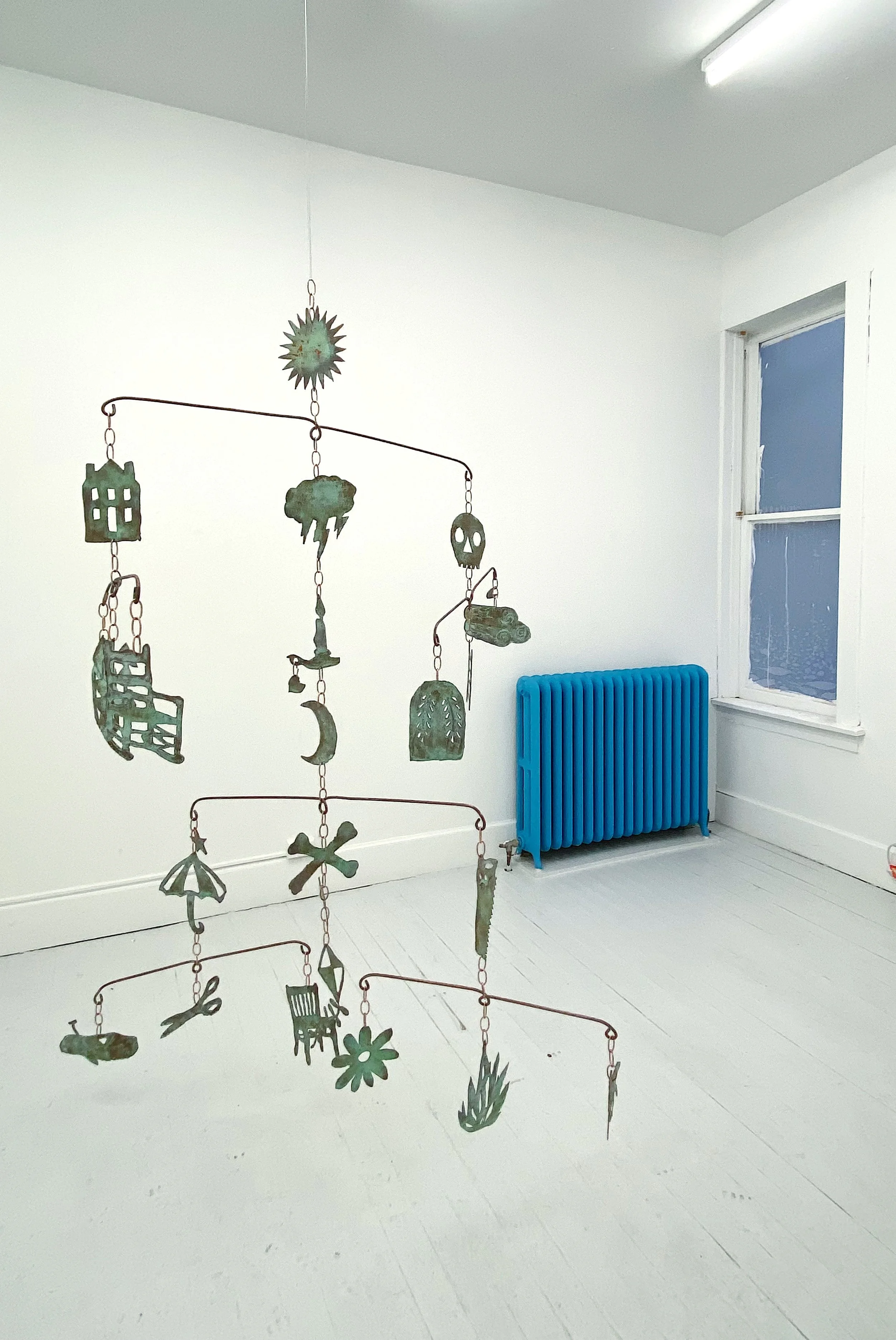
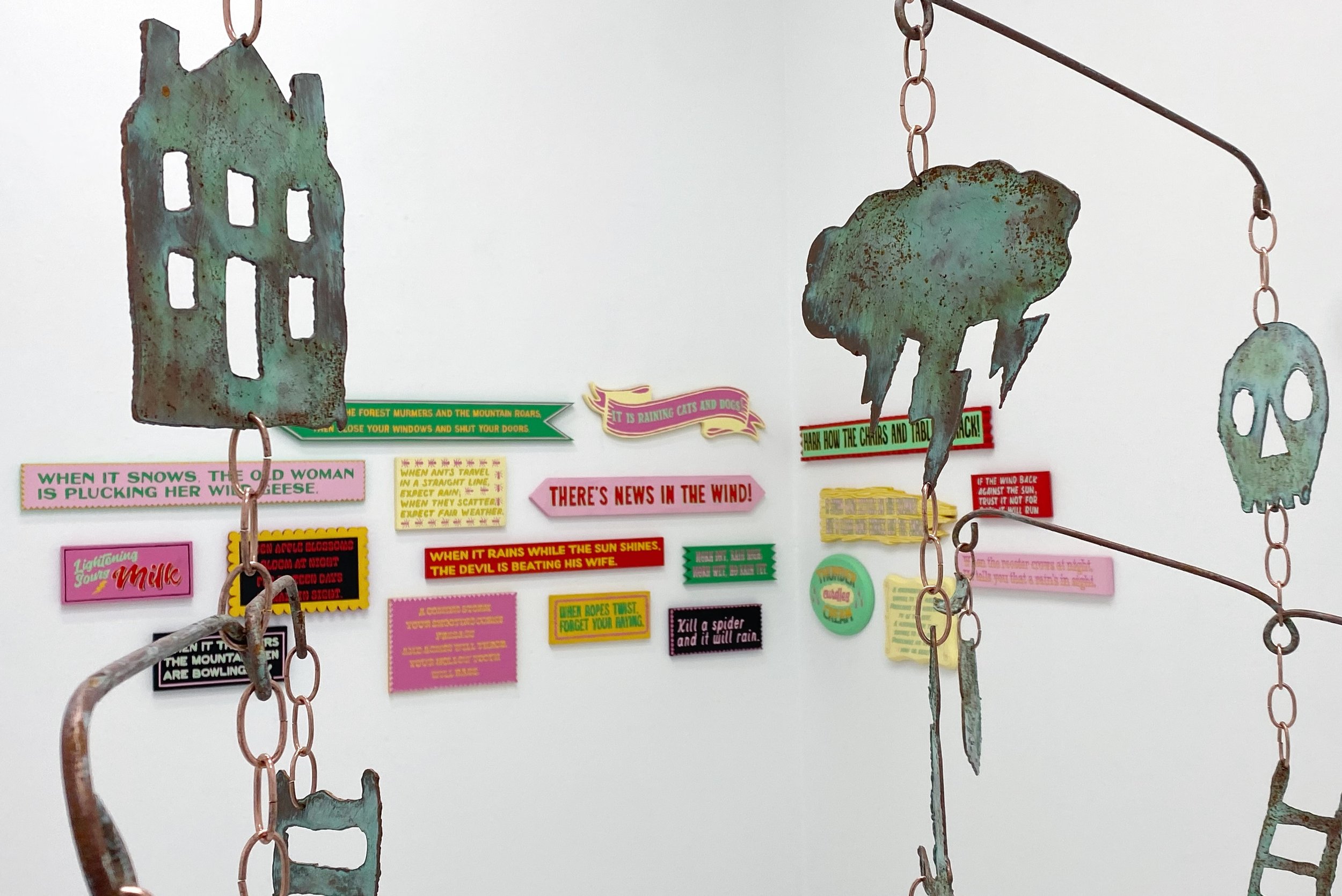
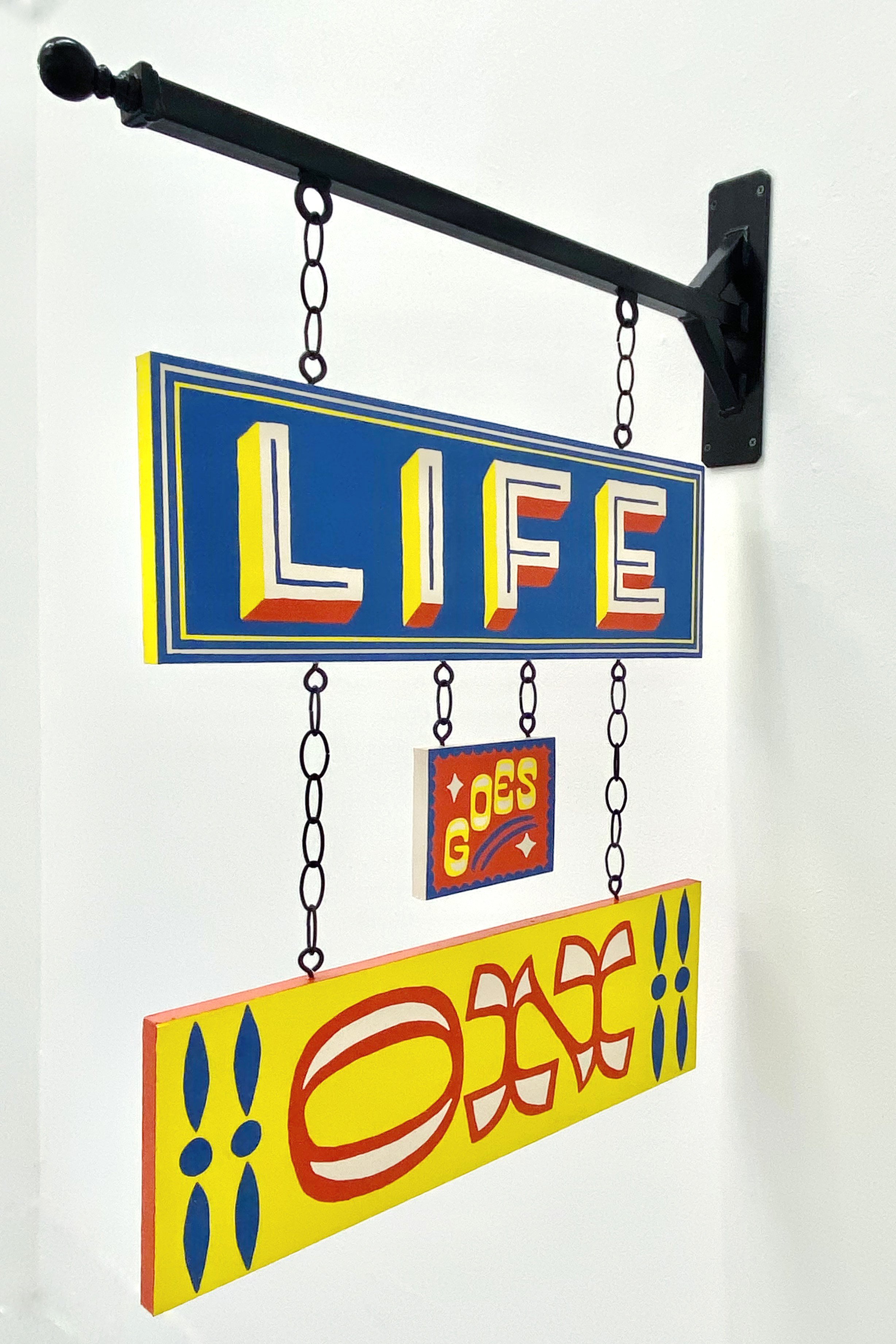
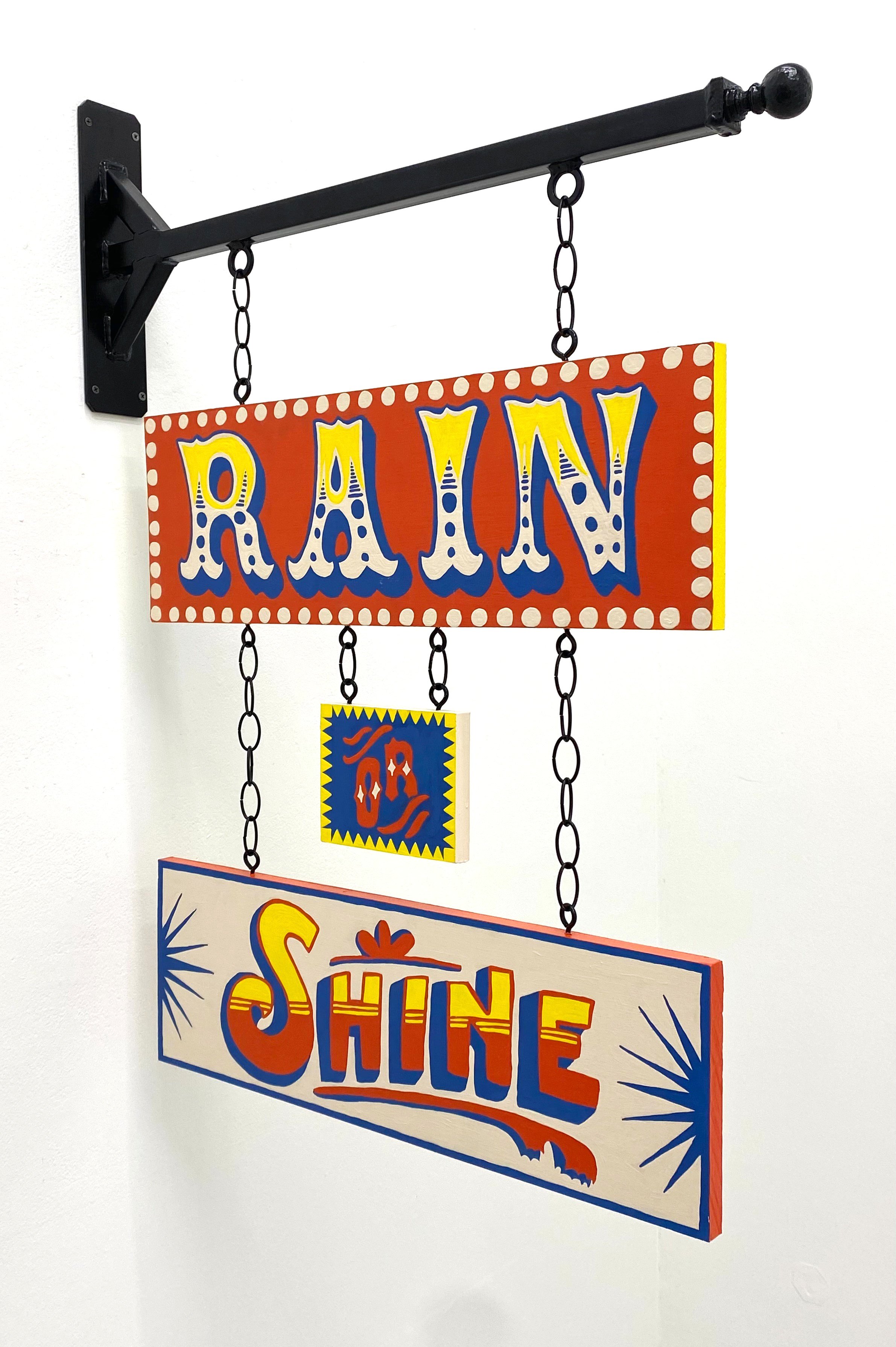
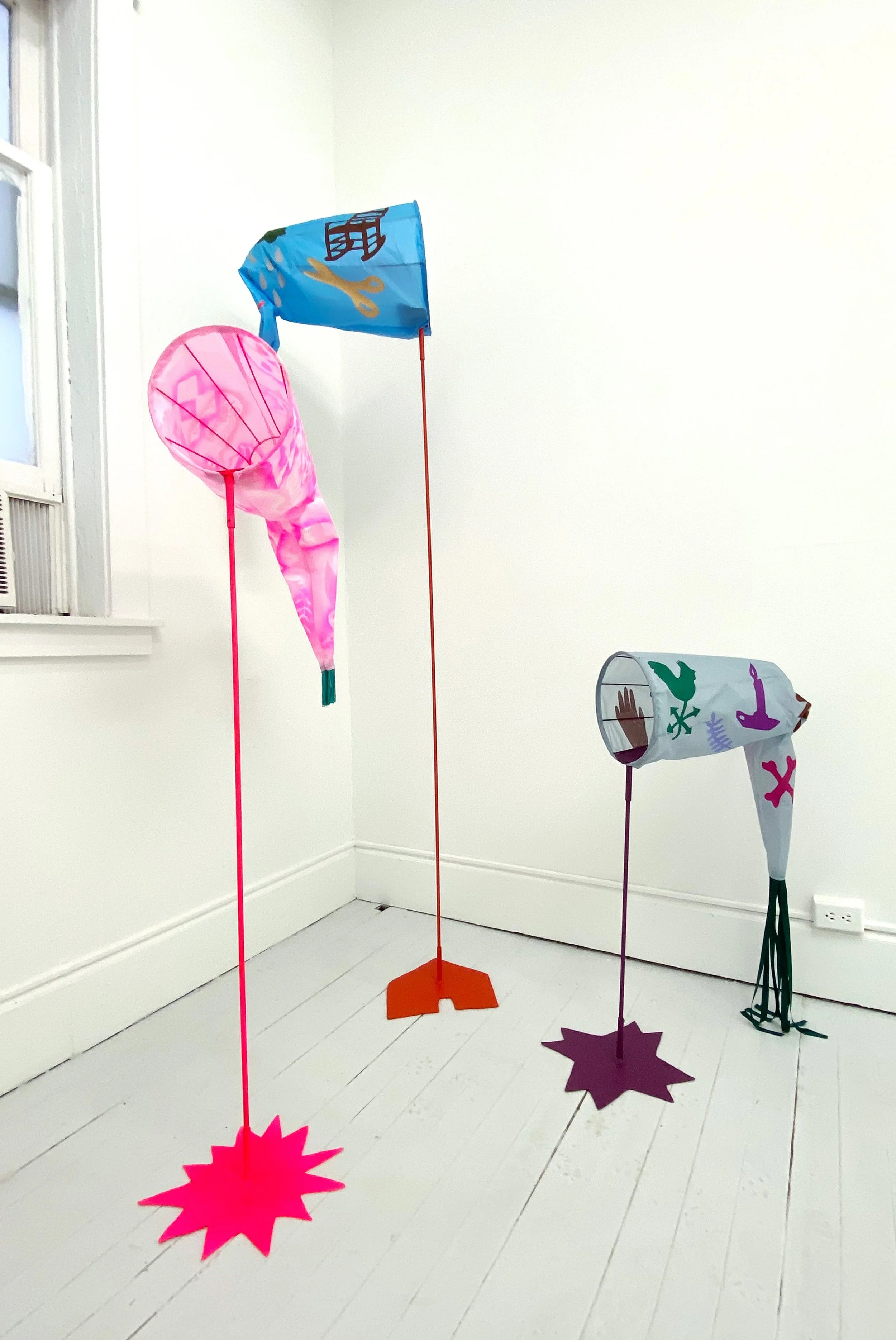
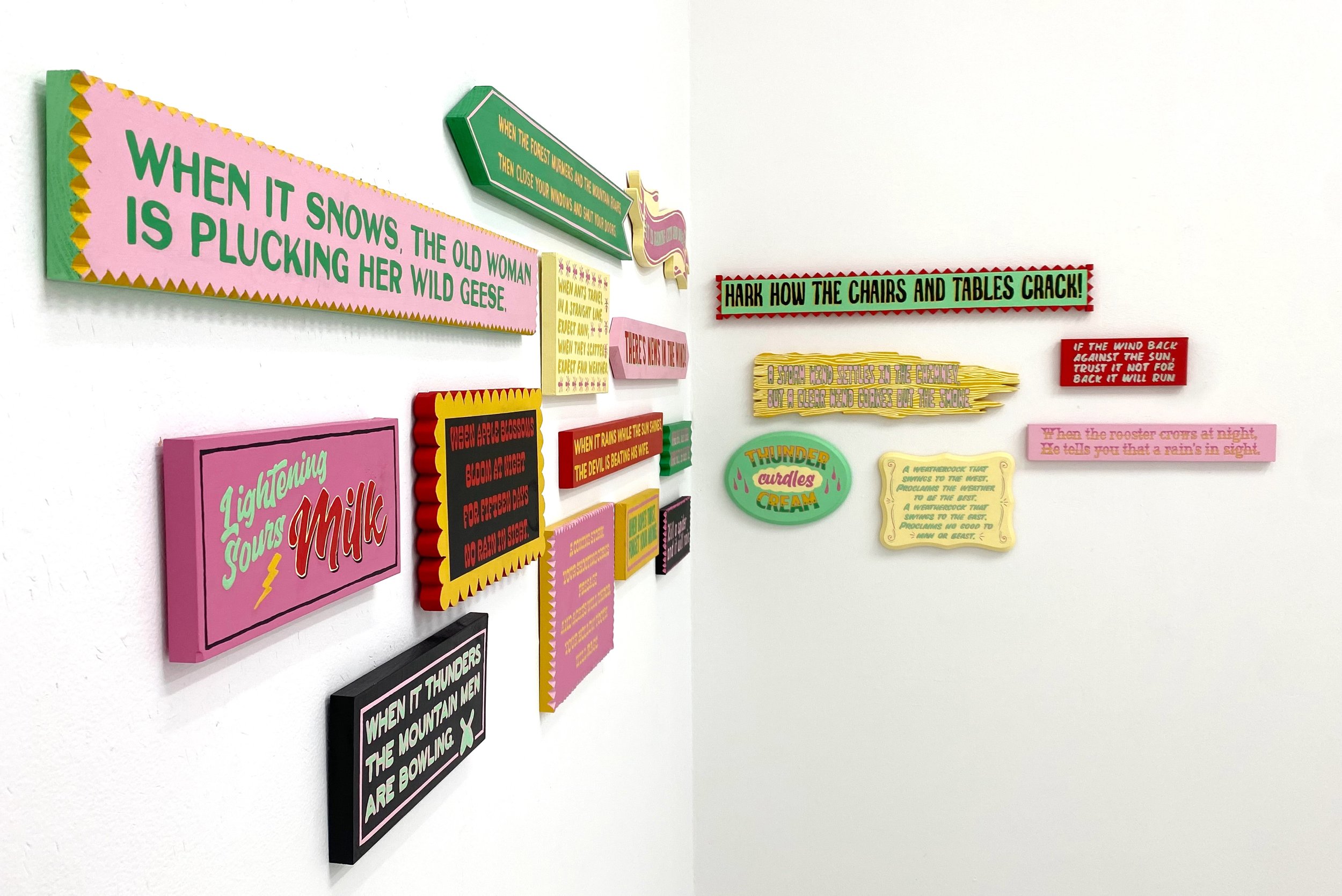
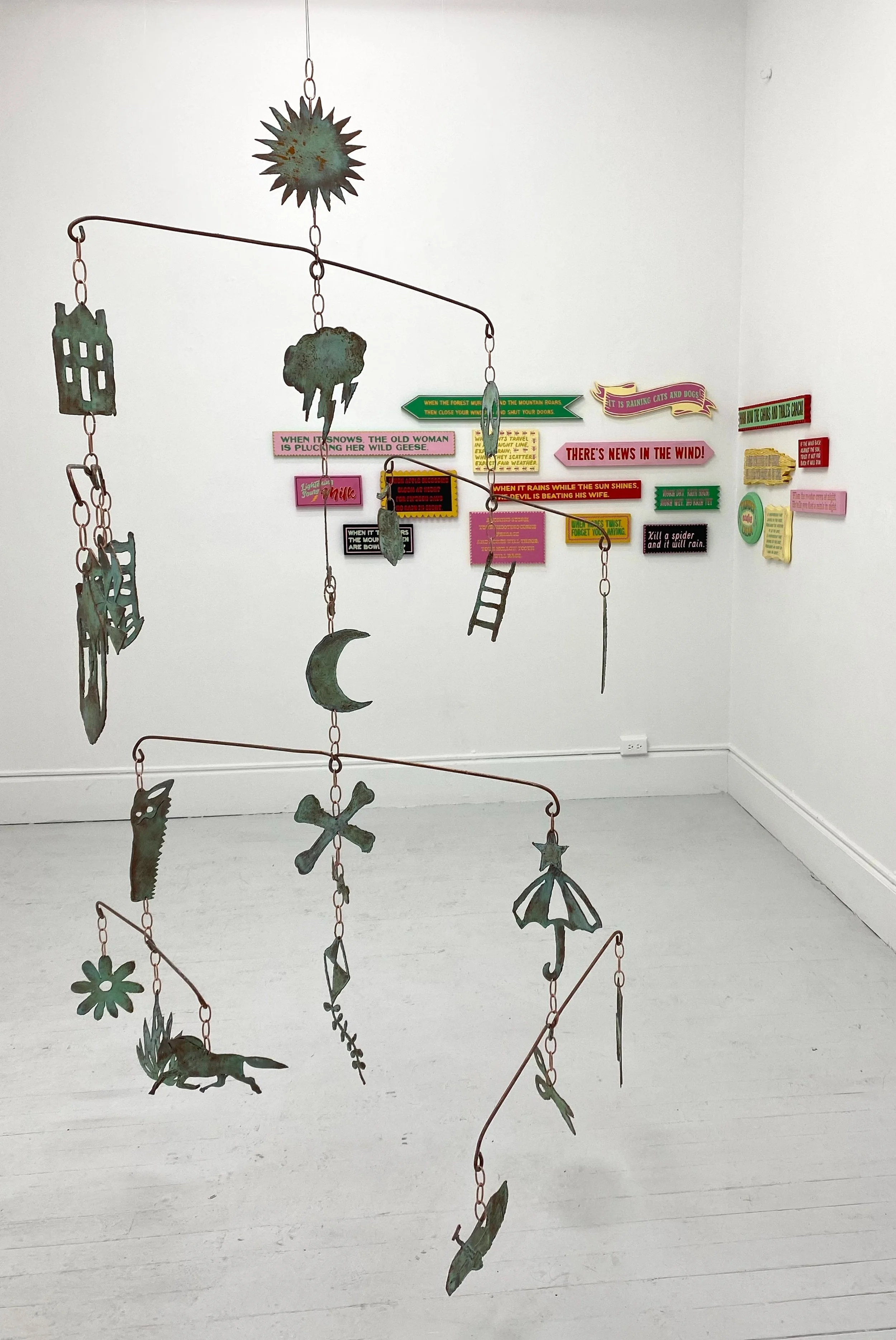
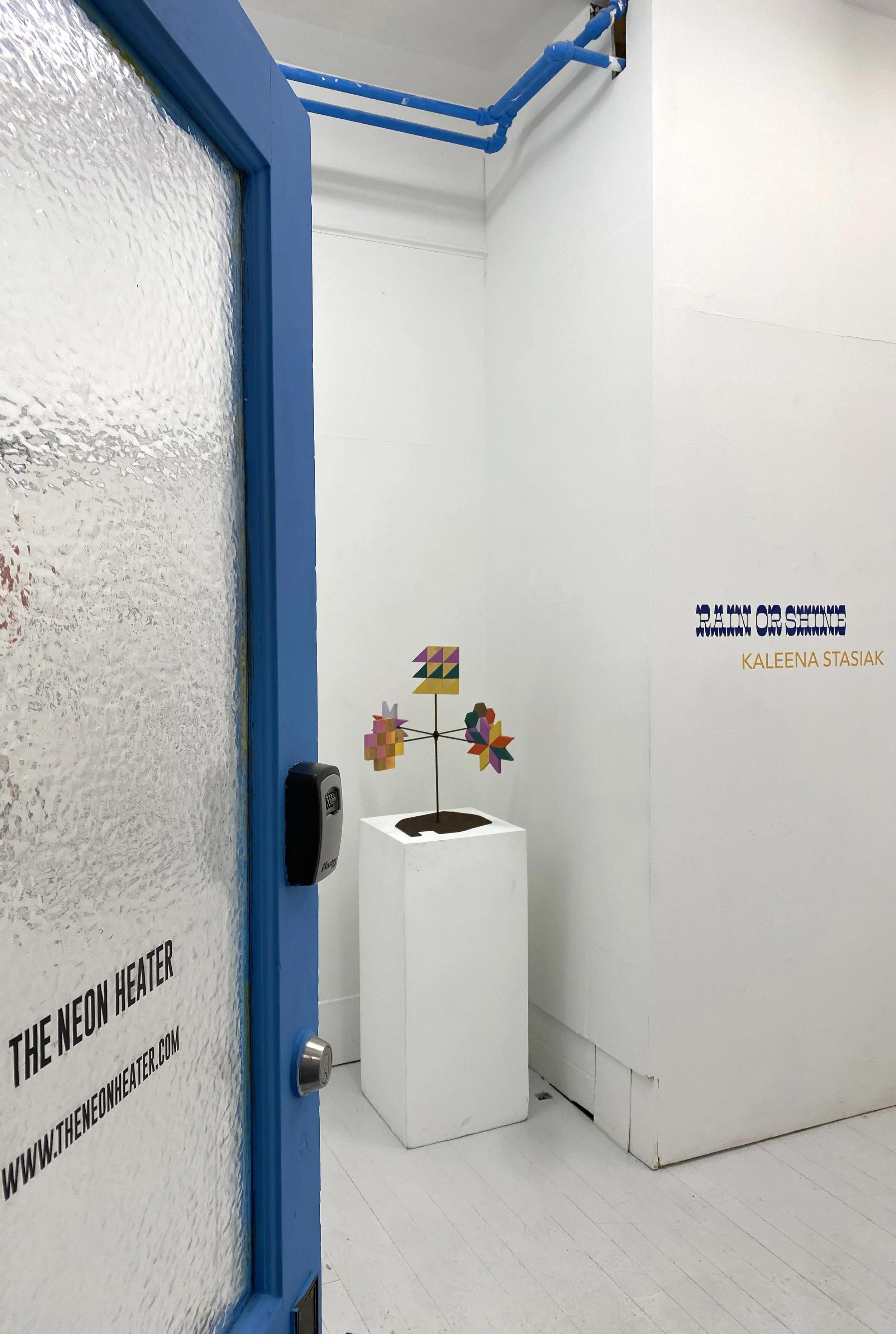
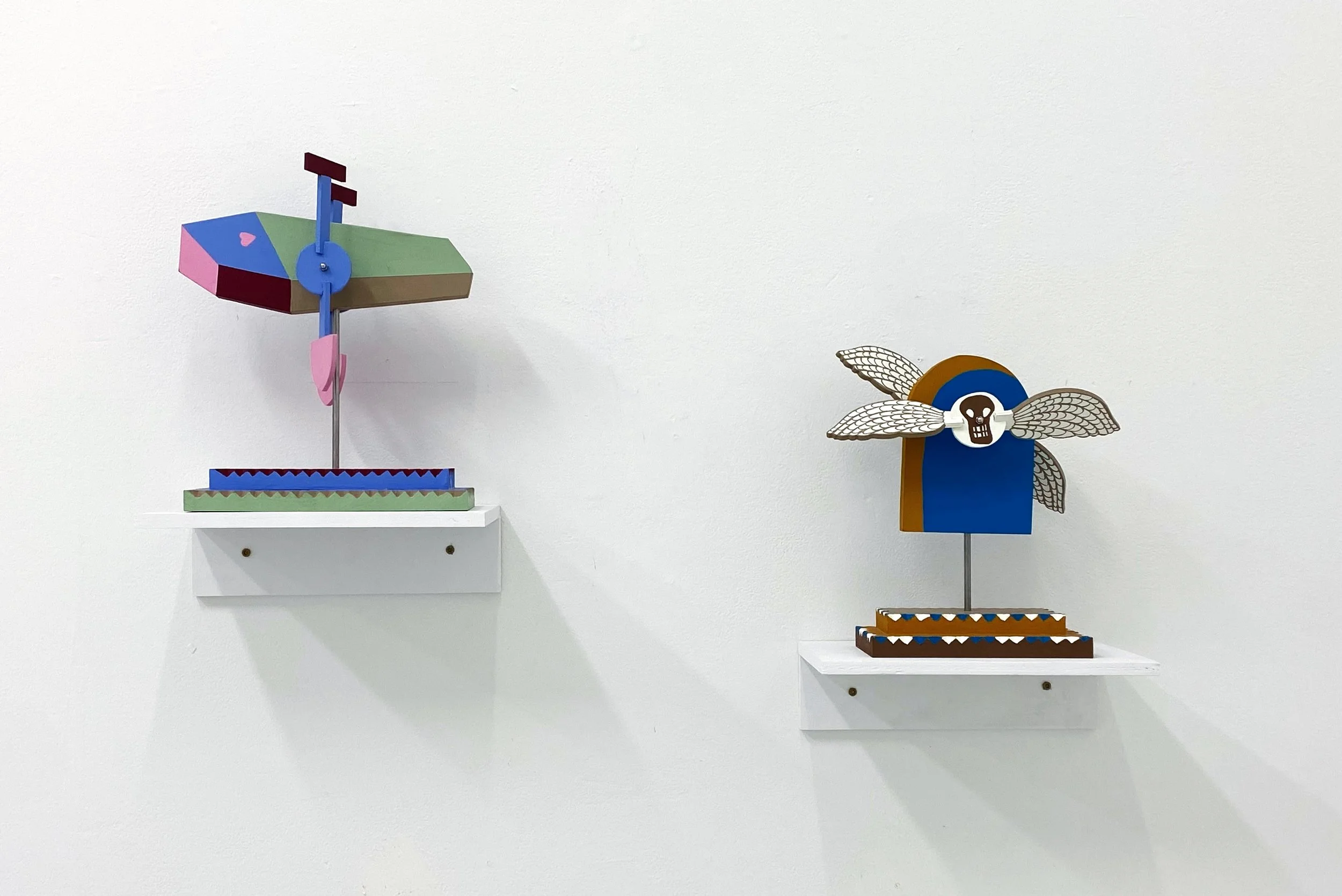
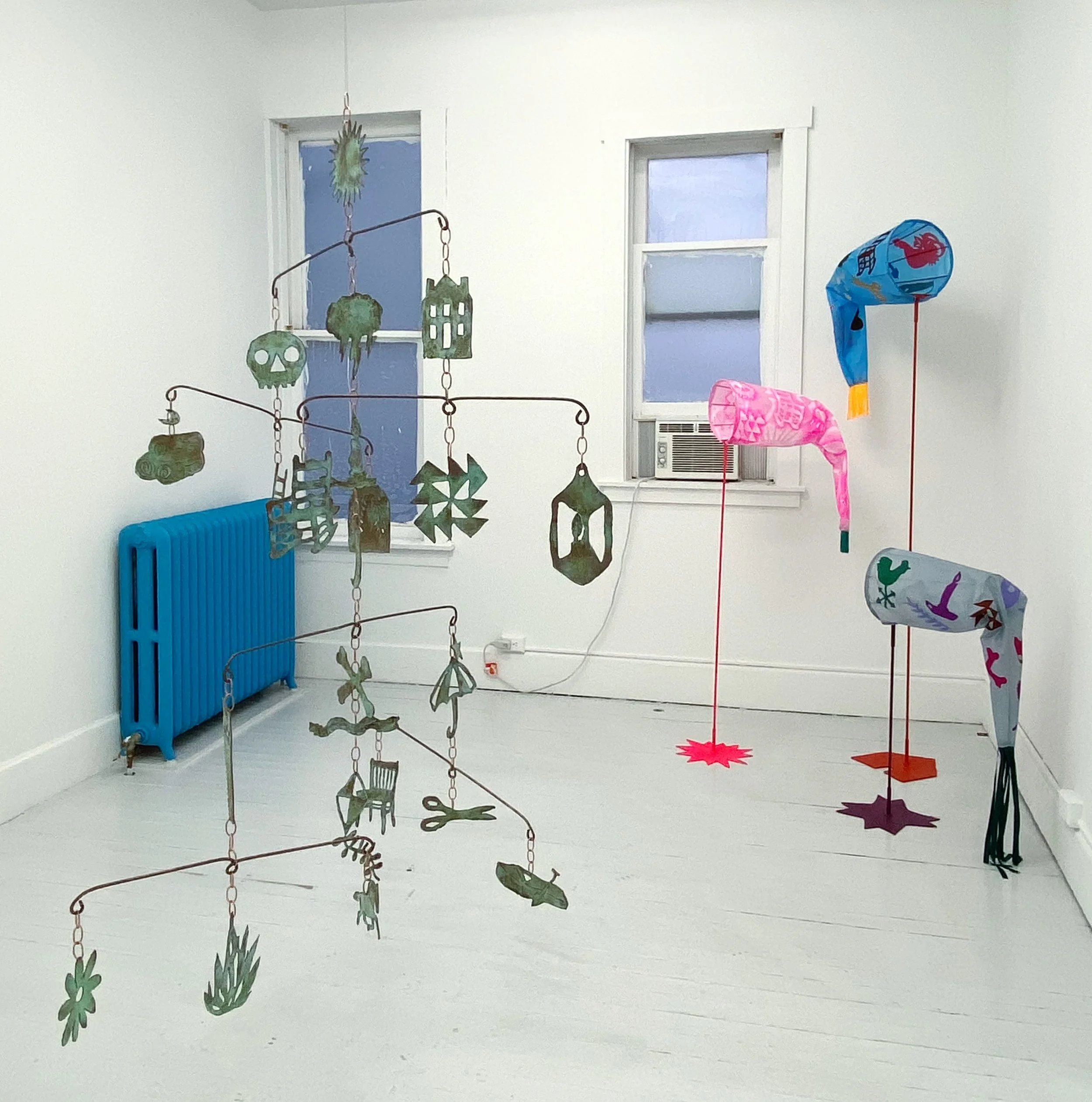
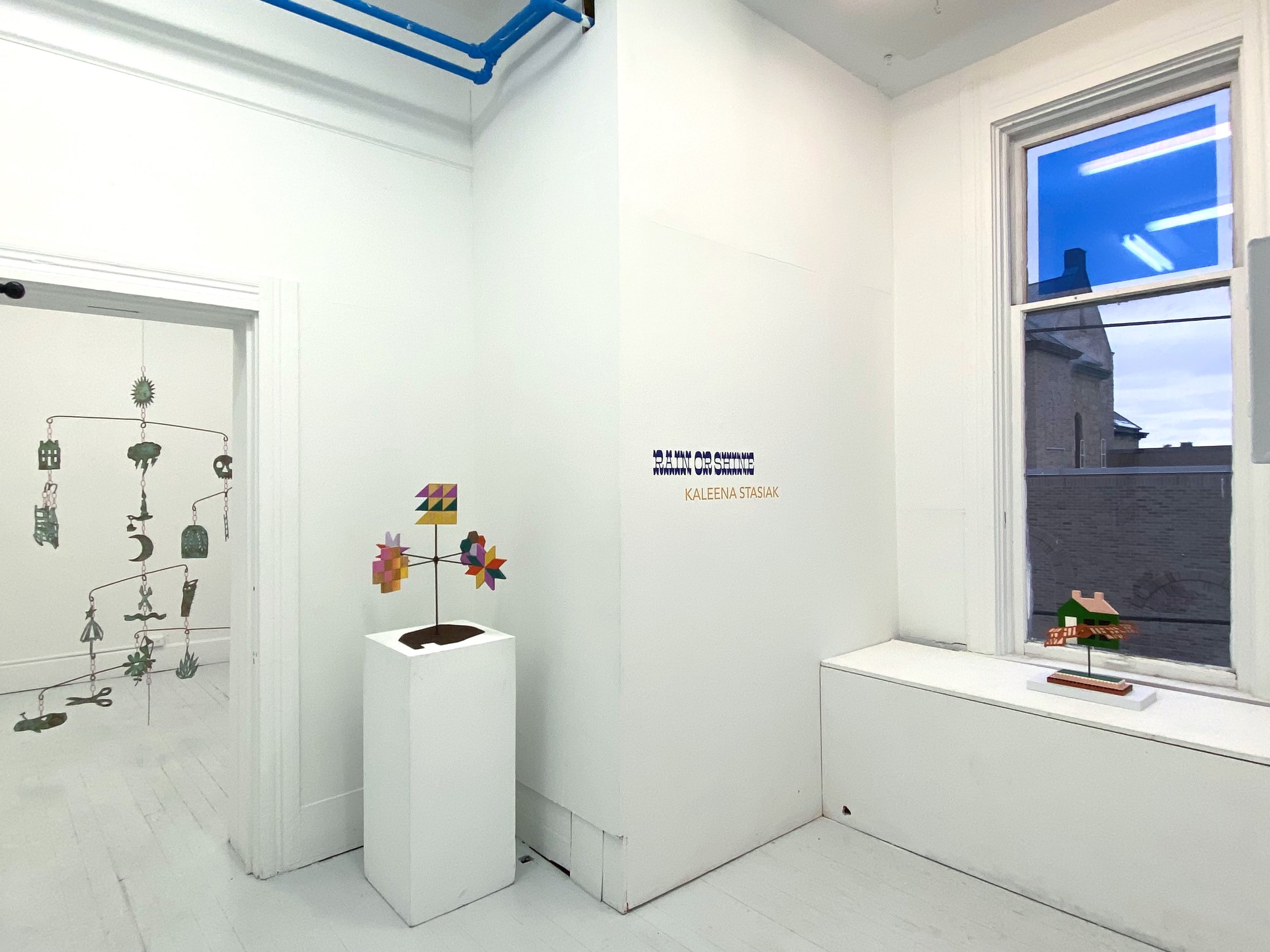
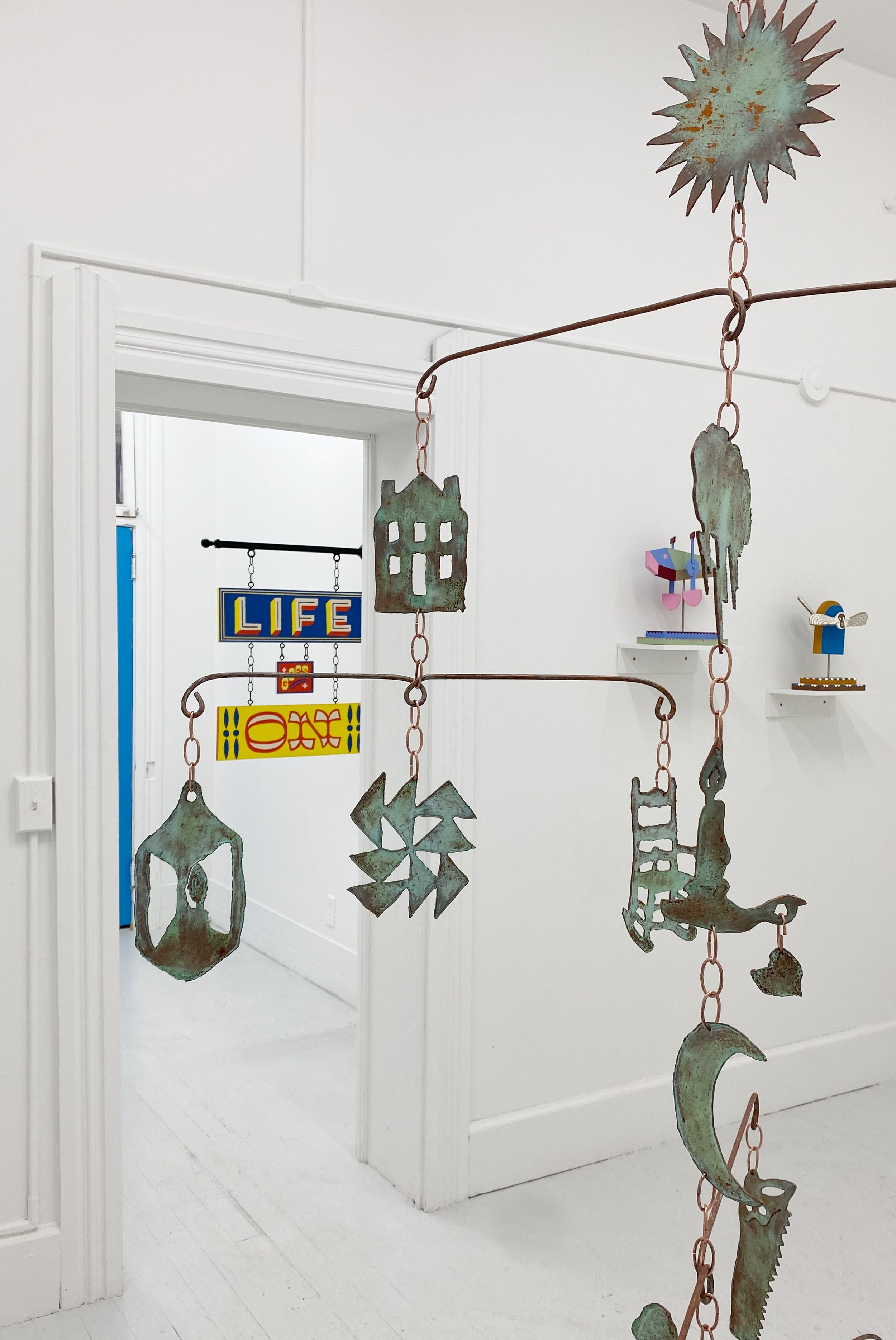
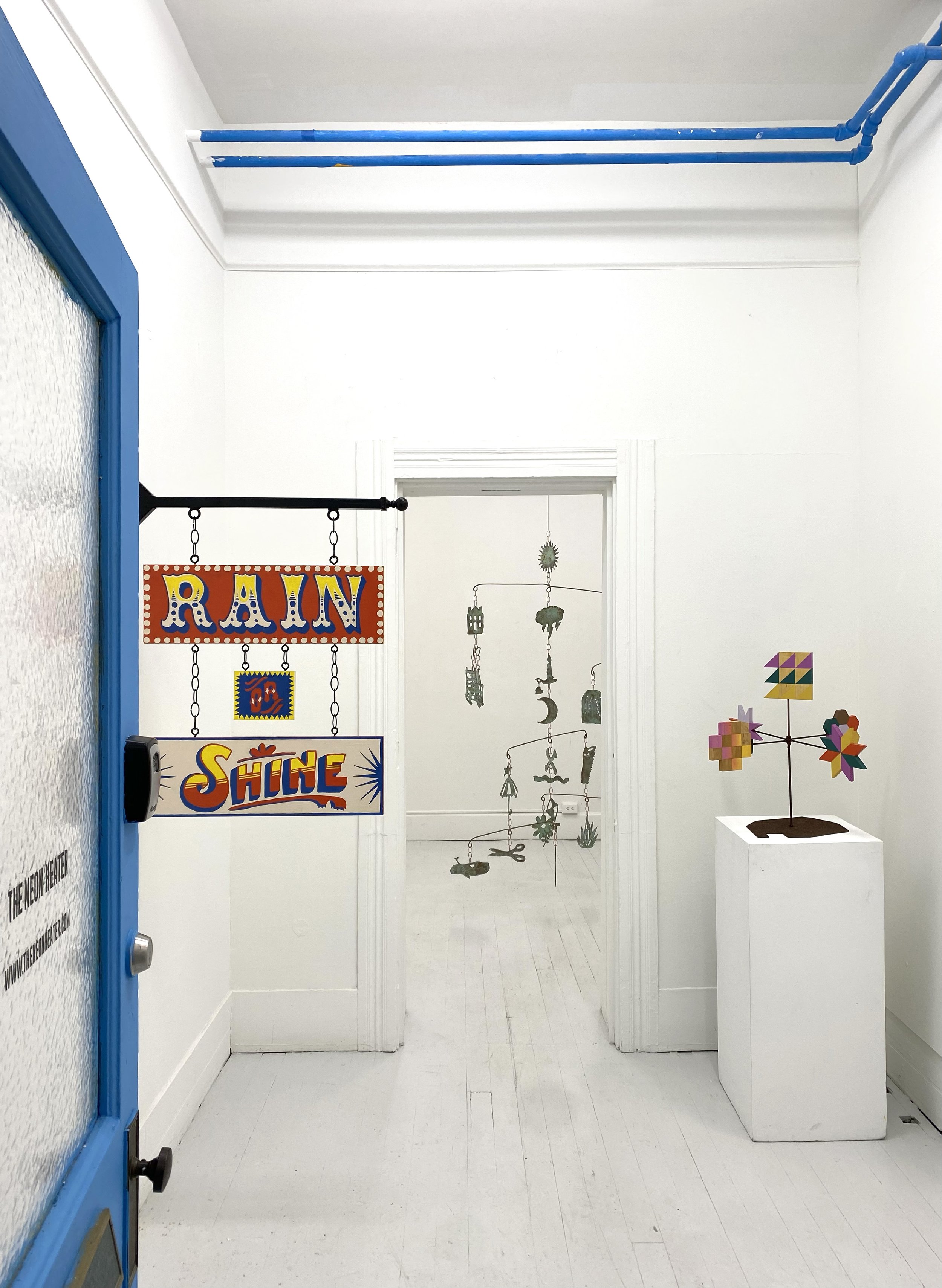
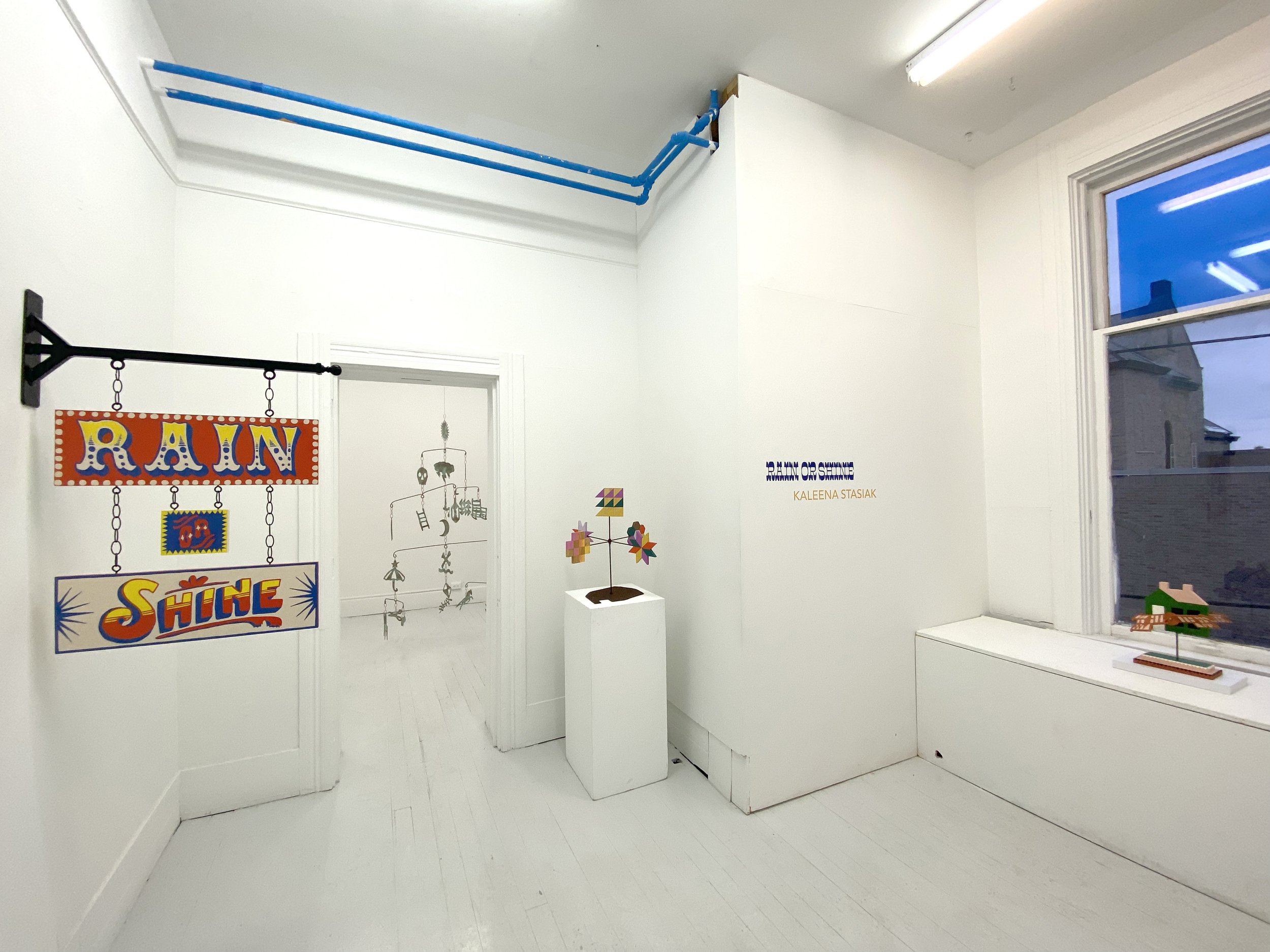
Rain or Shine, Neon Heater, Findlay, OH, 2025.
forecast (verb): to predict or calculate a future event based on the interpretation of observable natural phenomena
Found on porches and in front yards, traditional weather prediction tools such as windsocks, weathervanes and whirligigs embody human ritual and resilience, but have drifted into the realm of decoration, nostalgia and kitsch. In acts of historical roleplay, I reclaim and reconfigure these instruments to create counterpoints grounded in memory, labor, and shared cultural knowledge. When set into motion by the viewer, a gentle breeze, or chance, these objects activate a space where intuition and shared knowledge converge. In this activation, they become instruments of hope in a moment defined by uncertainty, inviting us to trust our bodies, our senses, and the wisdom that persists across generations.
Language itself becomes another tool of forecasting. Weather aphorisms form a generational warning system about how to navigate the natural world and one another. In this exhibition, appropriated weather-related sayings have been hand-painted in the style of old sign-painting traditions meant to signal, attract, inform, and instruct. These phrases are universal yet locally inflected. Even when their origins are unclear, we understand that they gesture toward impending barometric shifts tied to observable phenomena like pressure, humidity, and temperature. Passed down orally, they linger in the mind long after technology has taken over the work of prediction.
These transformed artifacts, once essential to human survival and productivity, now stand as quiet gestures of comfort and resilience in the face of environmental and cultural instability. By engaging with their material histories, I imagine new roles for these objects in an unreliable future.
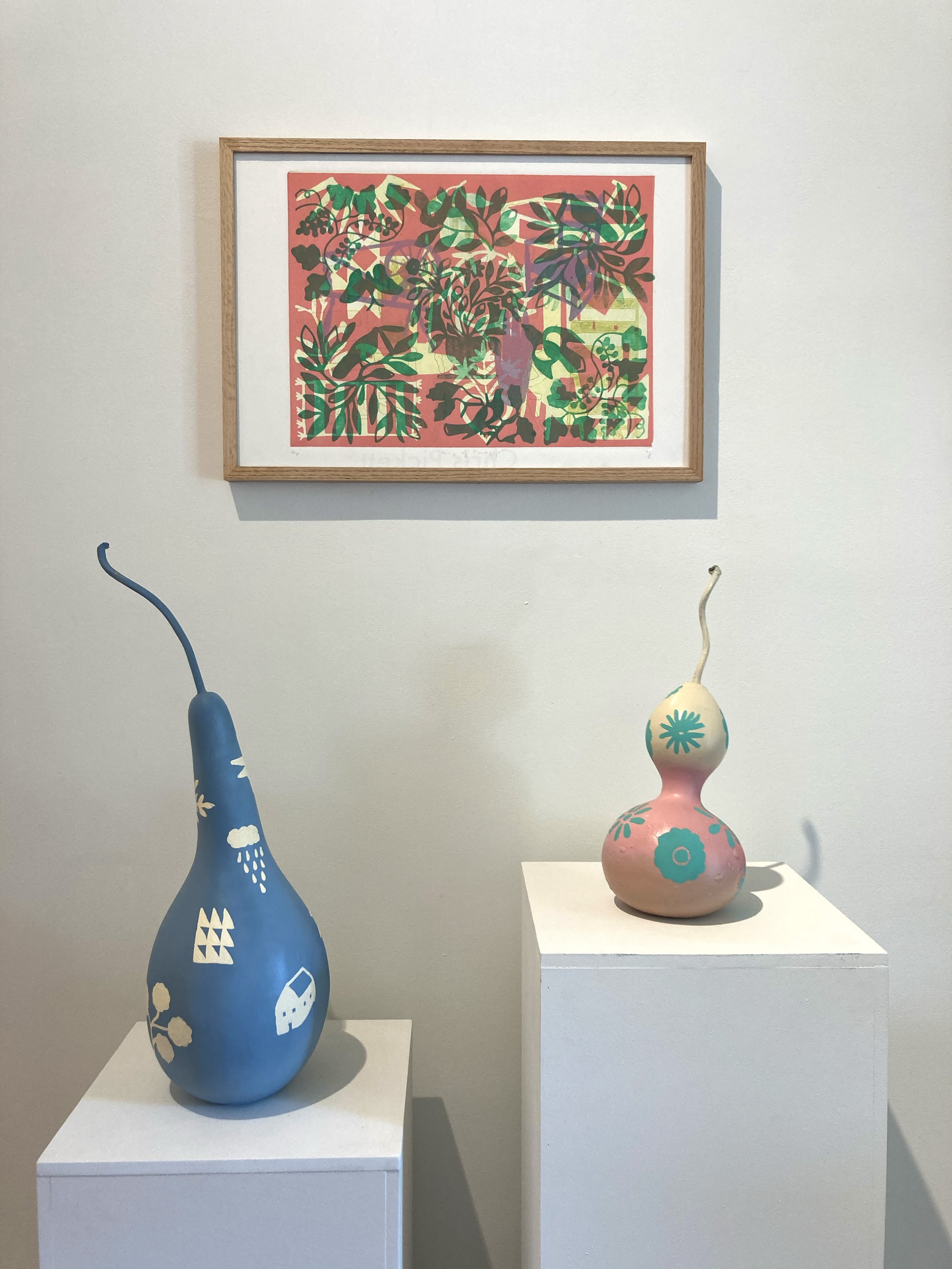
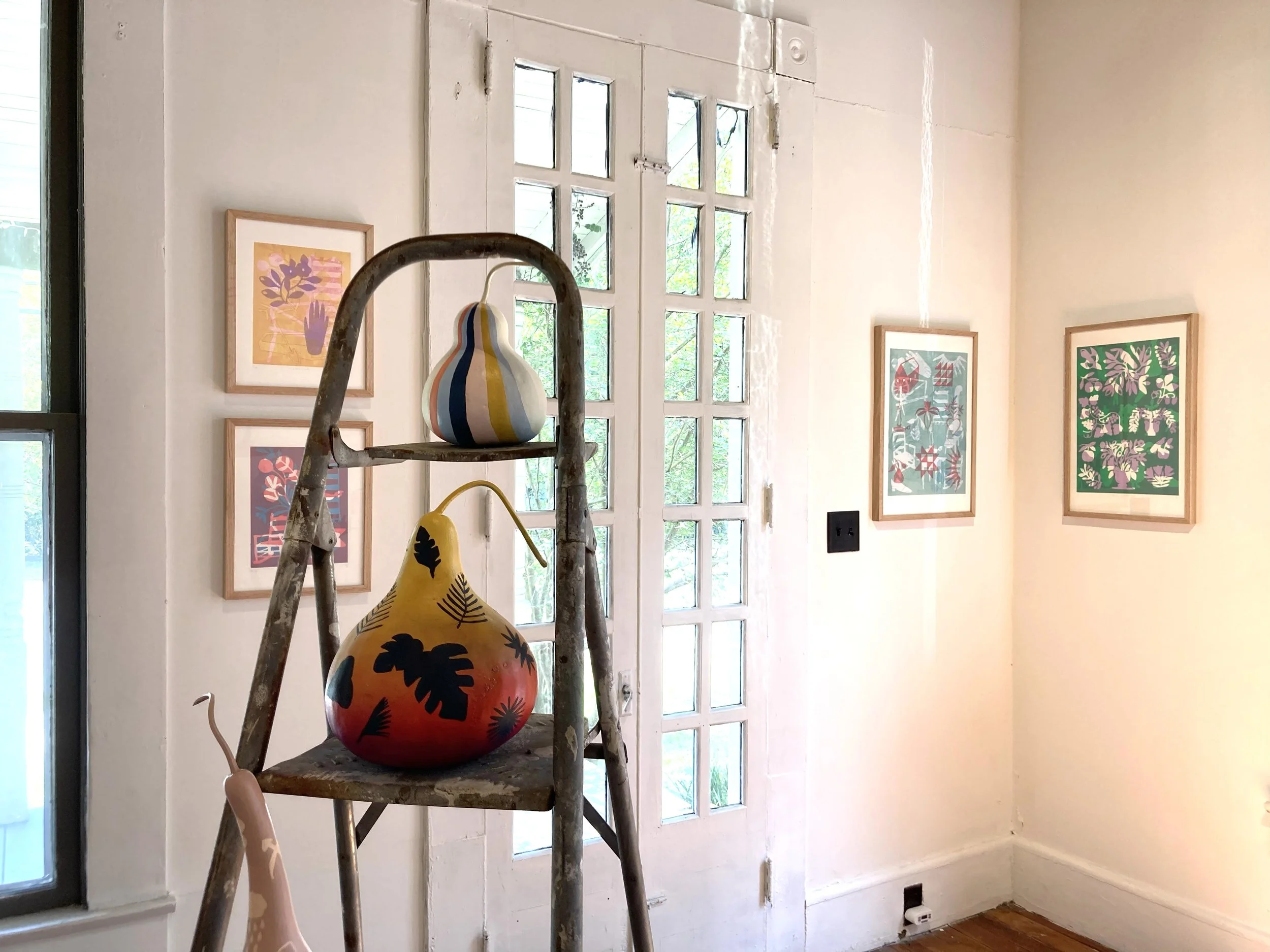
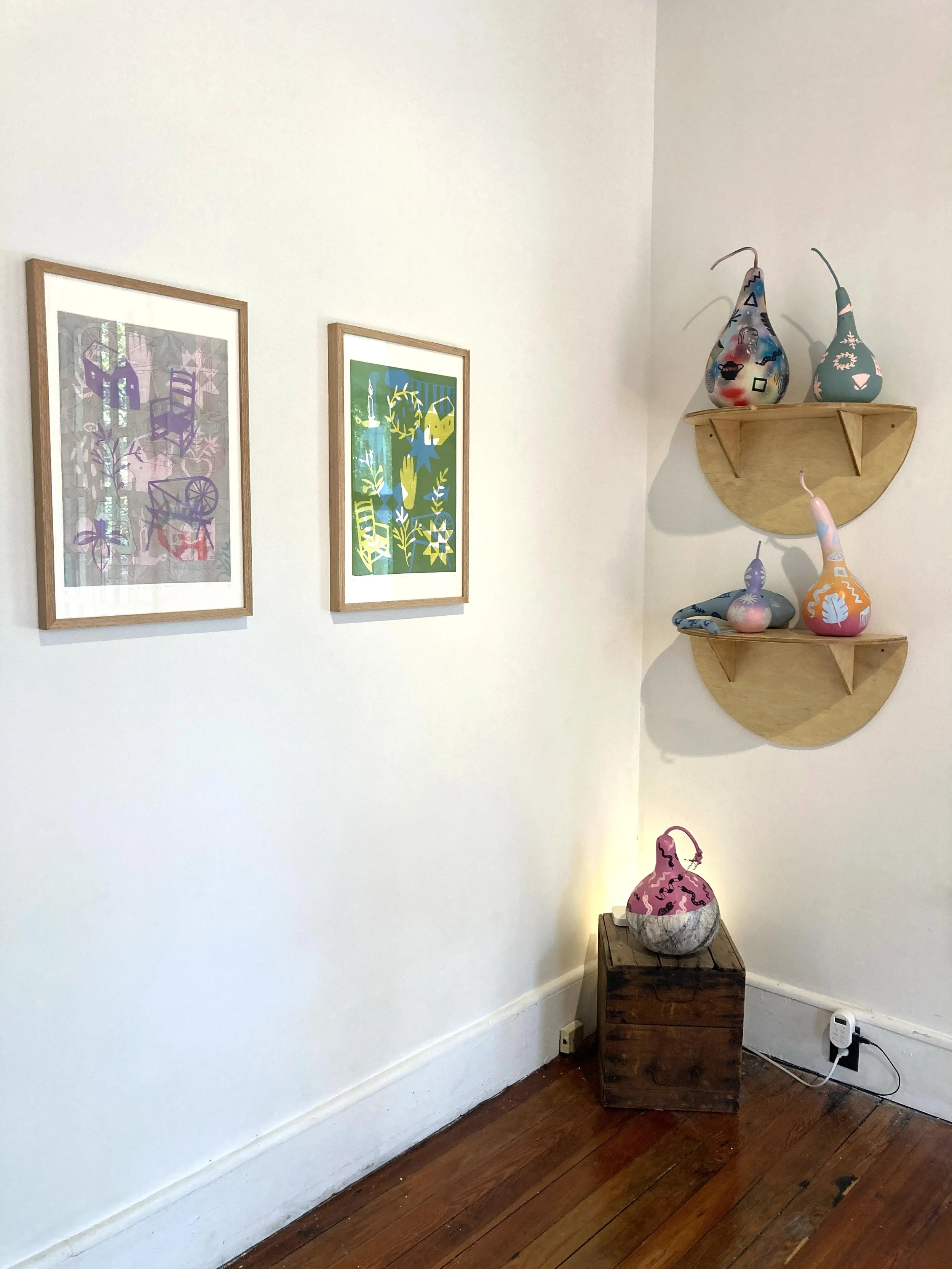
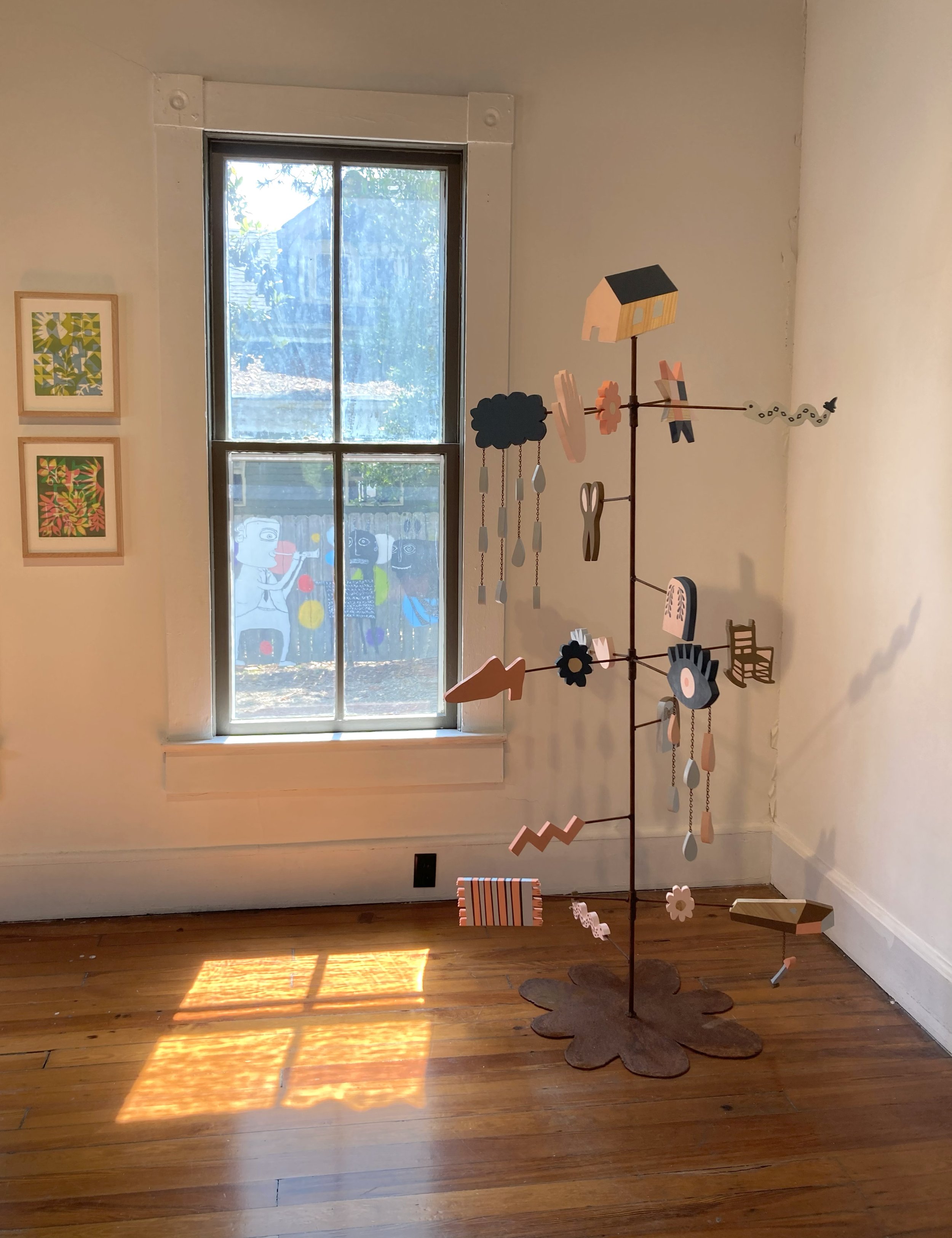
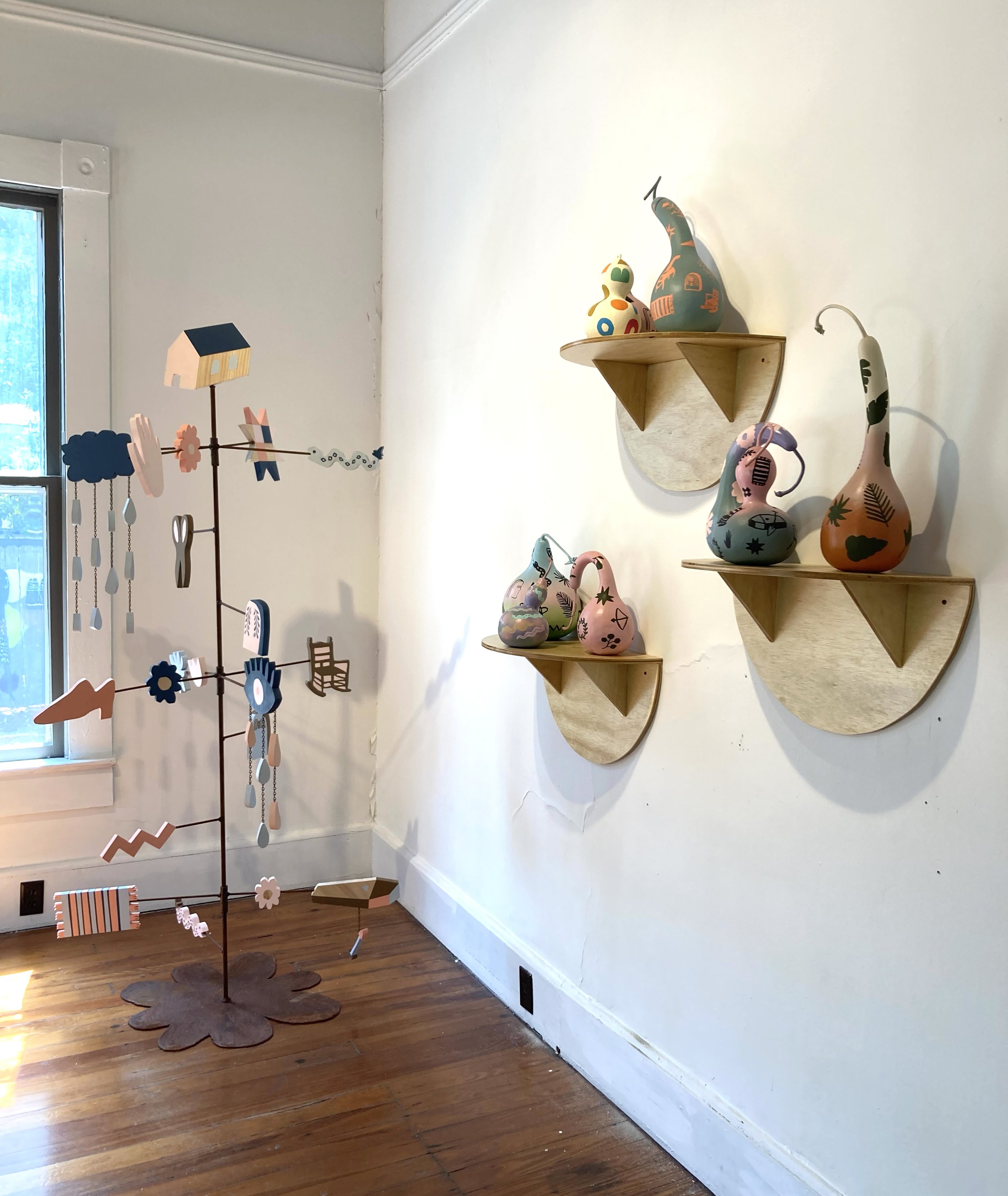
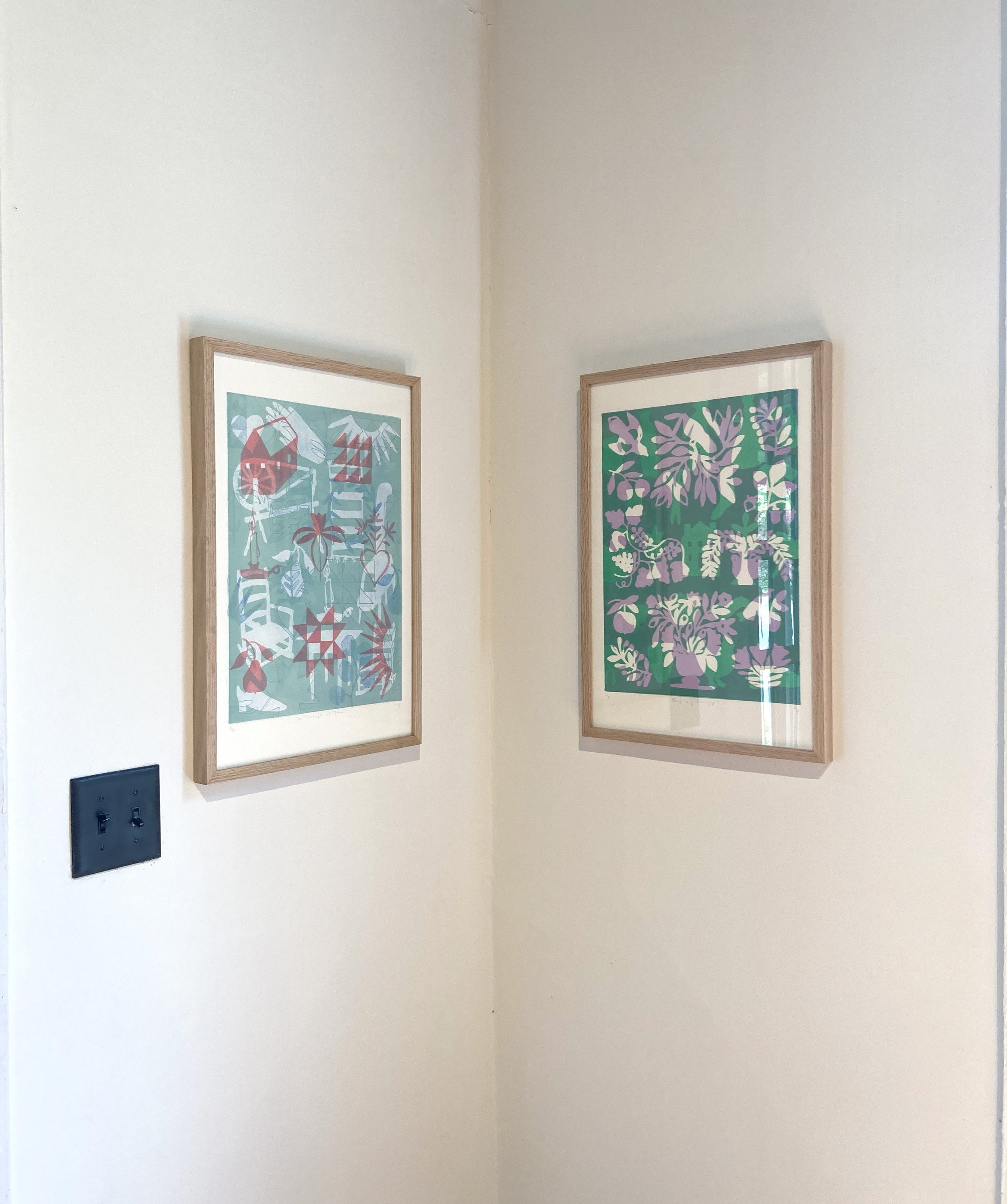
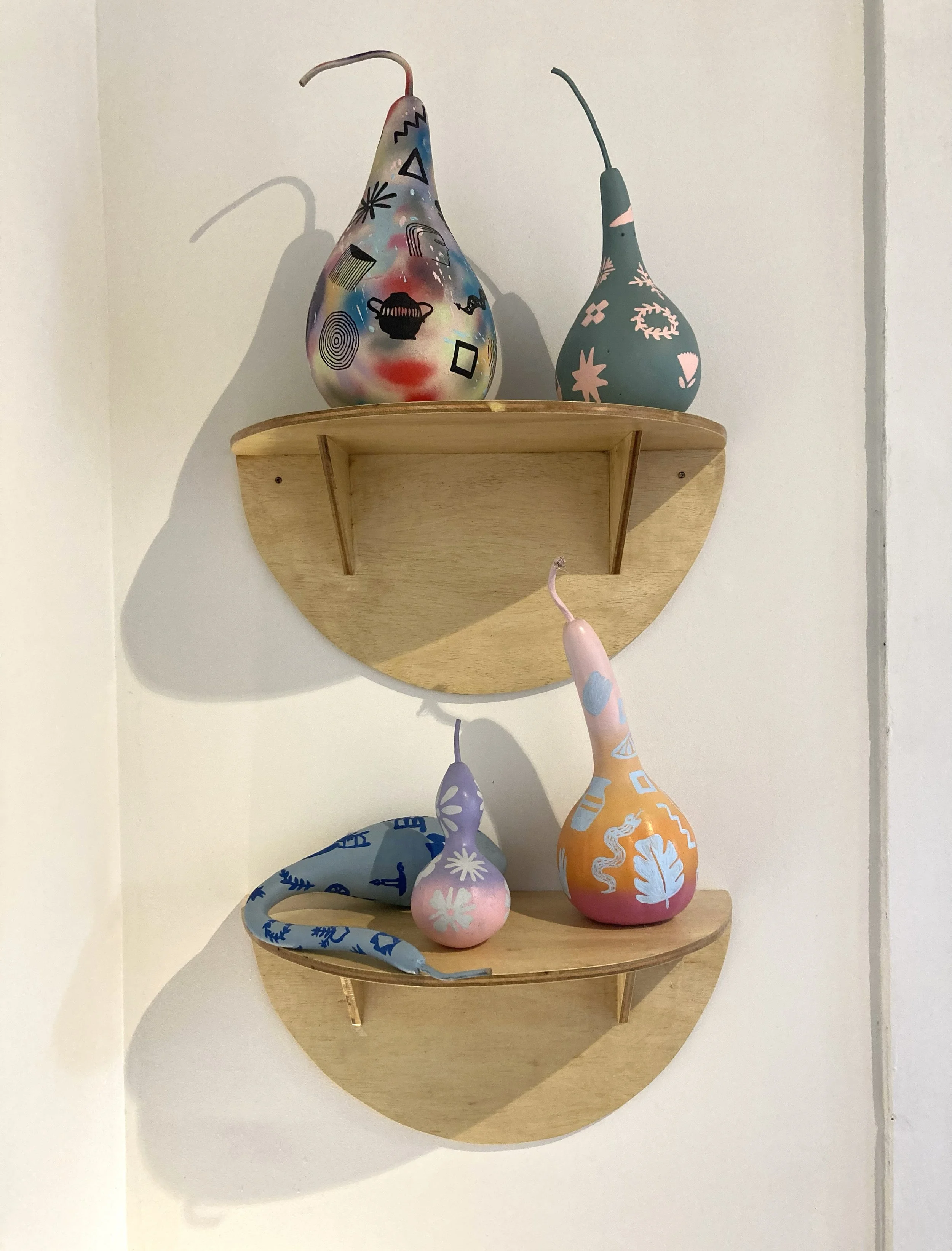
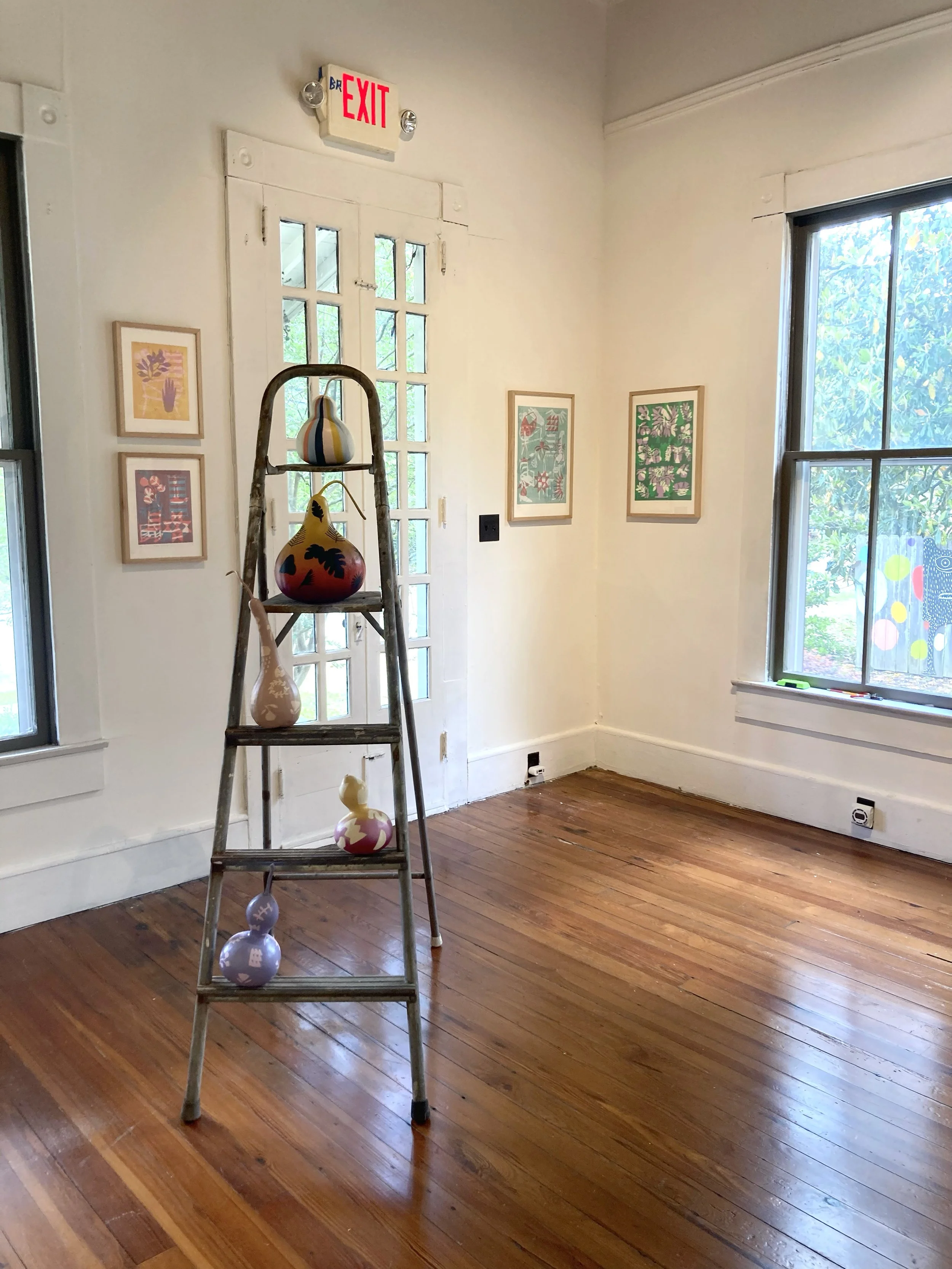
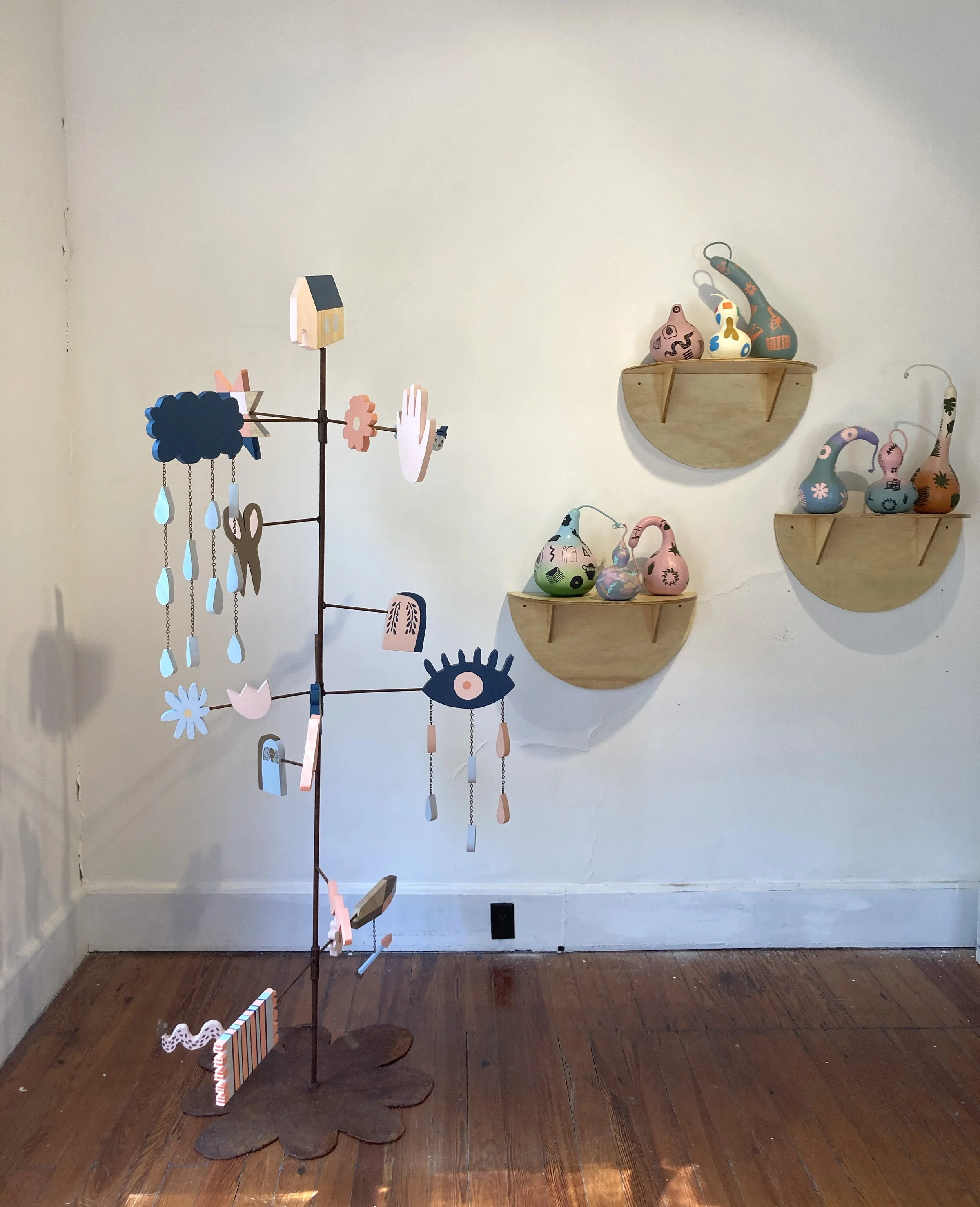
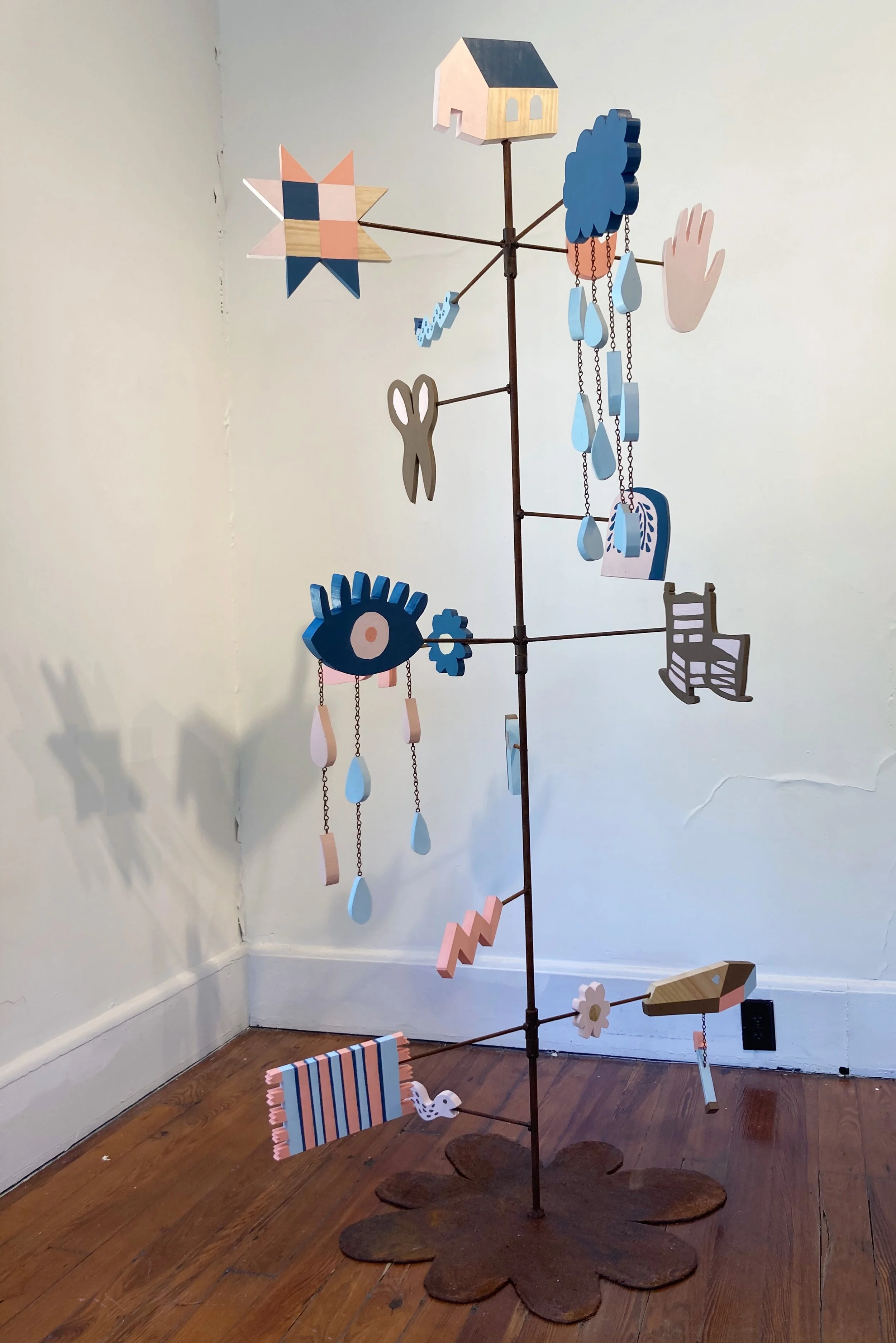
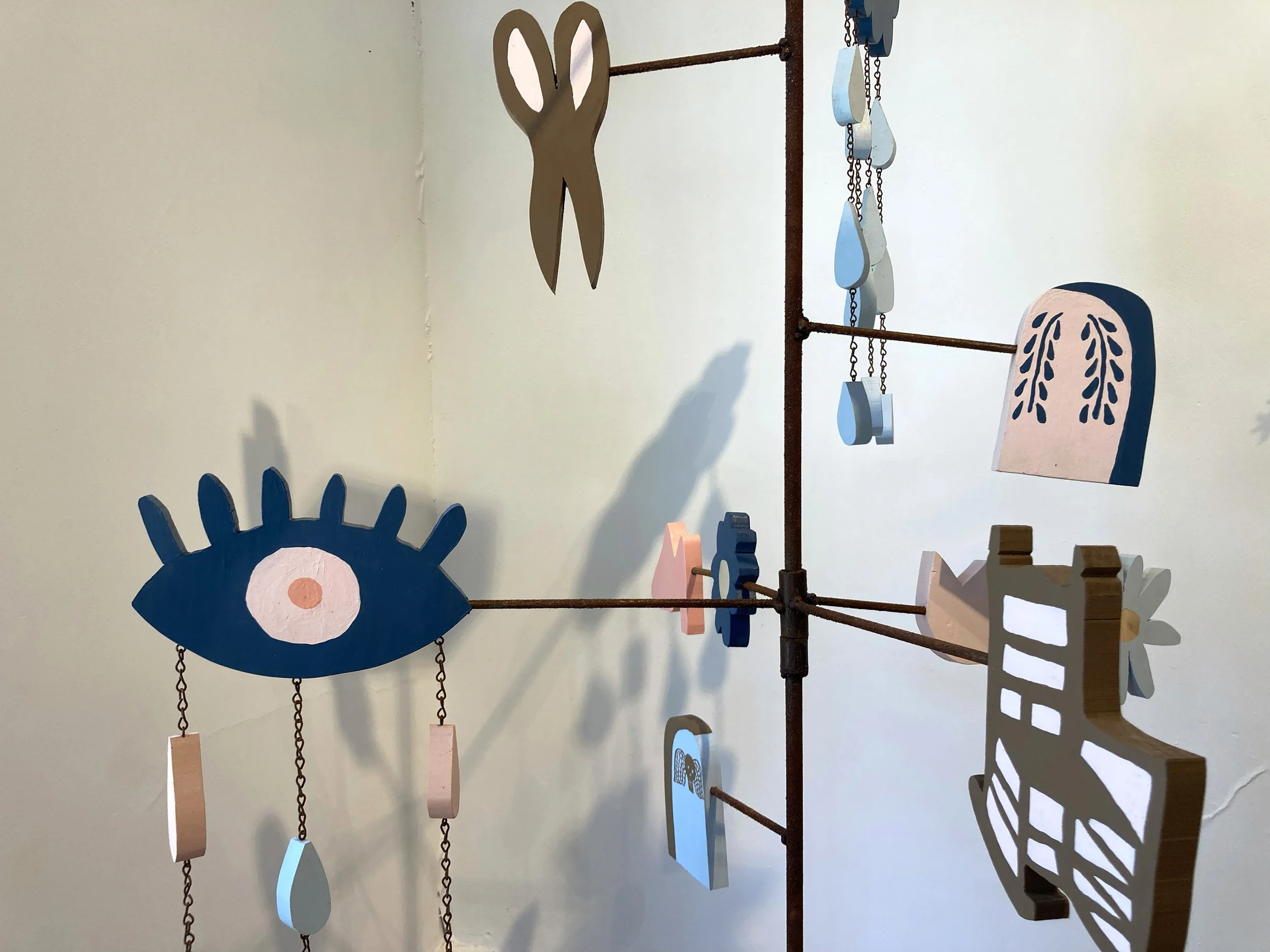
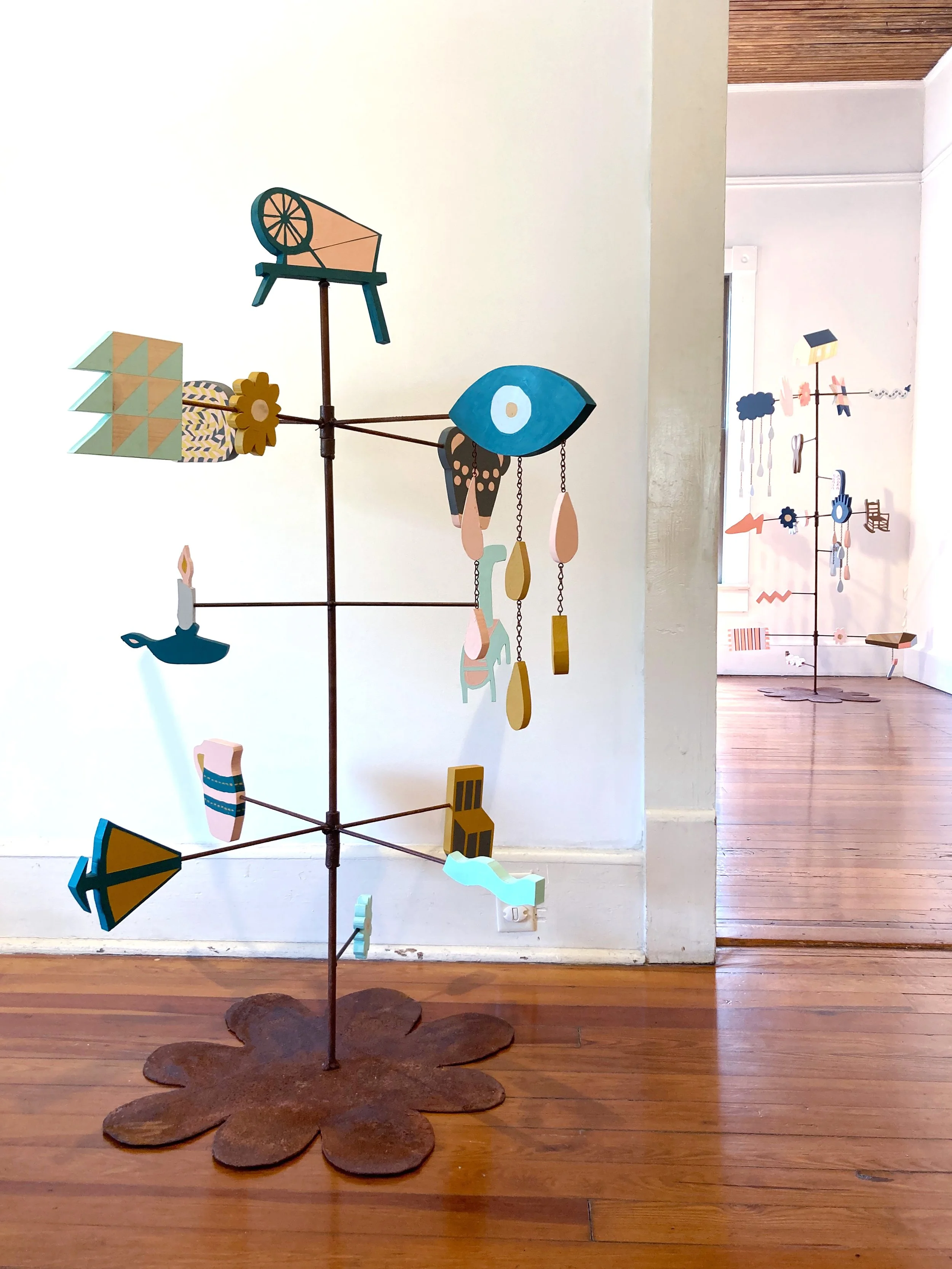
Midden, Plough Gallery, Tifton, GA, 2021
In Midden, Kaleena Stasiak uses sculpture and found objects in conjunction with printmaking to discuss the relationship between historical and contemporary material culture. Digging through a lexicon of symbols and imagery evoking American colonial times, folk art, and quilts, Stasiak interrogates early history and domestic labor. These graphic cyphers denote the power and breadth of traditional women’s work, functional handicraft, and the impulse to create. Decoration and ornamentation become expressions of desire, signifiers of identity, and autobiographical documentation of lives omitted from text-based historical narratives and artistic discourse. The implied functionality of the sculptural works points to human ritual and survival while also opening up to expanded modern interpretations. Painted gourds, whirligigs, and weathervanes once served vital human needs, but now litter antique malls and craft shows, their former utility relinquished for kitsch and nostalgic value. In Midden, Stasiak’s craft-based investigation explores the performative reproduction of formerly functional objects as a form of historical interpretation and re-envisioning of the future.
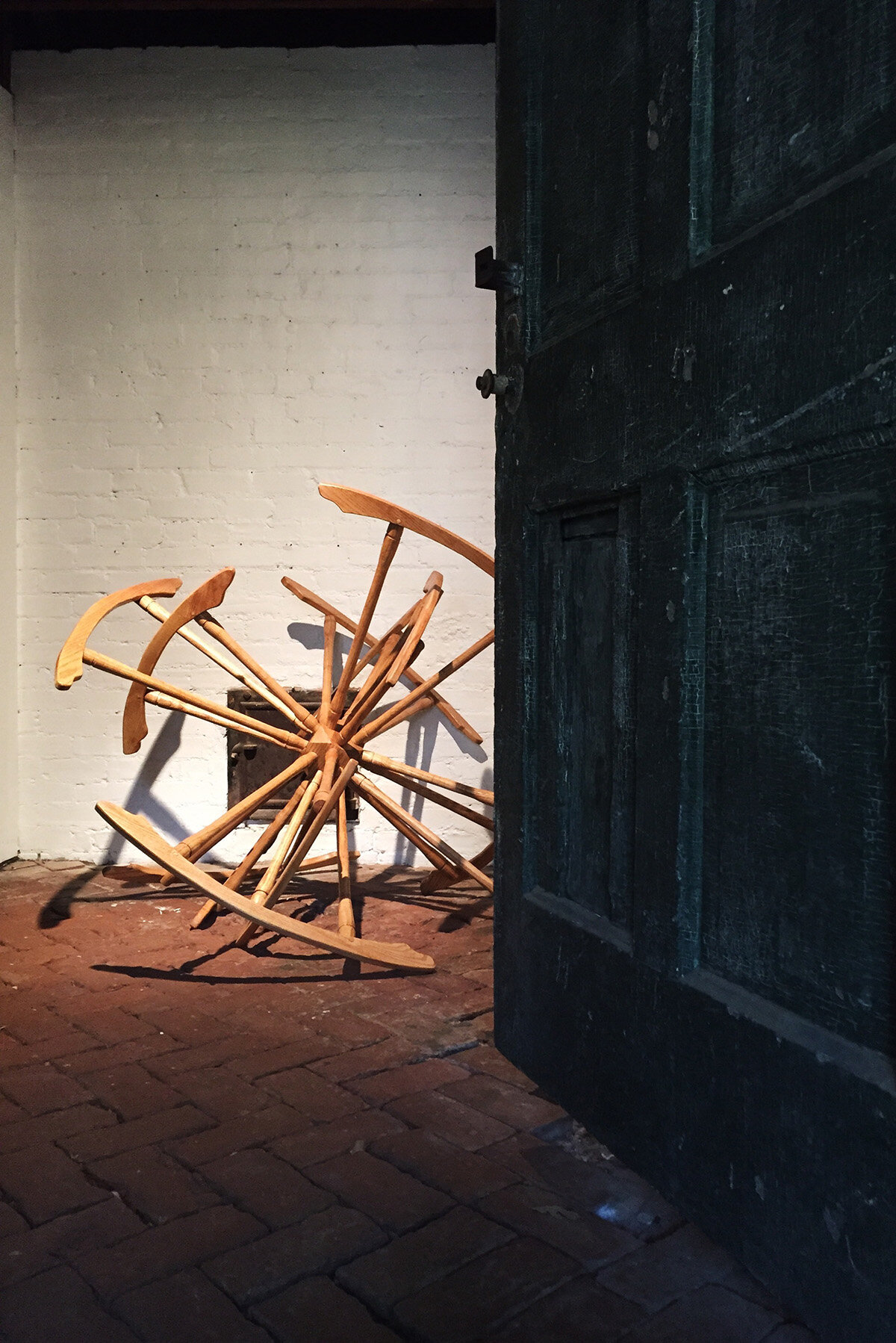
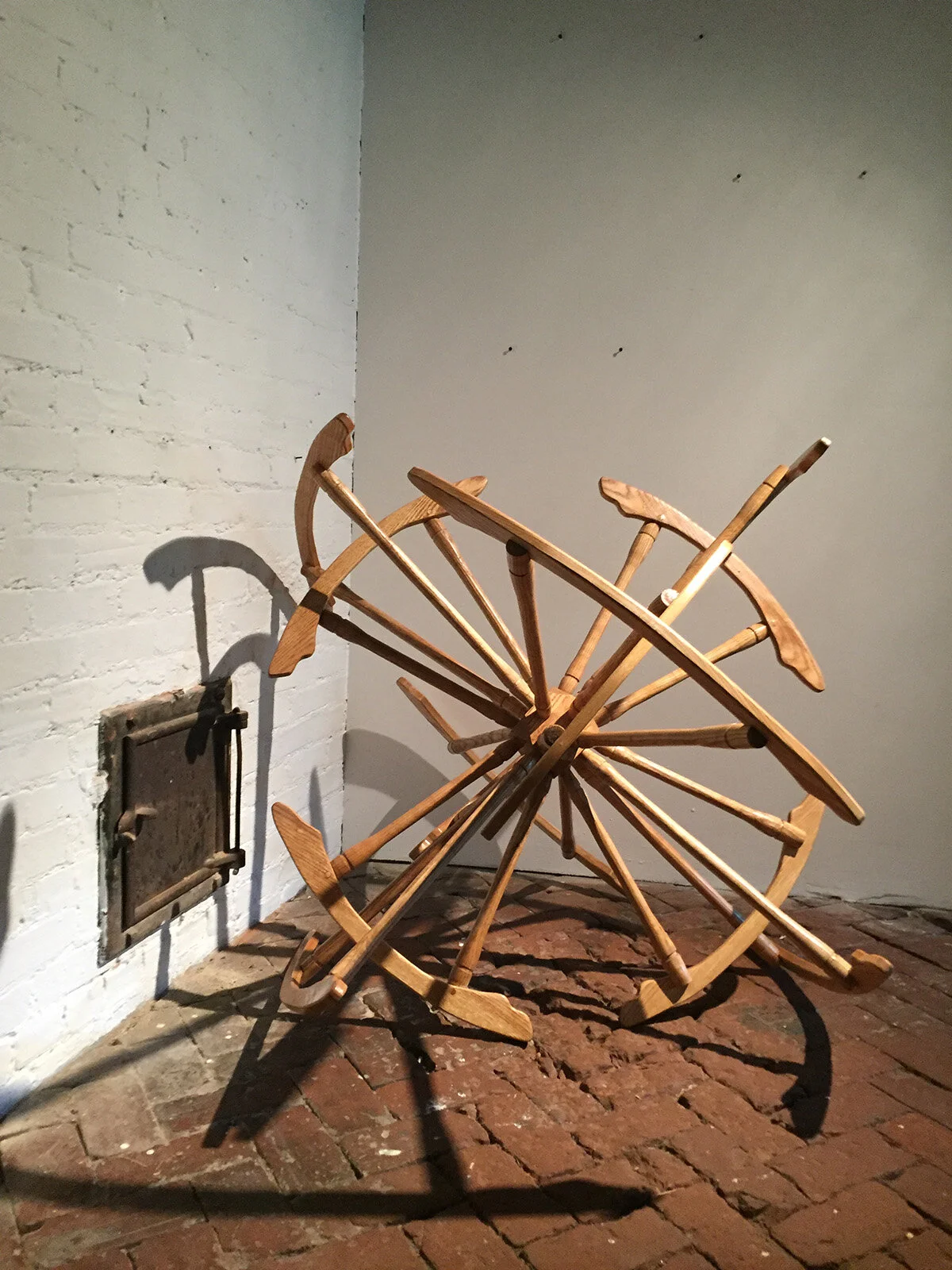
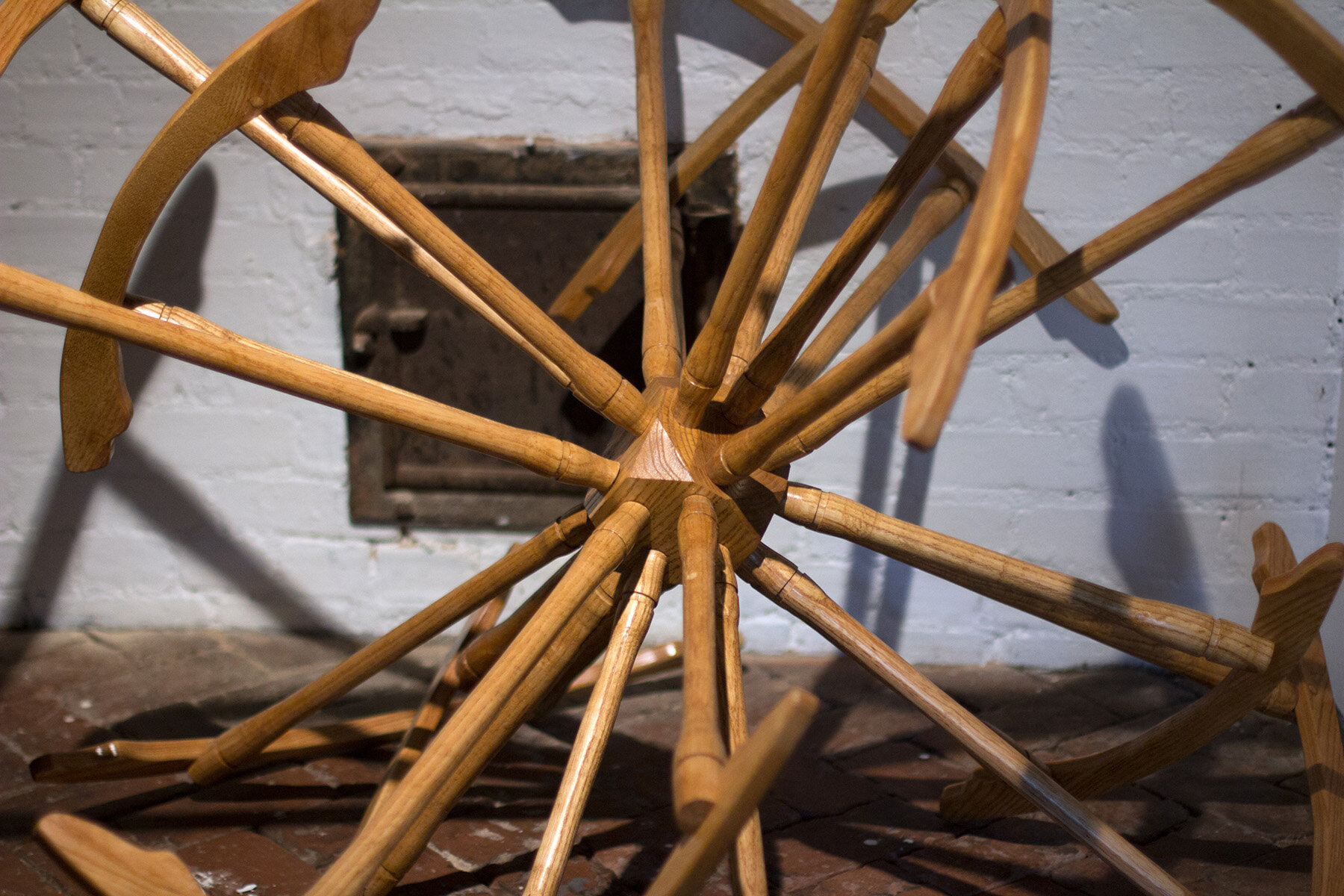
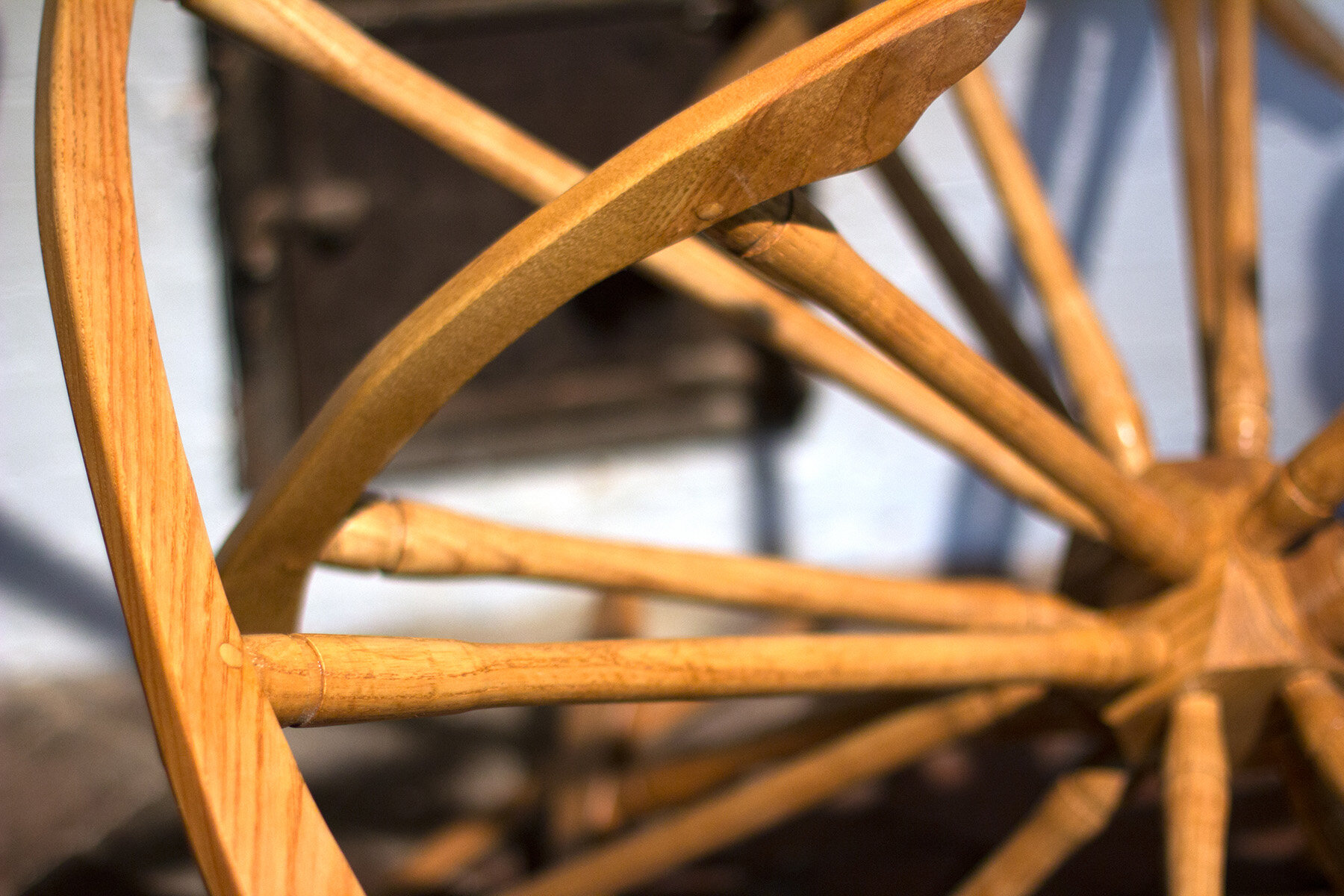
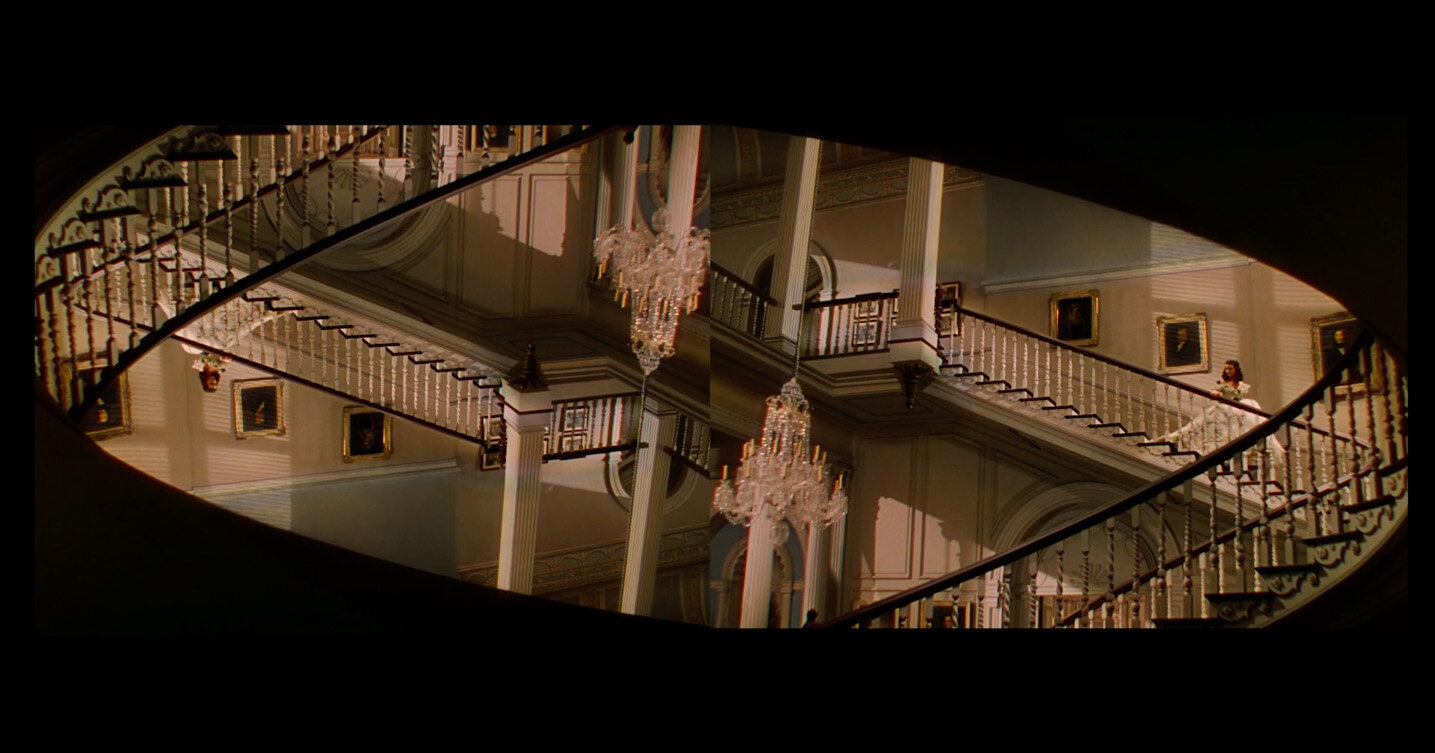
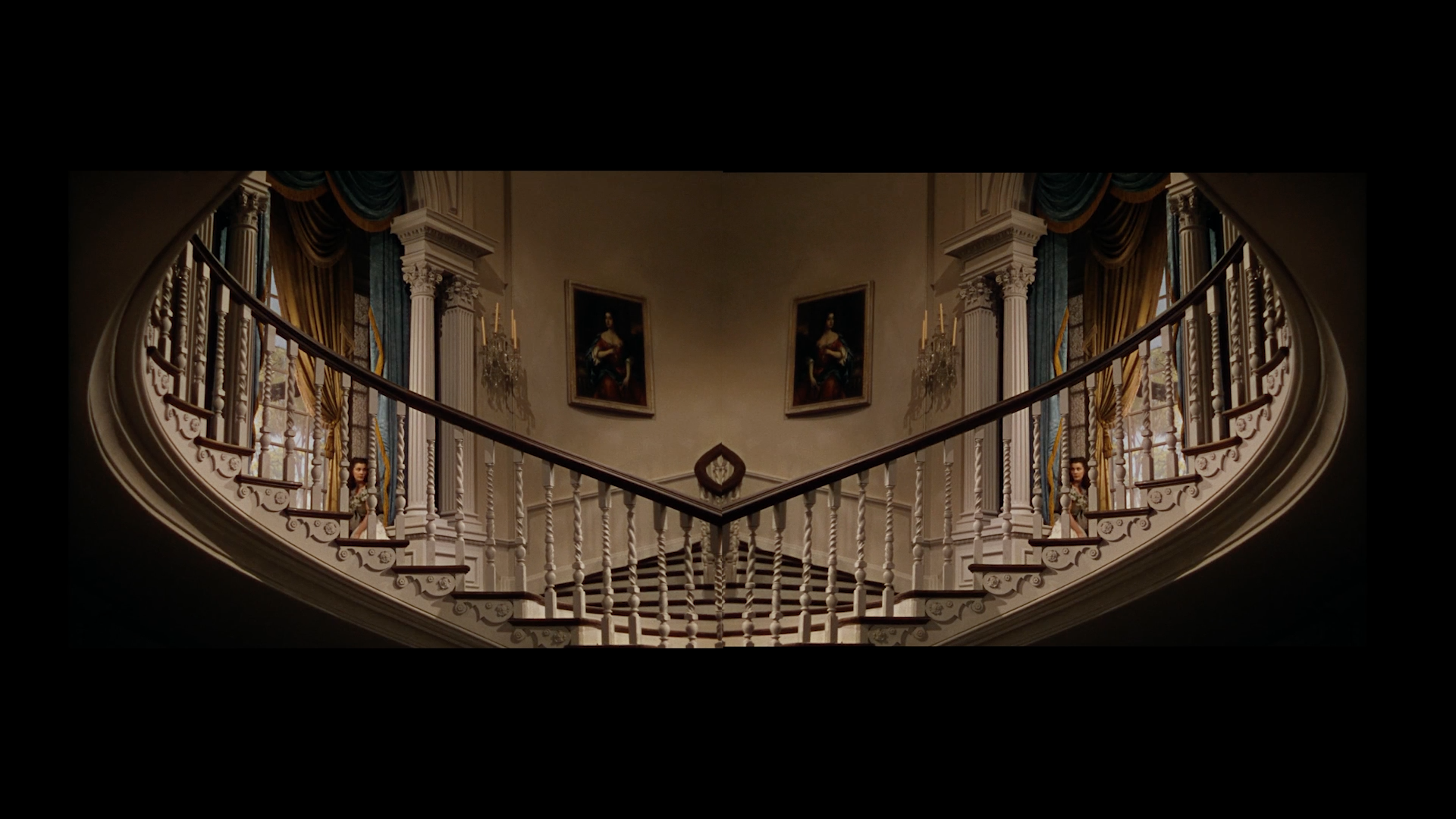
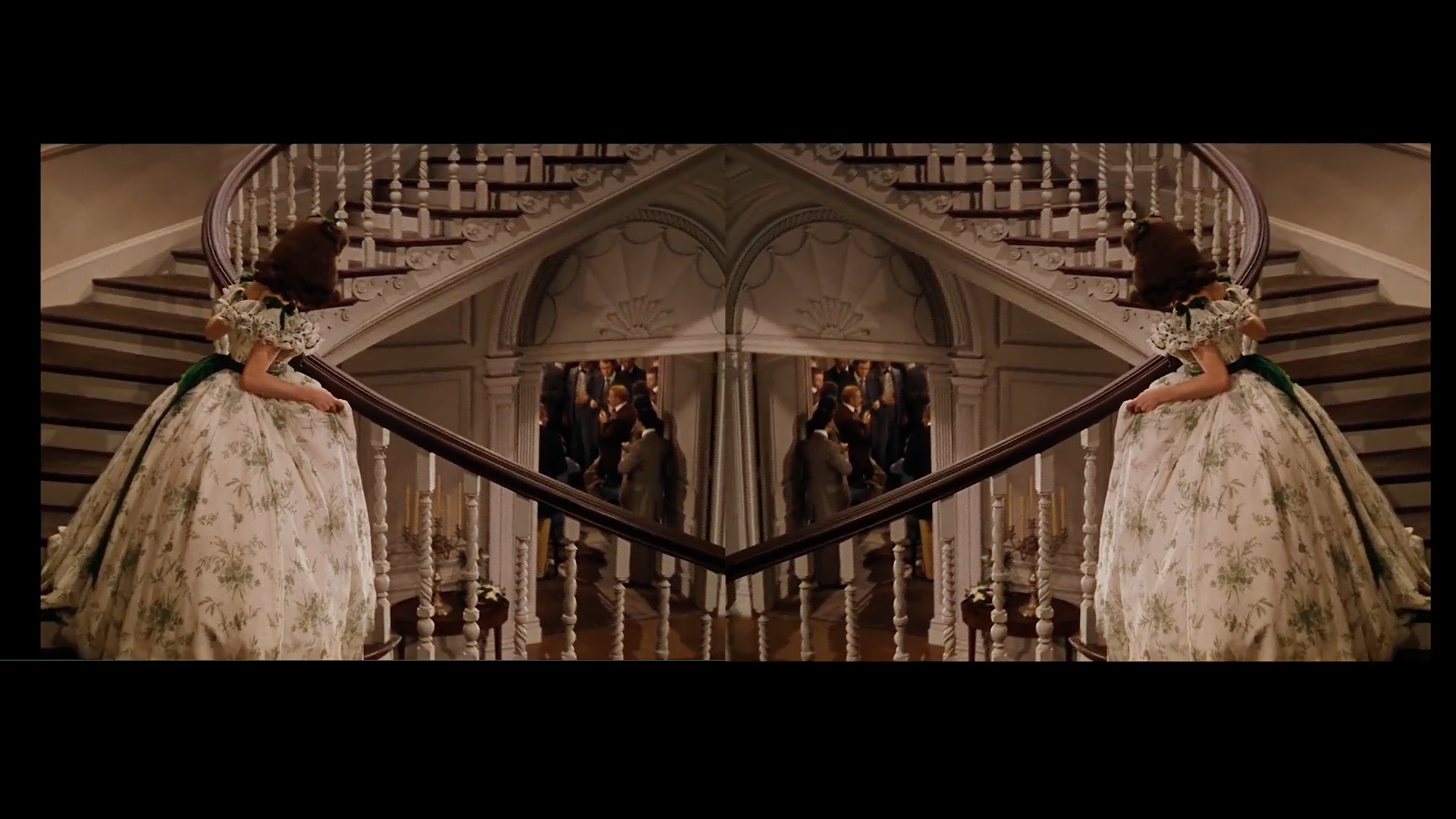
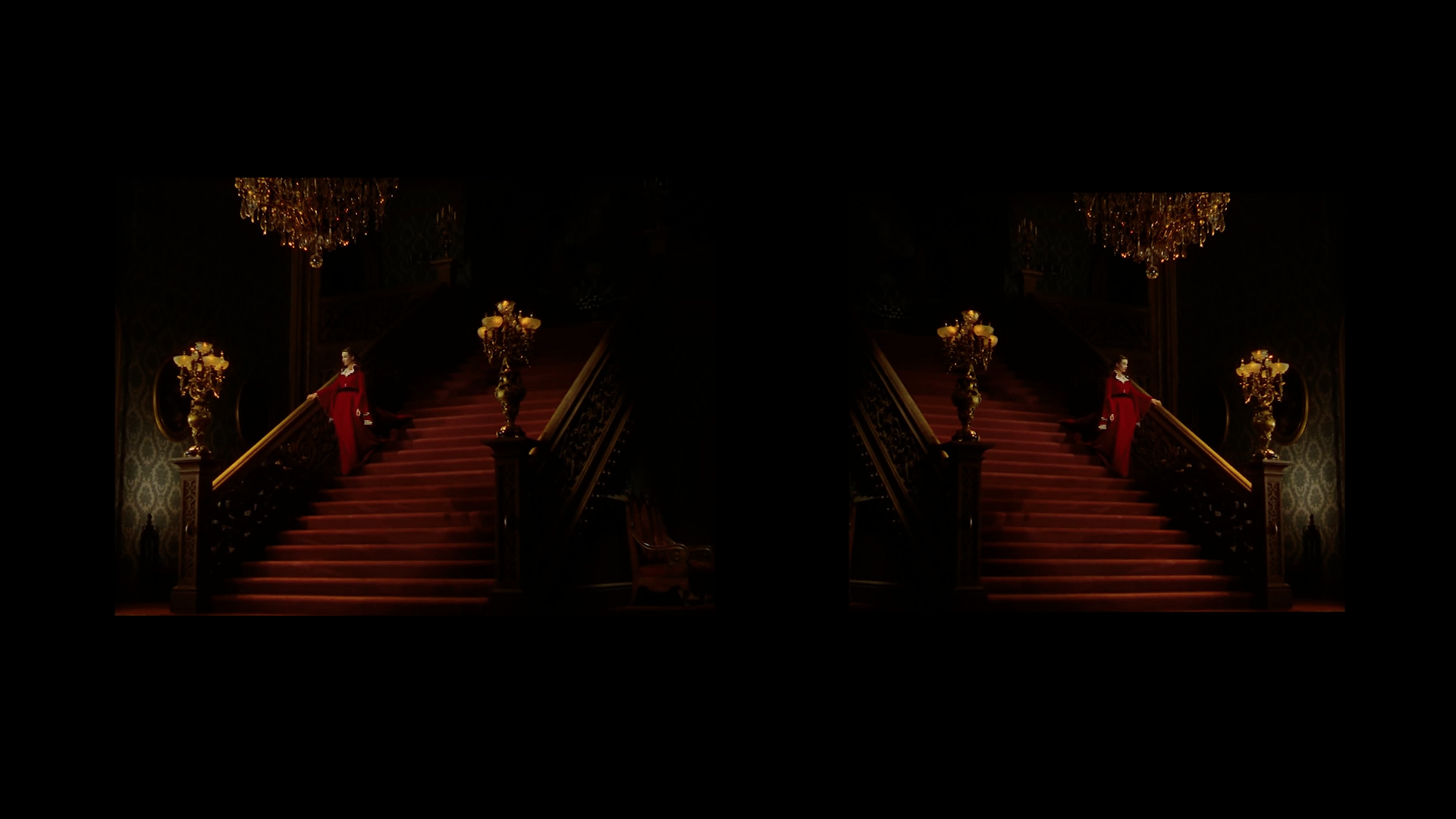
Eternal Return, Whitespec, Atlanta, GA, 2017.
Artist Statement: Kaleena Stasiak’s artistic practice engages in material and textual investigation both inside and outside of the studio. Simultaneously looking through the lenses of artist, amateur historian, archaeologist, and cultural anthropologist, she explores methods of history consumption to address the relationship between the past, identity, and craft. Friedrich Nietzsche describes his theory of eternal return as the recurrence of the universe’s energy an interminable number of times across infinite time and space. Exploring the repetition of history as a theme, Stasiak presents a gilded kaleidoscope of fictionalized memories. Domestic objects become iconic symbols of a misremembered past, fragmenting and refracting to create an echo chamber of nostalgia. This seductive sentimentality contrasts with Nietzsche’s warning that the circularity of time is a burden of the “heaviest weight.” With levity and gravity, Stasiak mirrors and distorts the past as a way to distance the present and offer hope for the future.
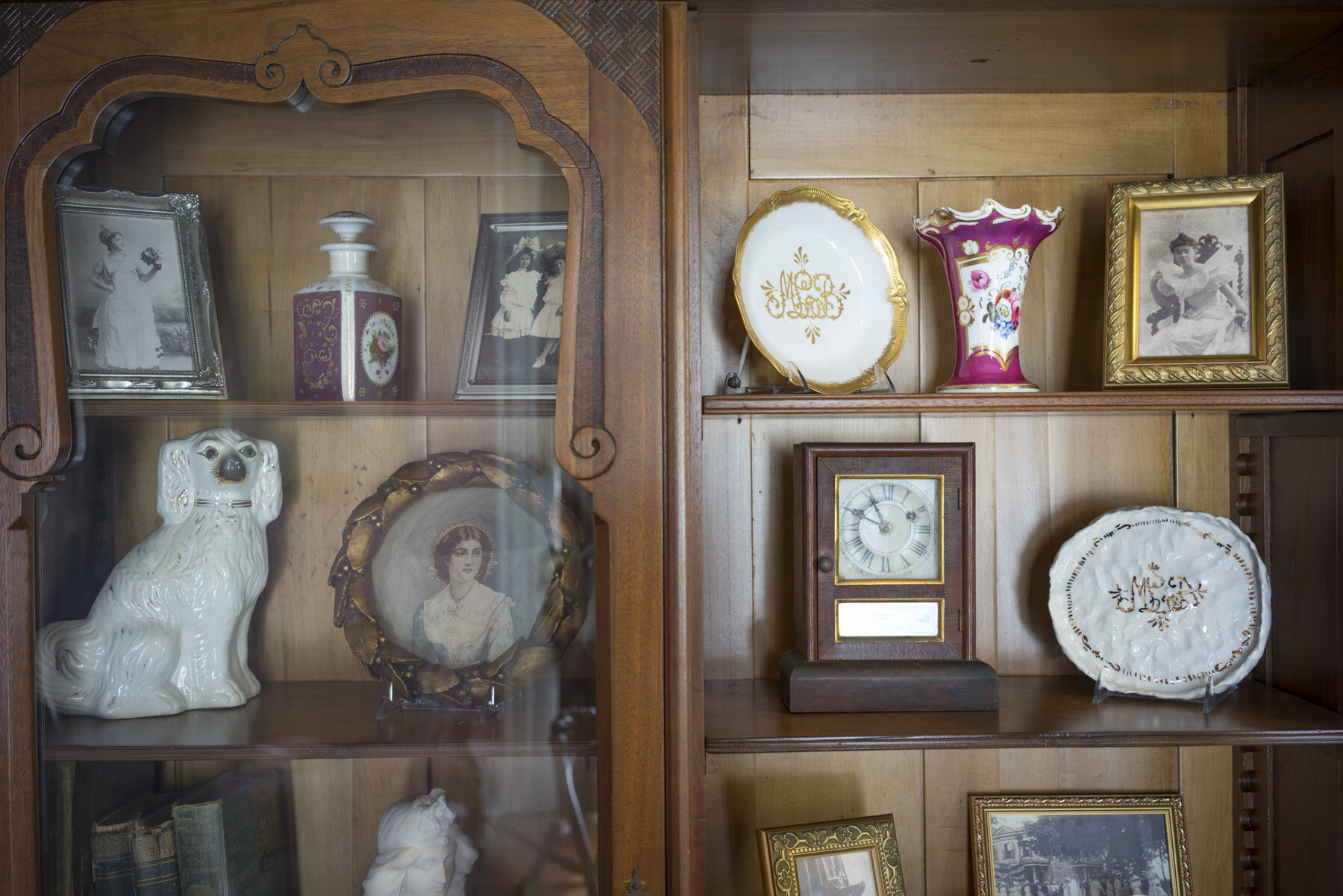
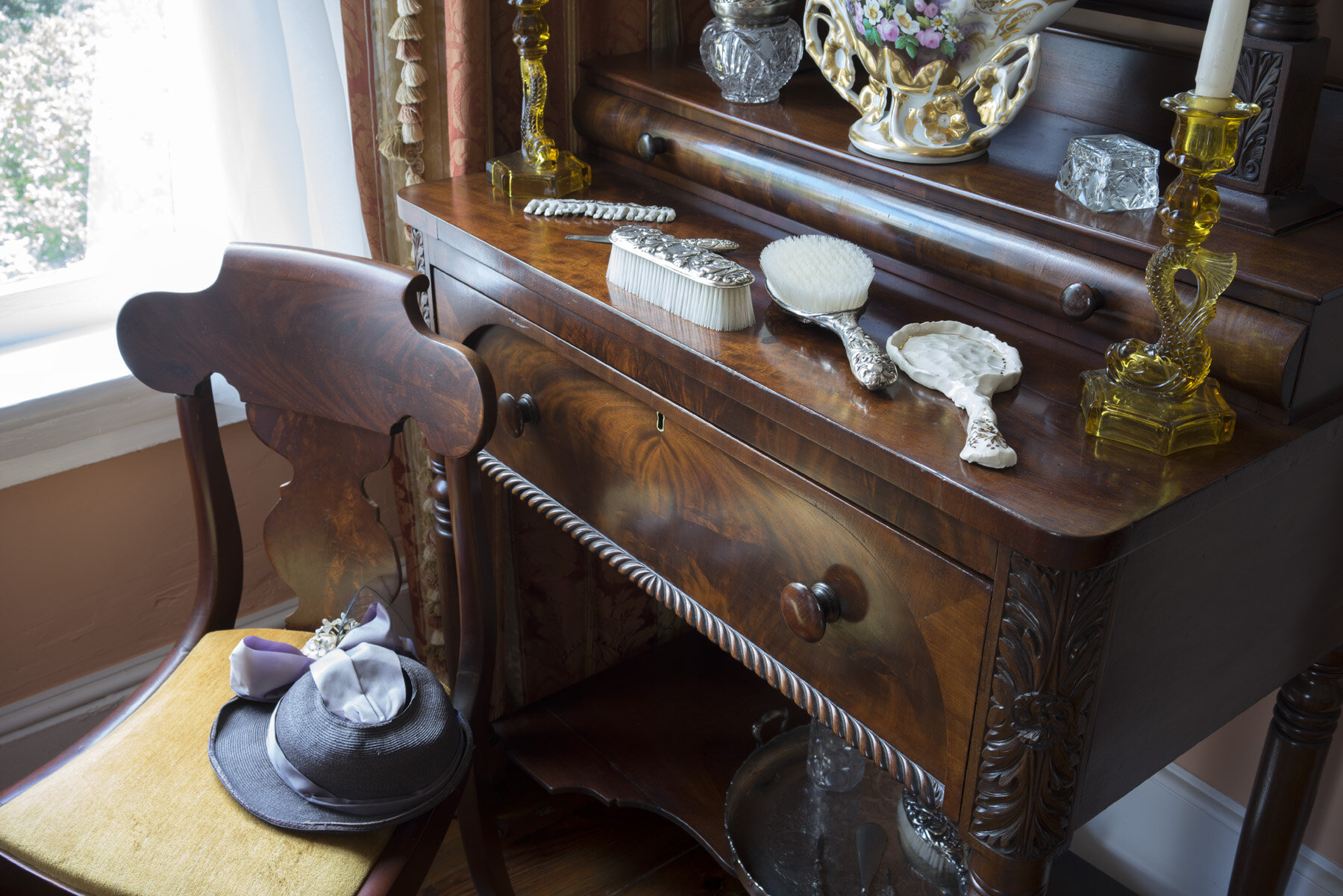
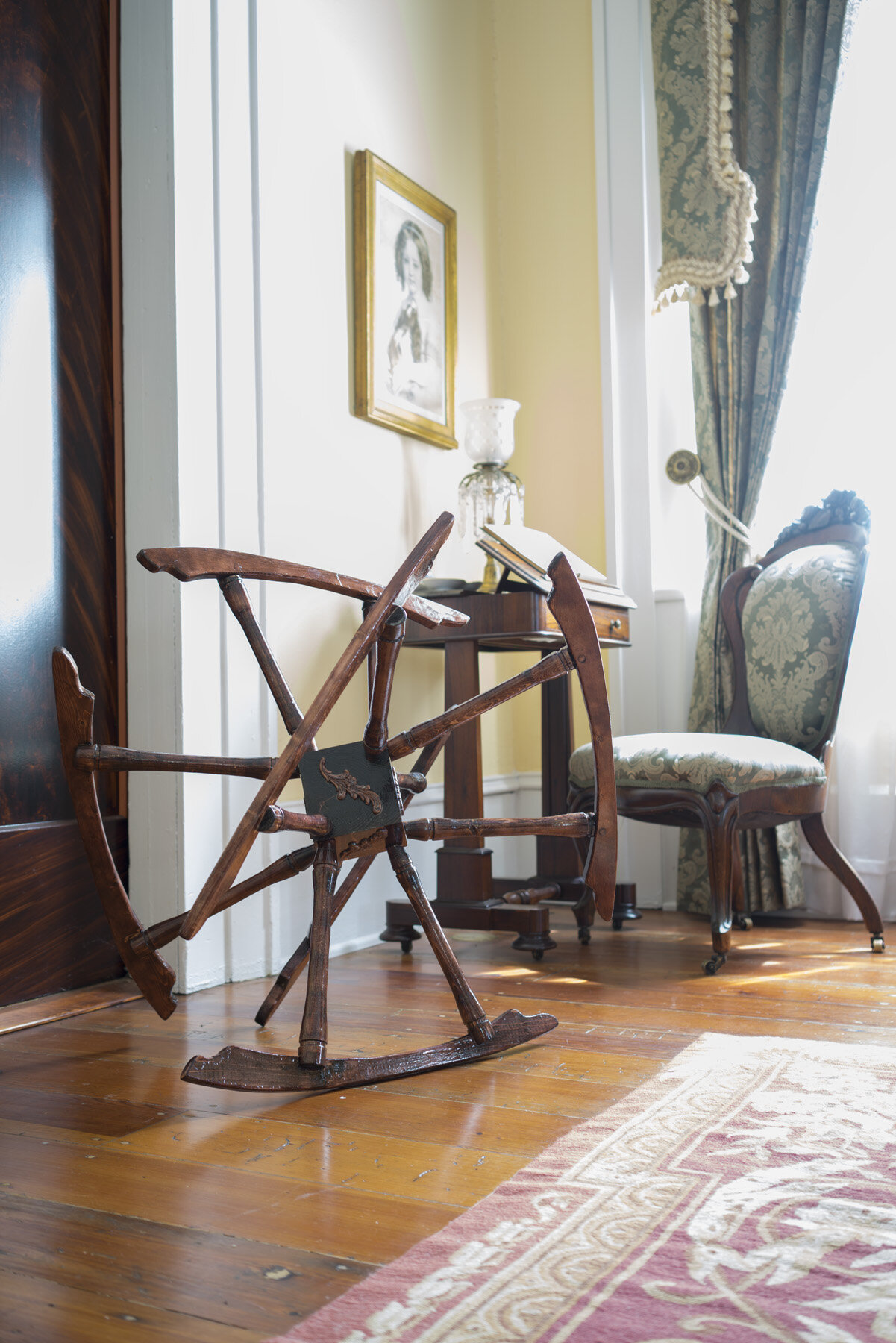
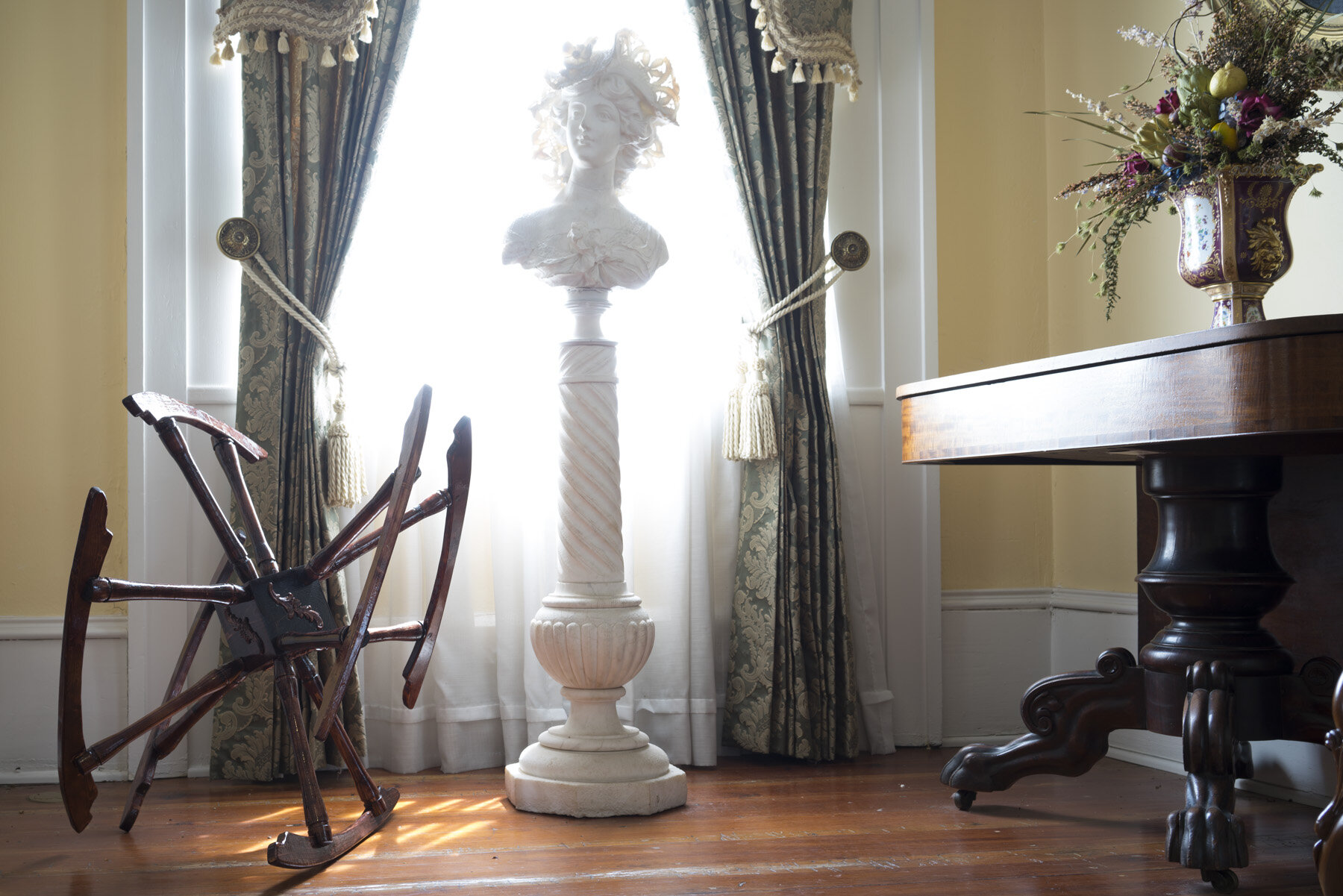
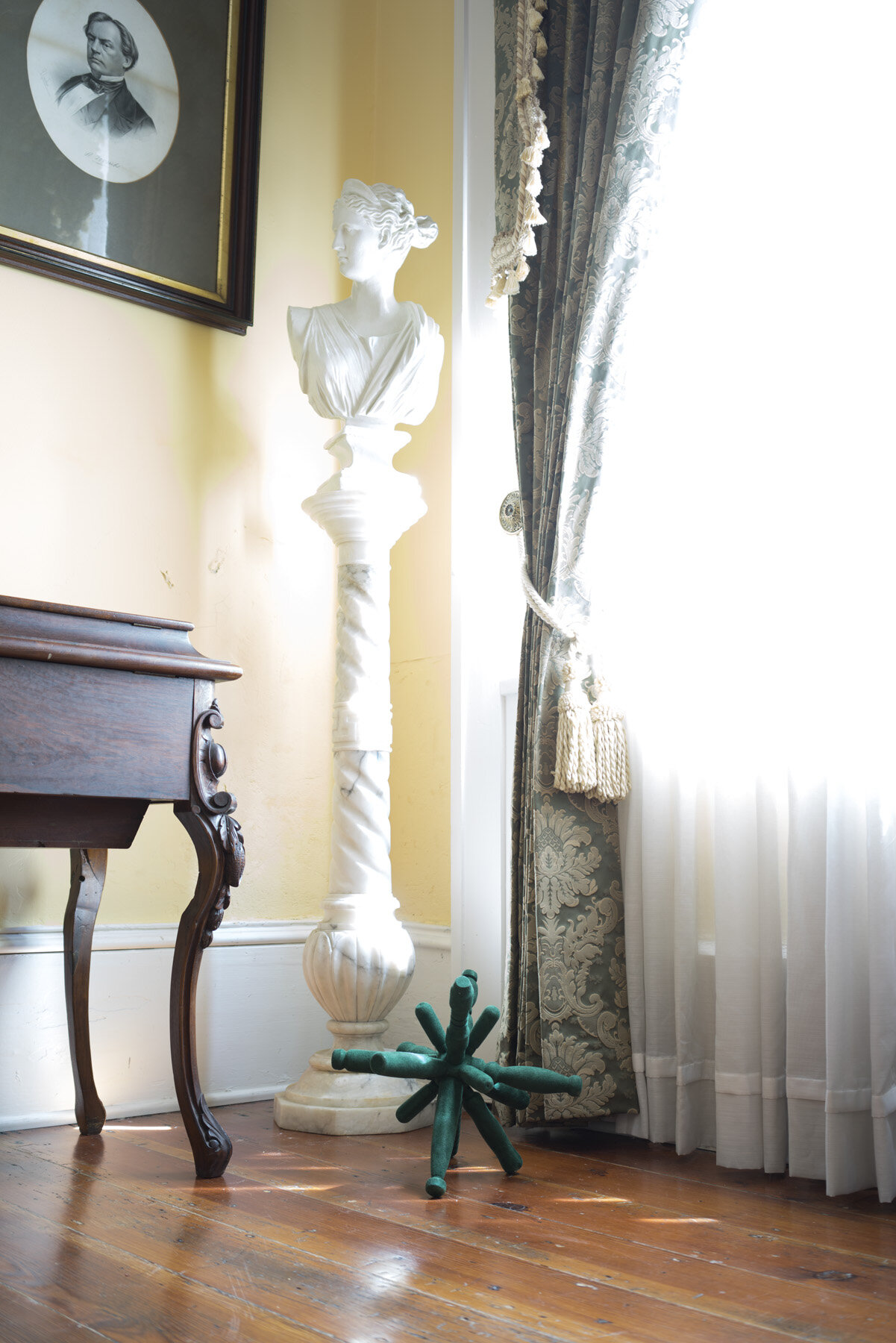
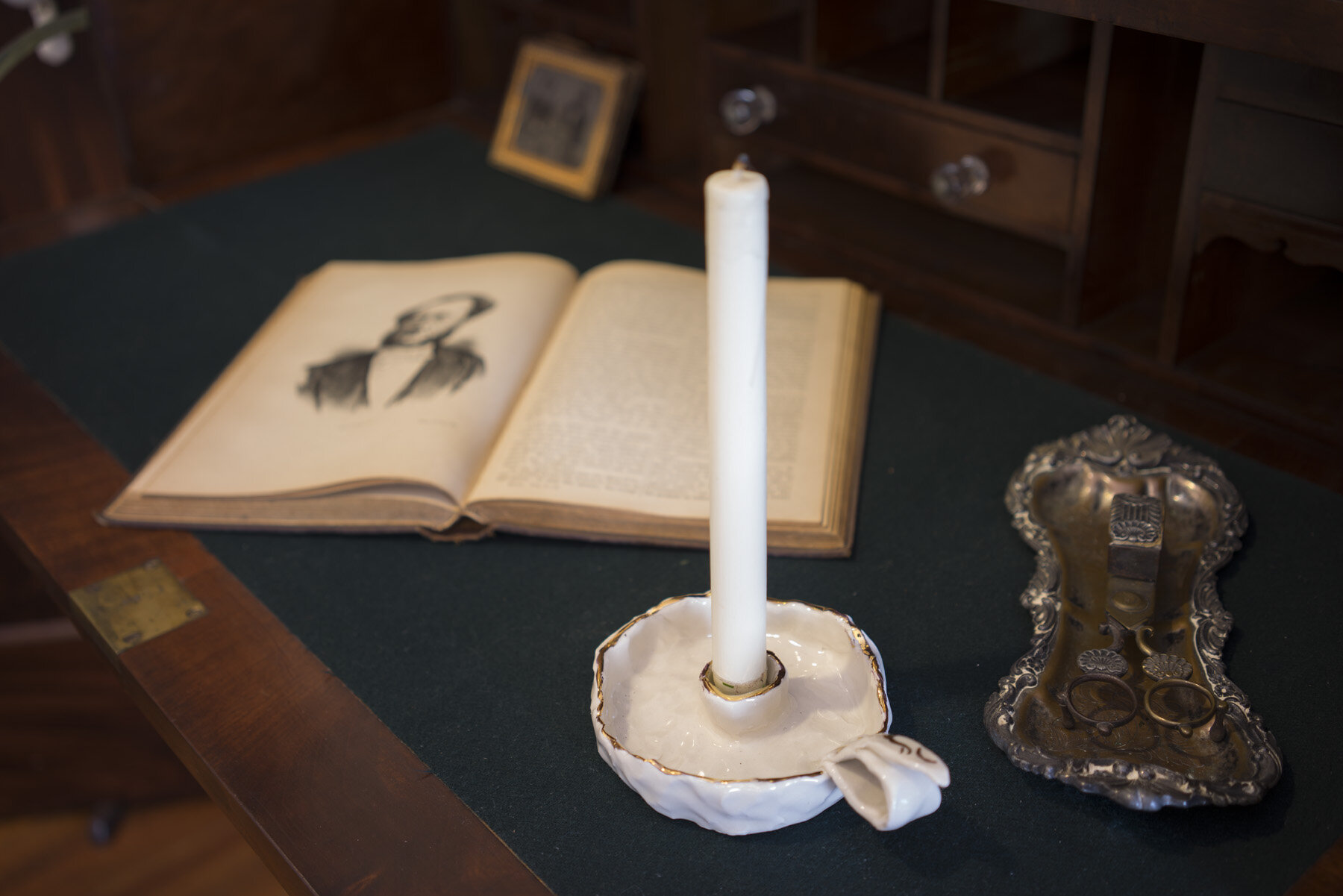
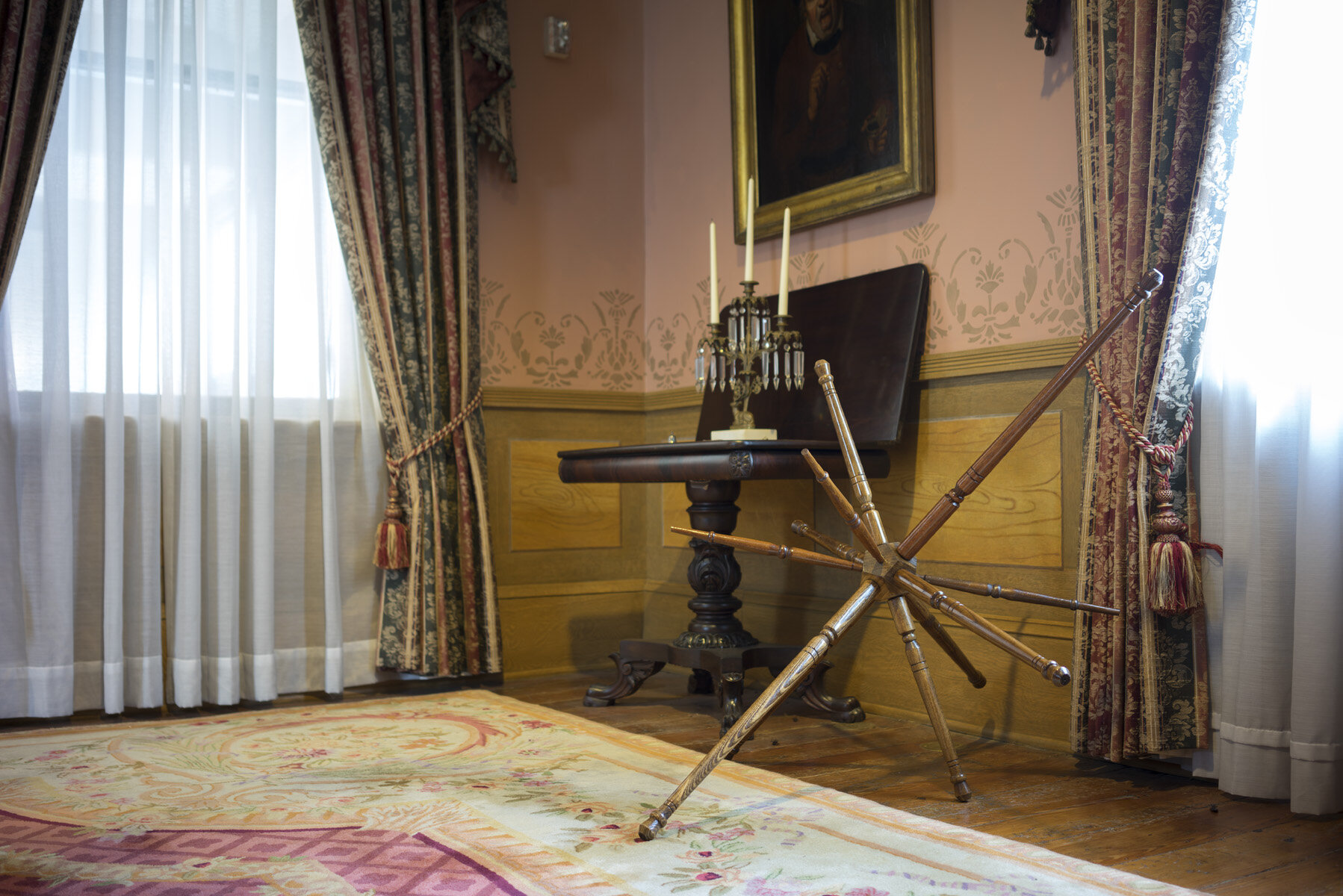
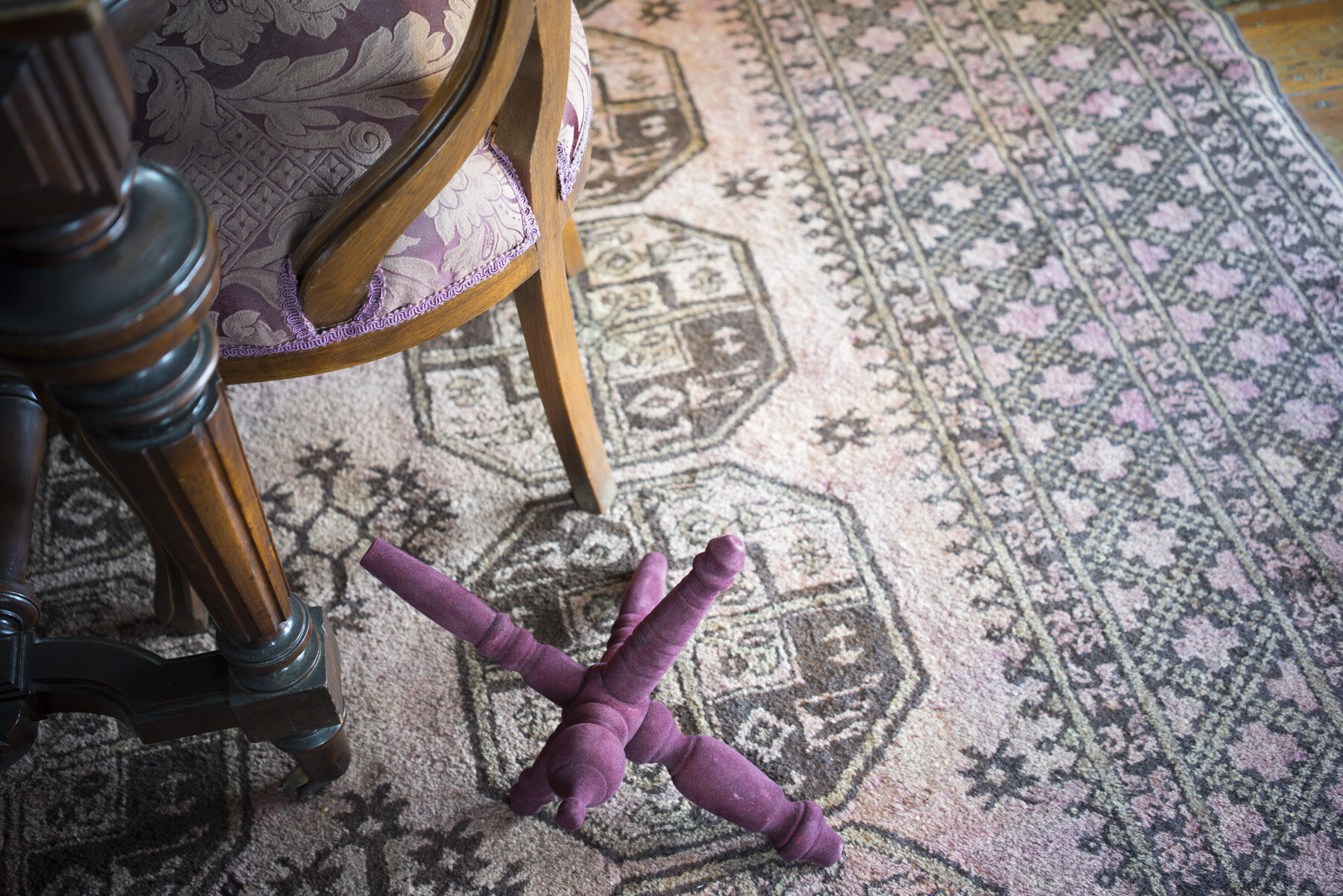
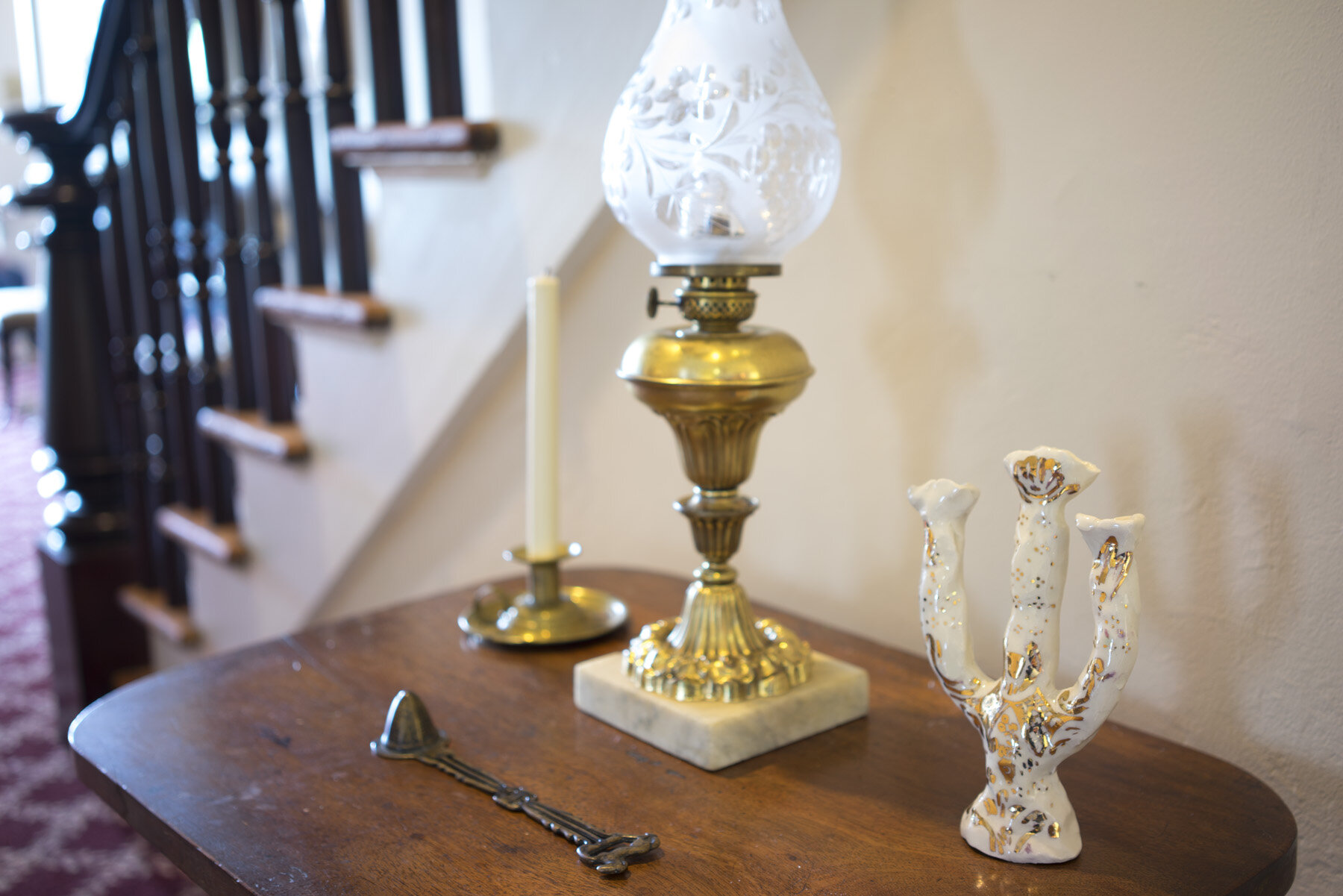
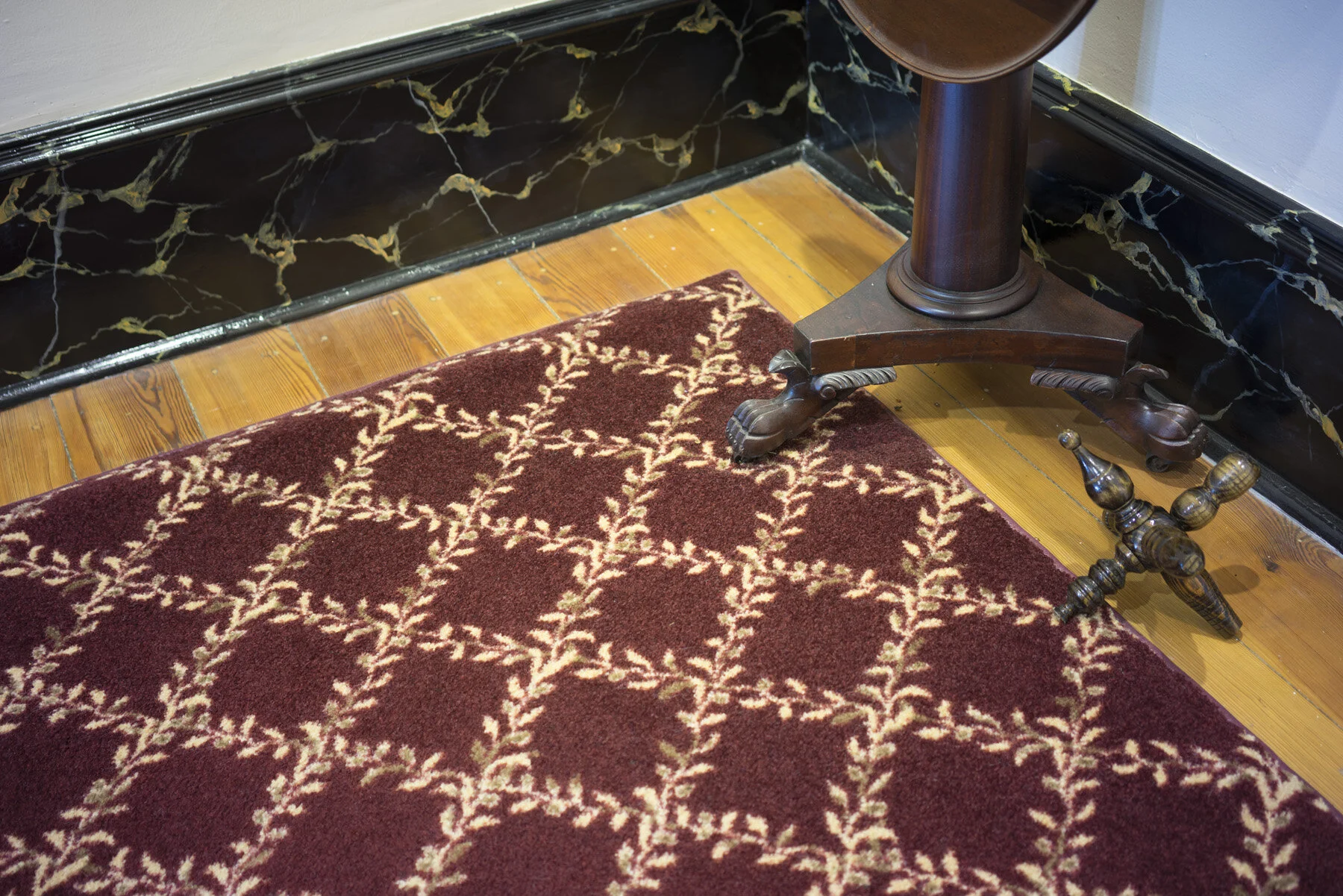
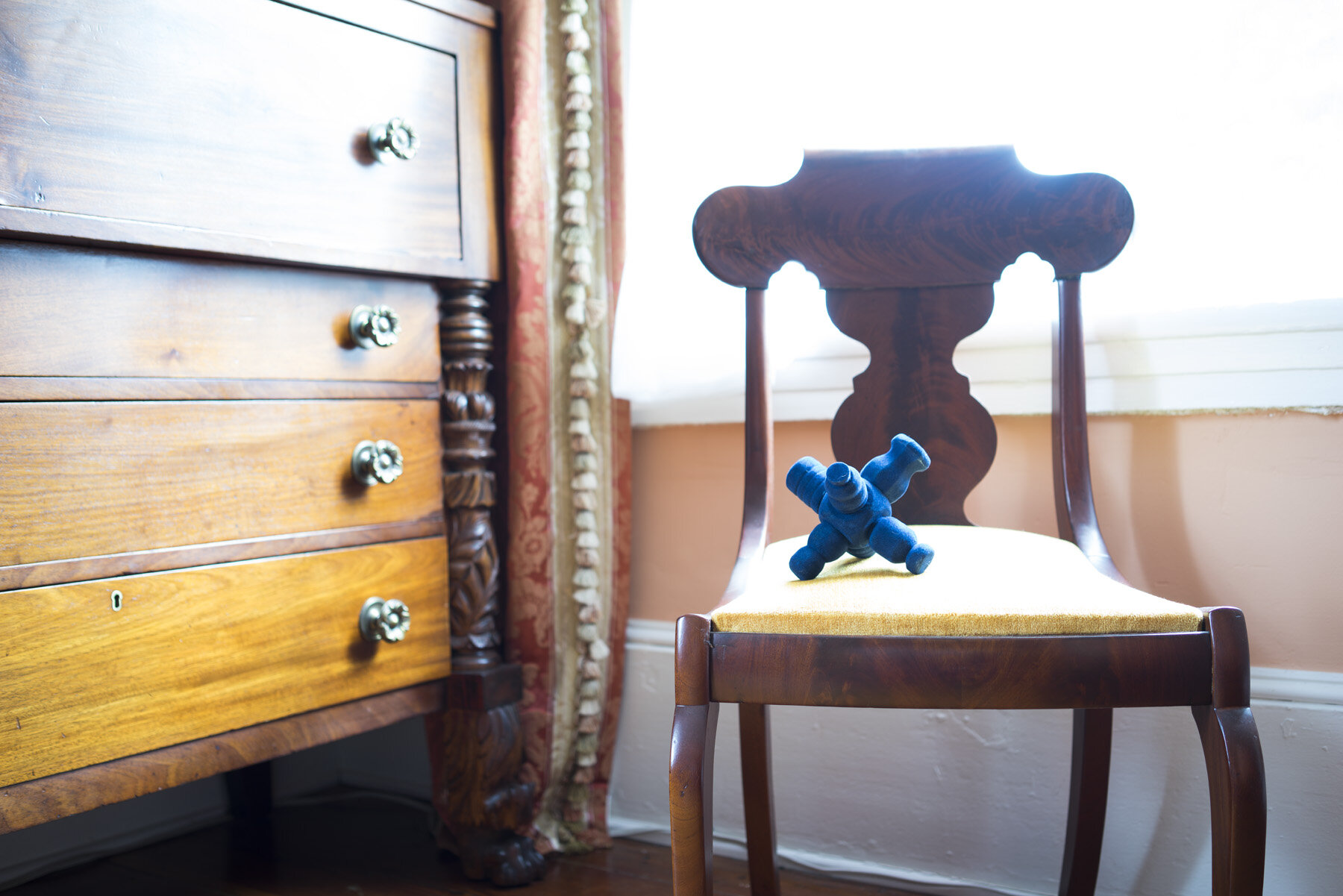
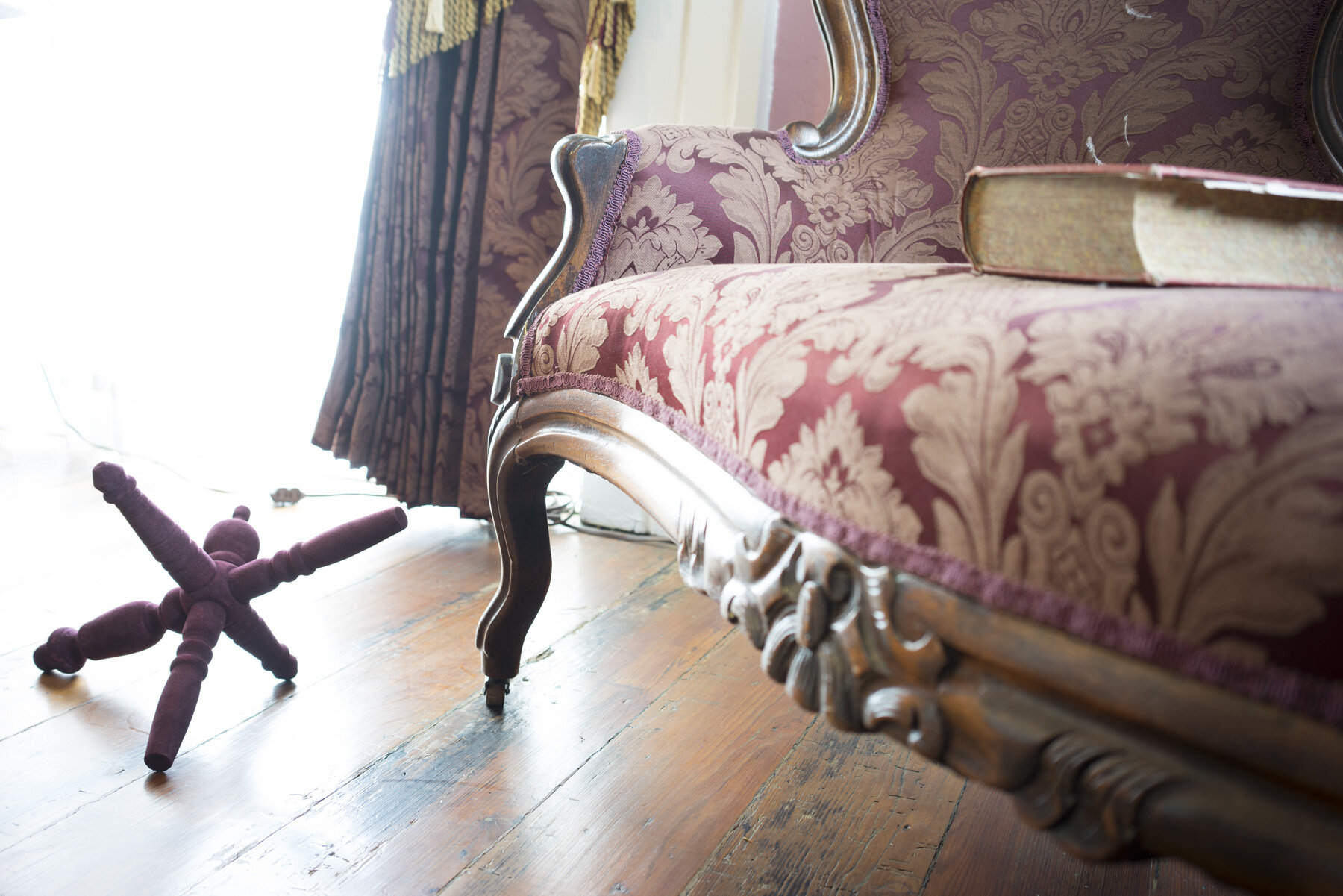
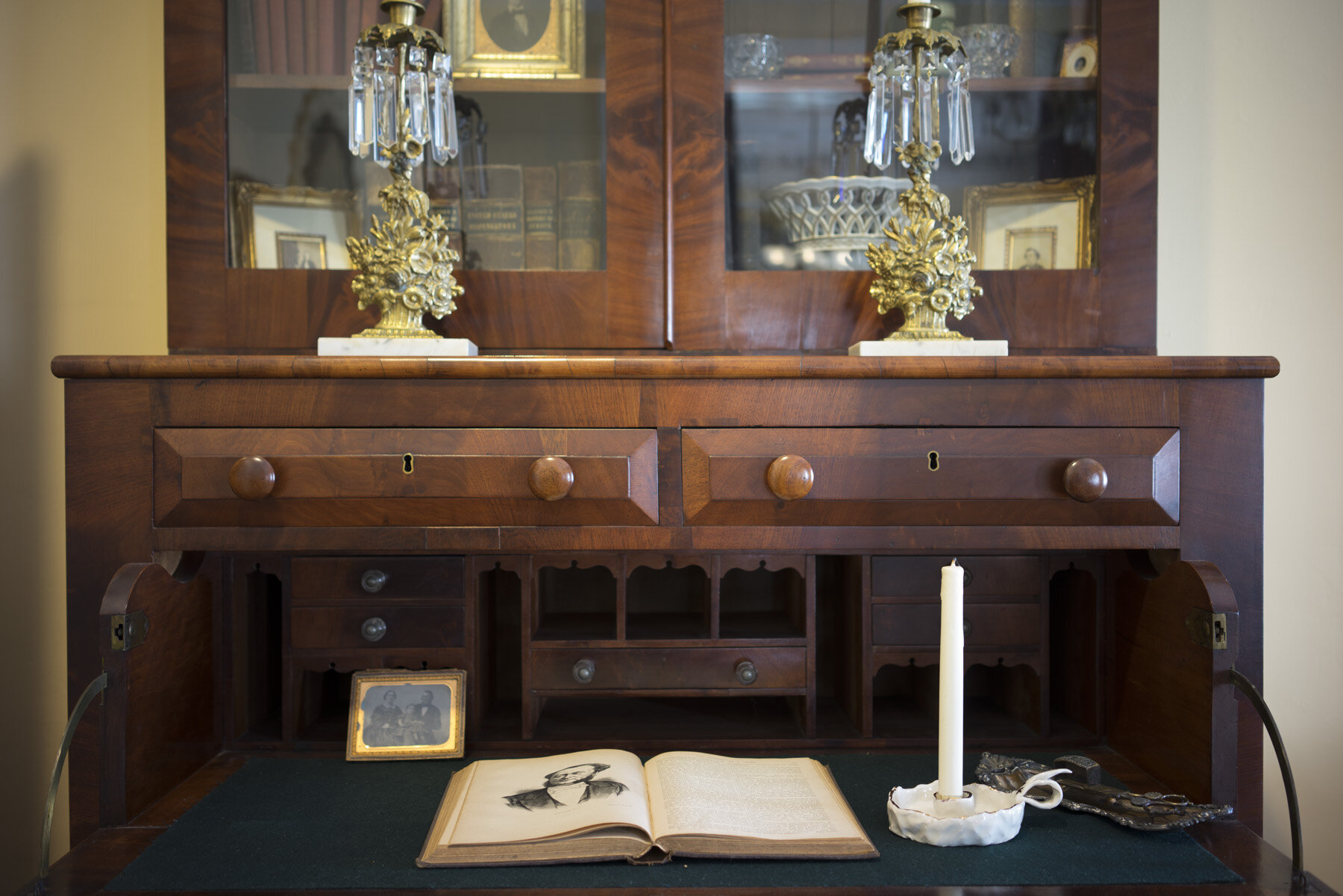
The Game Show, Lyndon House Arts Center, Athens, GA, 2017. Photos courtesy of Stephanie Sutton
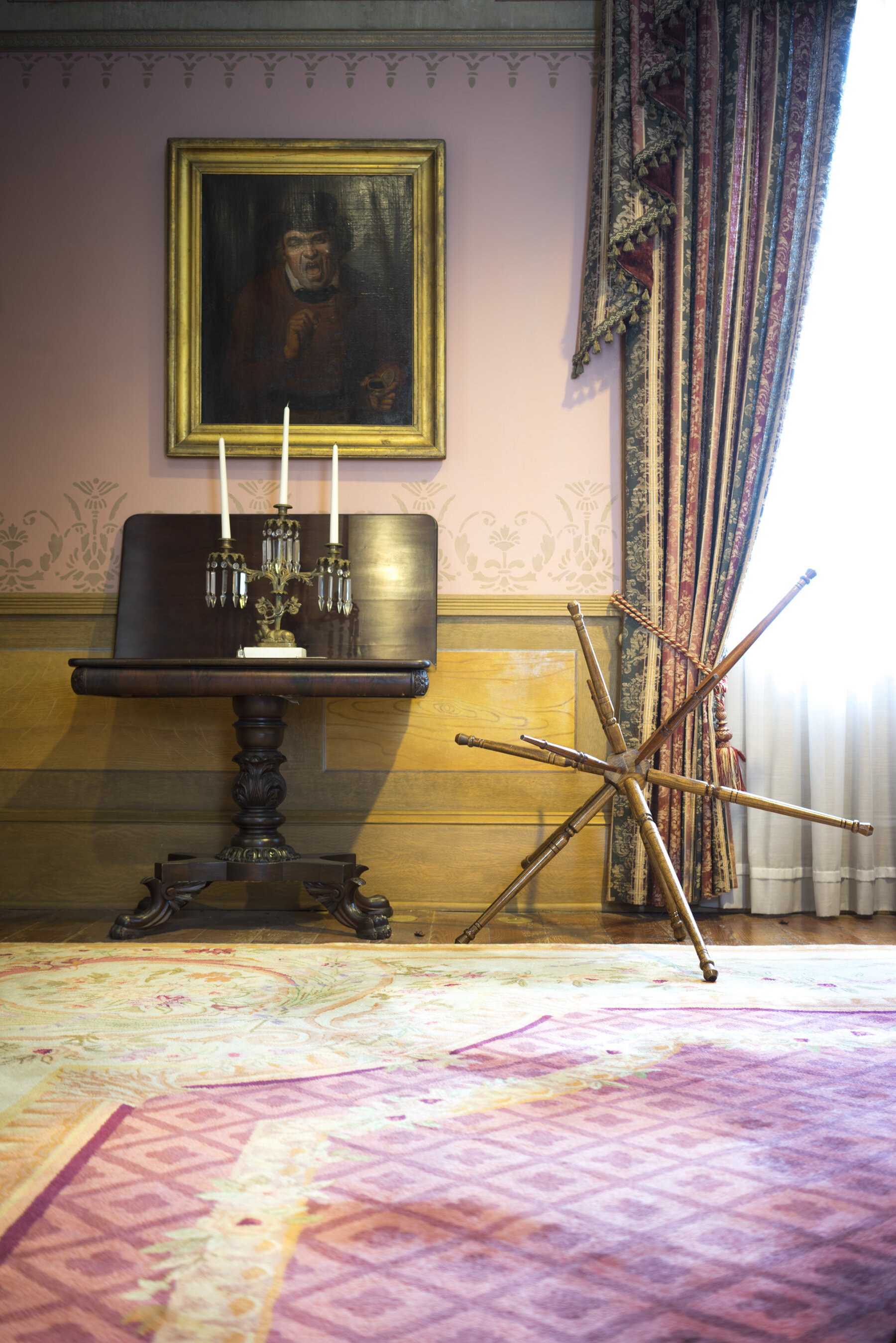
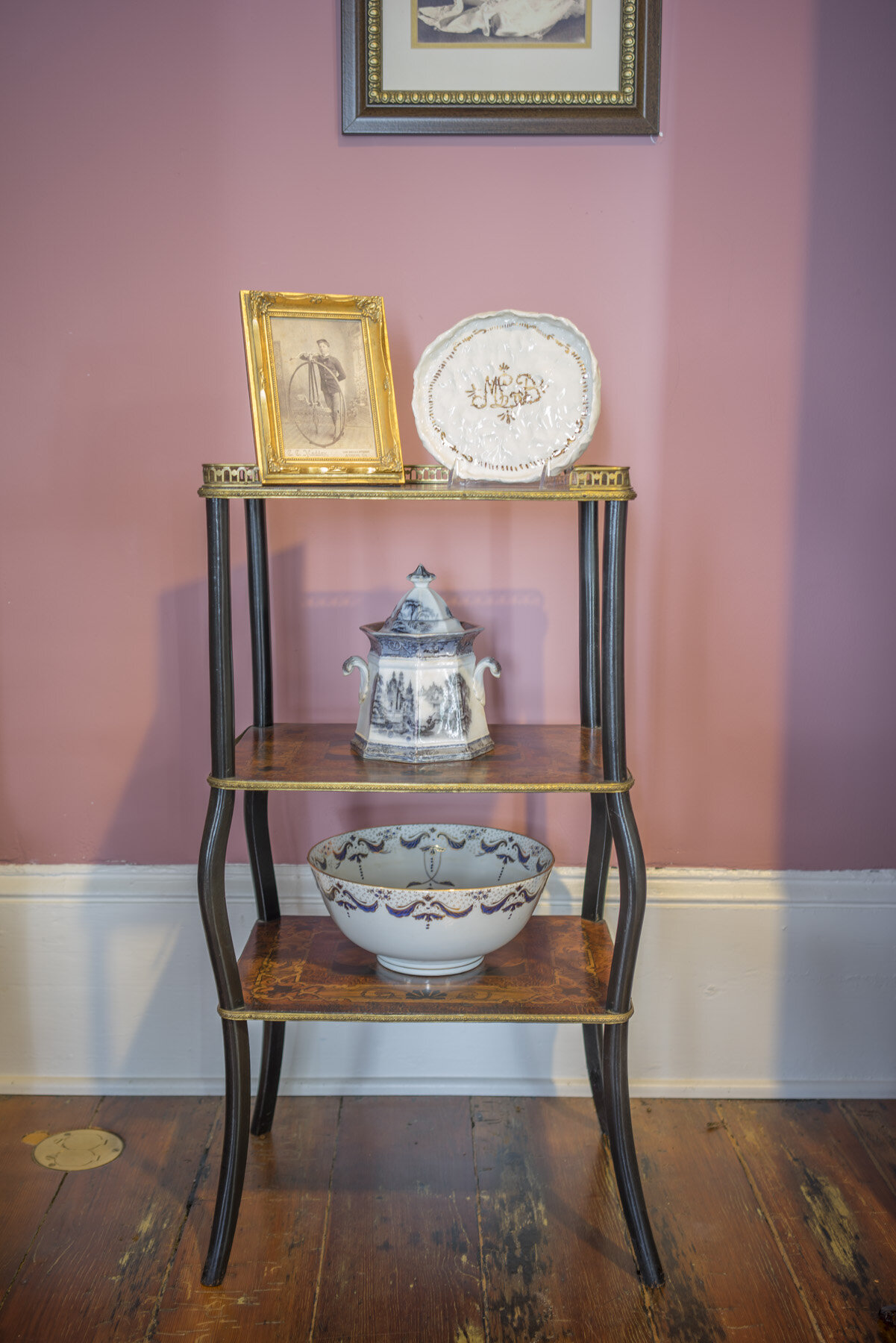
In researching objects in museums, I question whether institutions are unbiased and I am critical of the notion that the authentic object is a catalyst for belief. As part of the exhibition The Game Show at the Lyndon House Arts Center in 2017, I created a site-specific intervention in the Ware-Lyndon Historic House called In Situ to explore my skepticism. I made a “scavenger hunt” amongst the period rooms consisting of ten furniture sculptures and ceramics that were created in response to design elements in the house to appear like a natural part of the museum display. Participants were given a visual list of the interlopers and instructed to find them.
In a performative artist talk I gave at the museum, a “Tour of the Fakes”, I led a group through the historic house. Instead of pointing out my obvious and ridiculous additions, I spoke about the covert replicas and visual trickery in the rooms that was not immediately apparent. I spoke about forgeries in surface design, such as fake woodwork, that were popular during this era in order to demonstrate wealth. Period rooms can be interpreted as immersive theatre sets and I pointed out props, such as reproductions of letters written by former occupants, that were placed on tables next to pen and ink to suspend spectators’ belief that they have travelled back in time. After realizing the ubiquitous nature of copies and replicas in museum display, viewers questioned the role of authenticity in the museum. Authenticity is veiled under institutional authority and viewers wondered about the implications for creativity and improvisation in historical display.
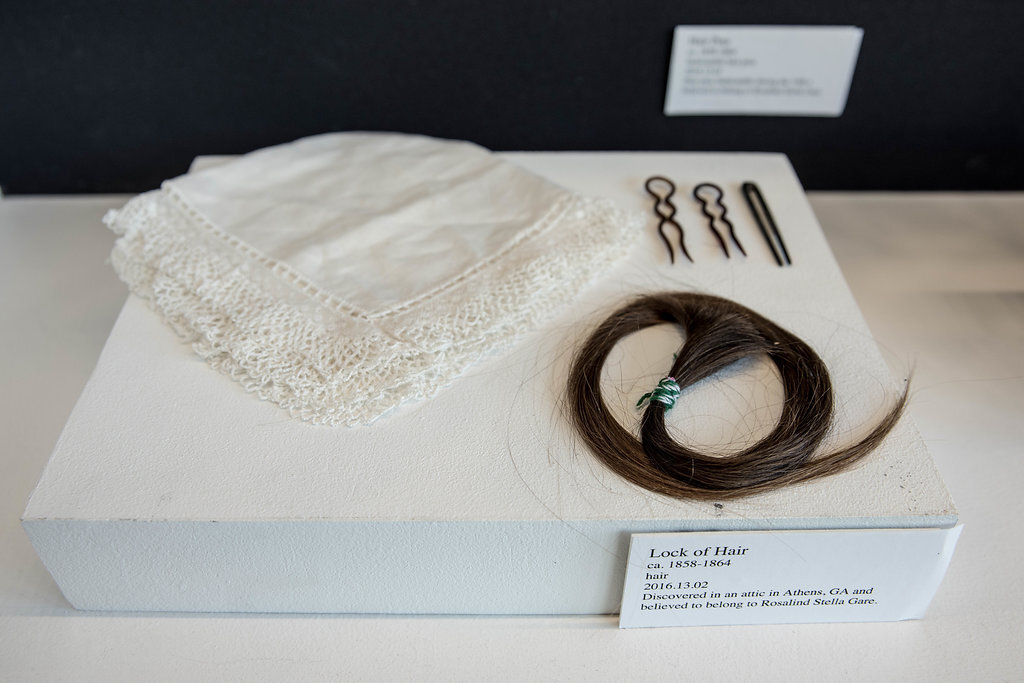
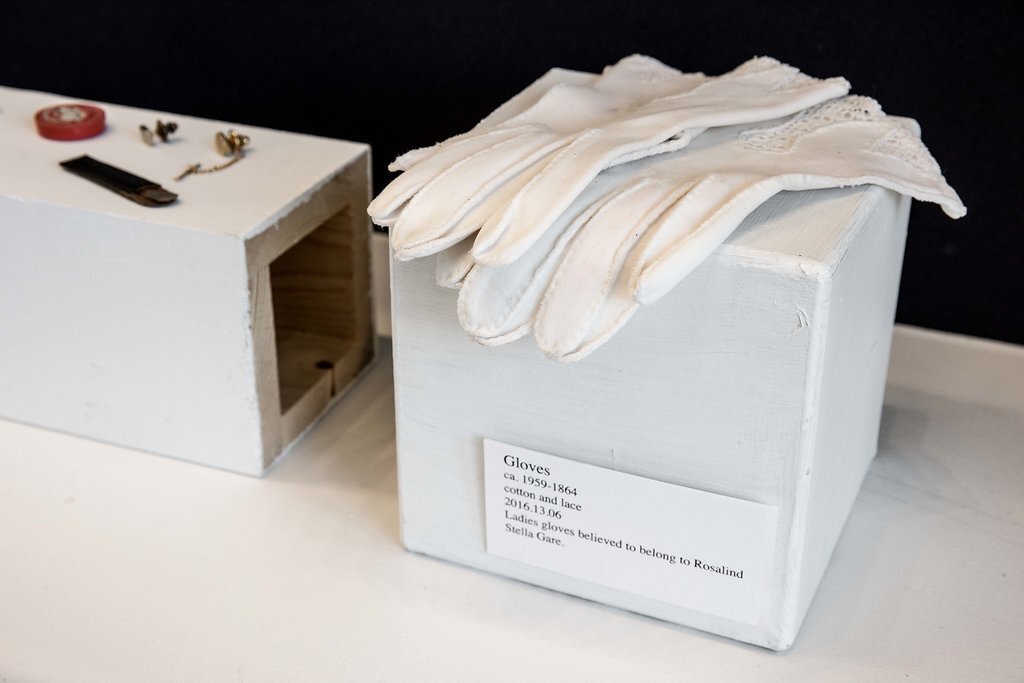
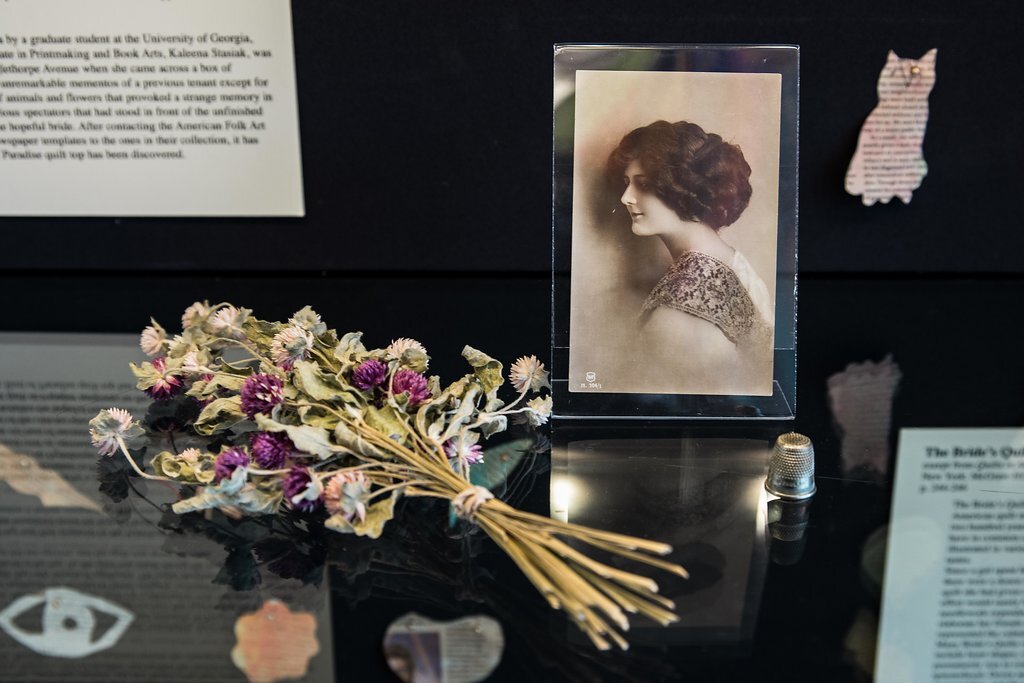
RSG, Lamar Dodd School of Art, University of Georgia, Athens, GA, 2017. Photos courtesy of Ally Christmas
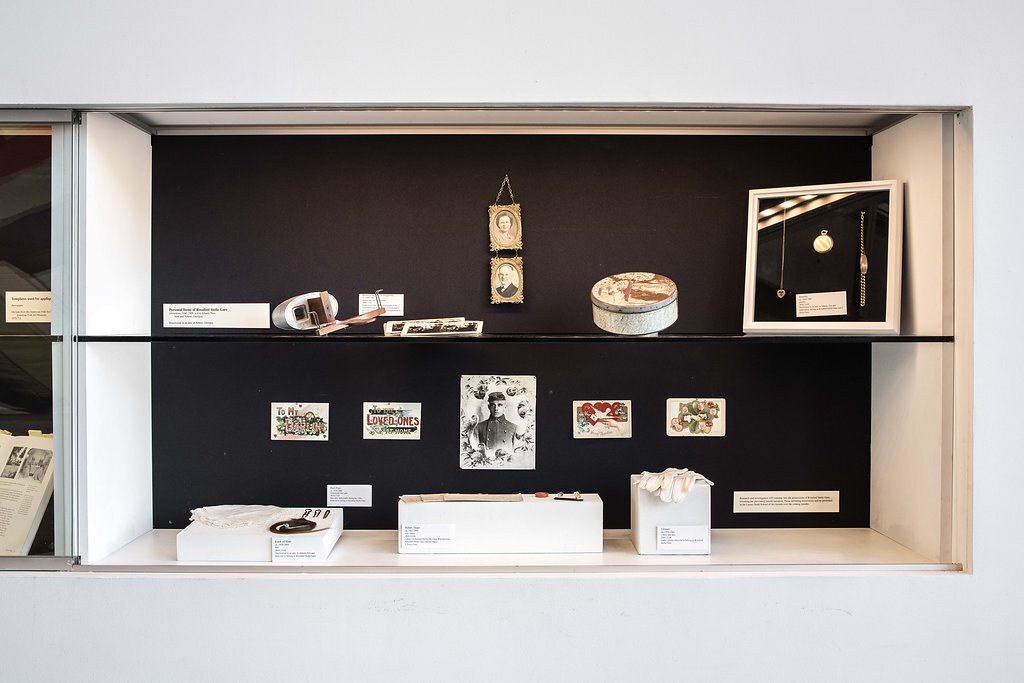
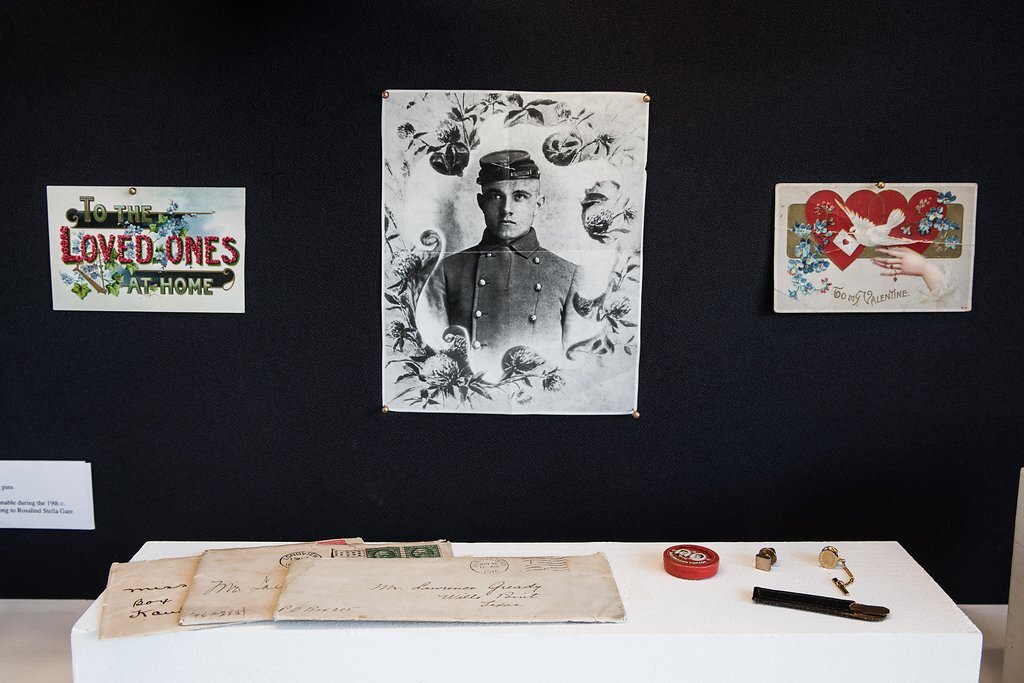
Parafictions are an experiment with truth through fictional narratives that have some basis in reality. In this era of “post-truth”, parafictions propose alternatives to accepted truths to understand the practical applications of trust. For a brief moment, parafictions may be perceived as fact and so these narratives shift between imaginary worlds and our lived experiences.
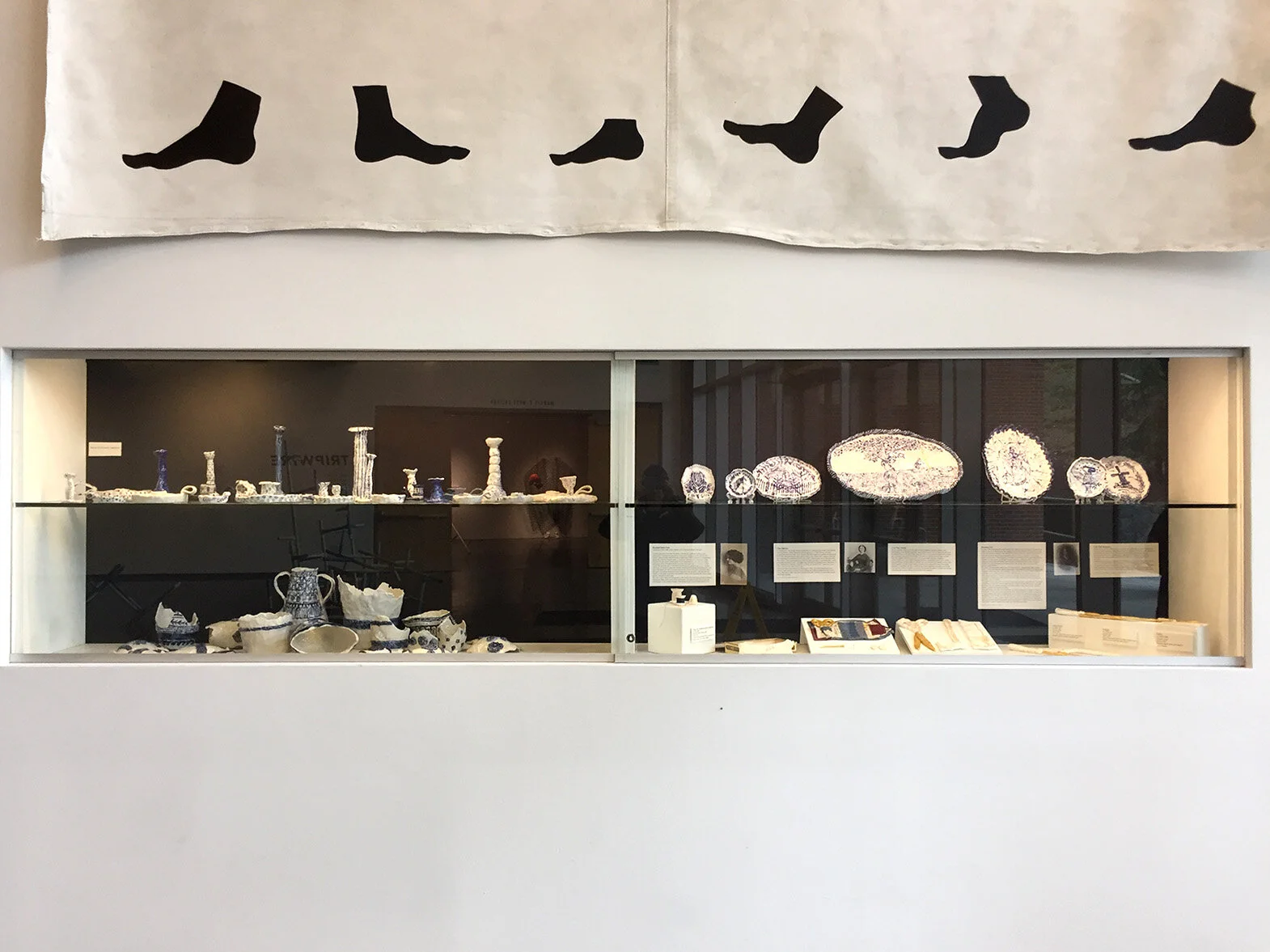
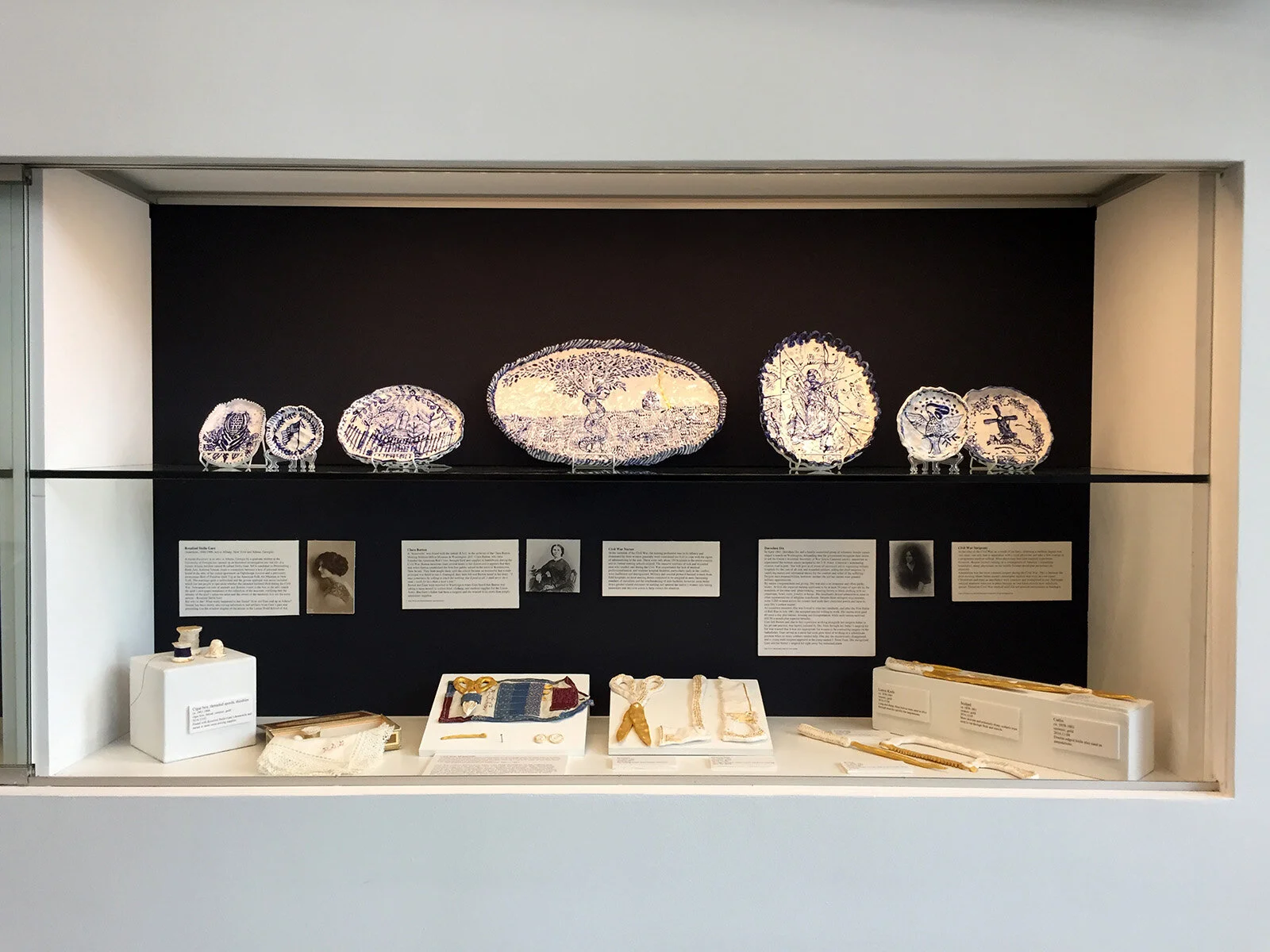
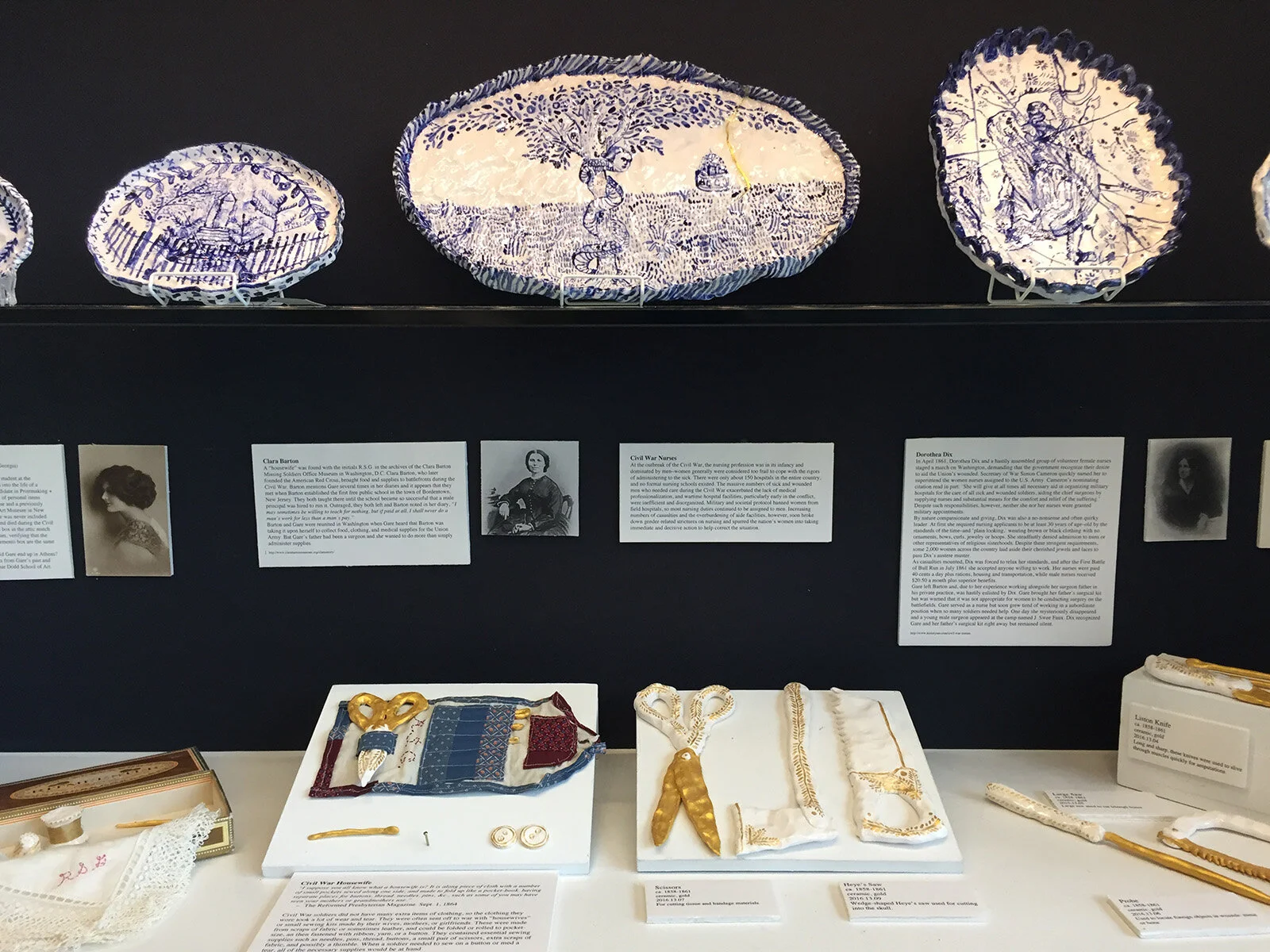
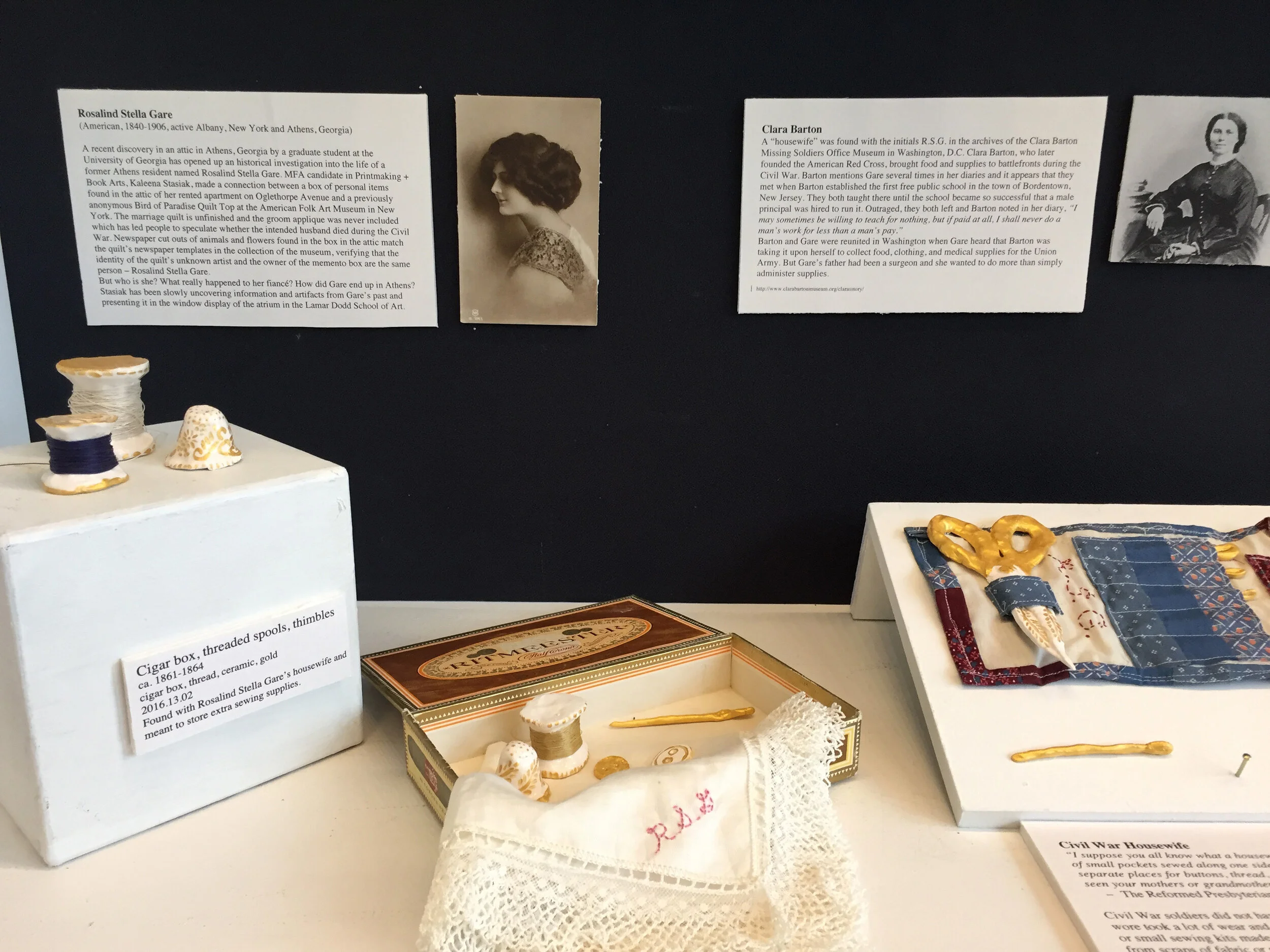
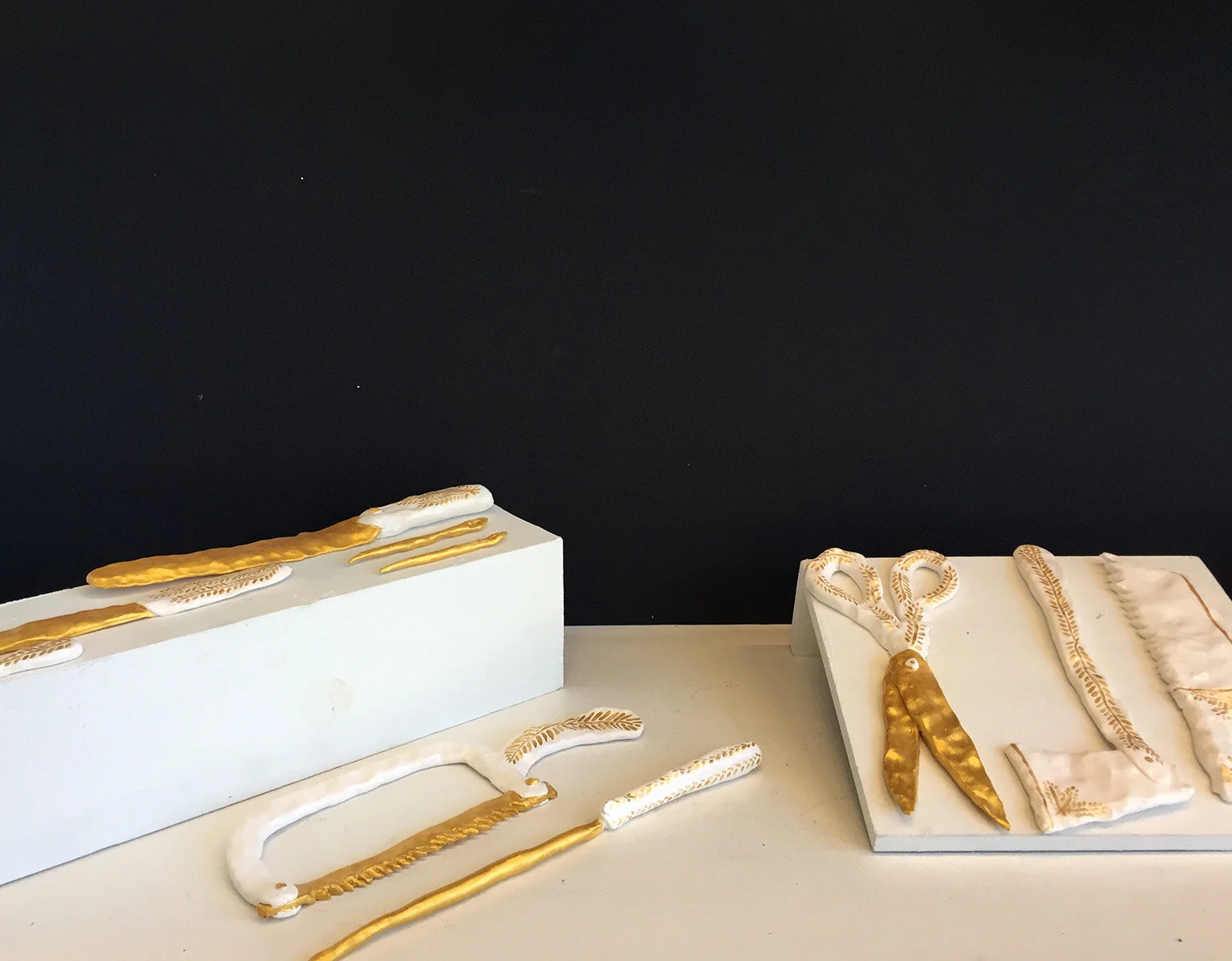
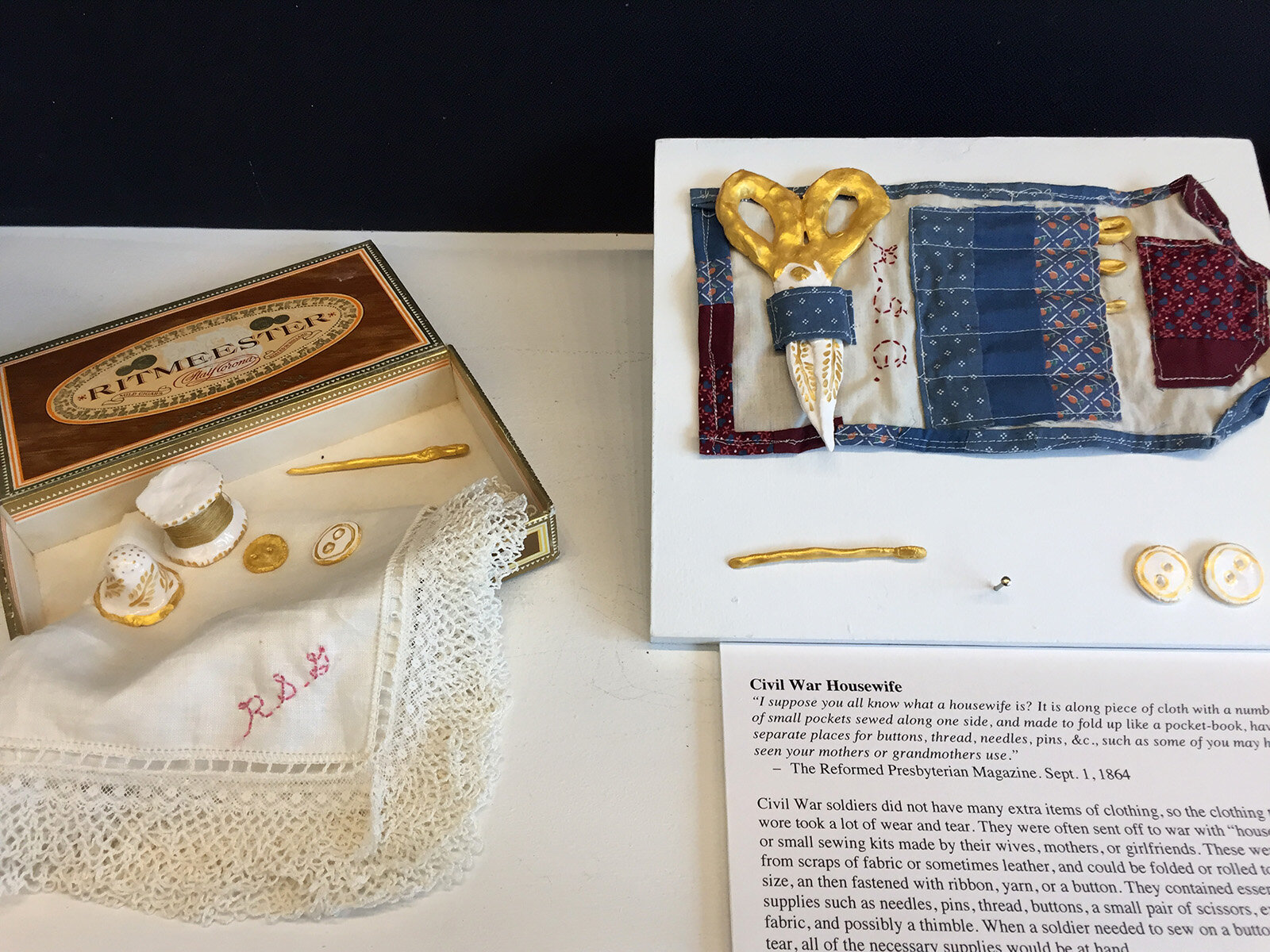
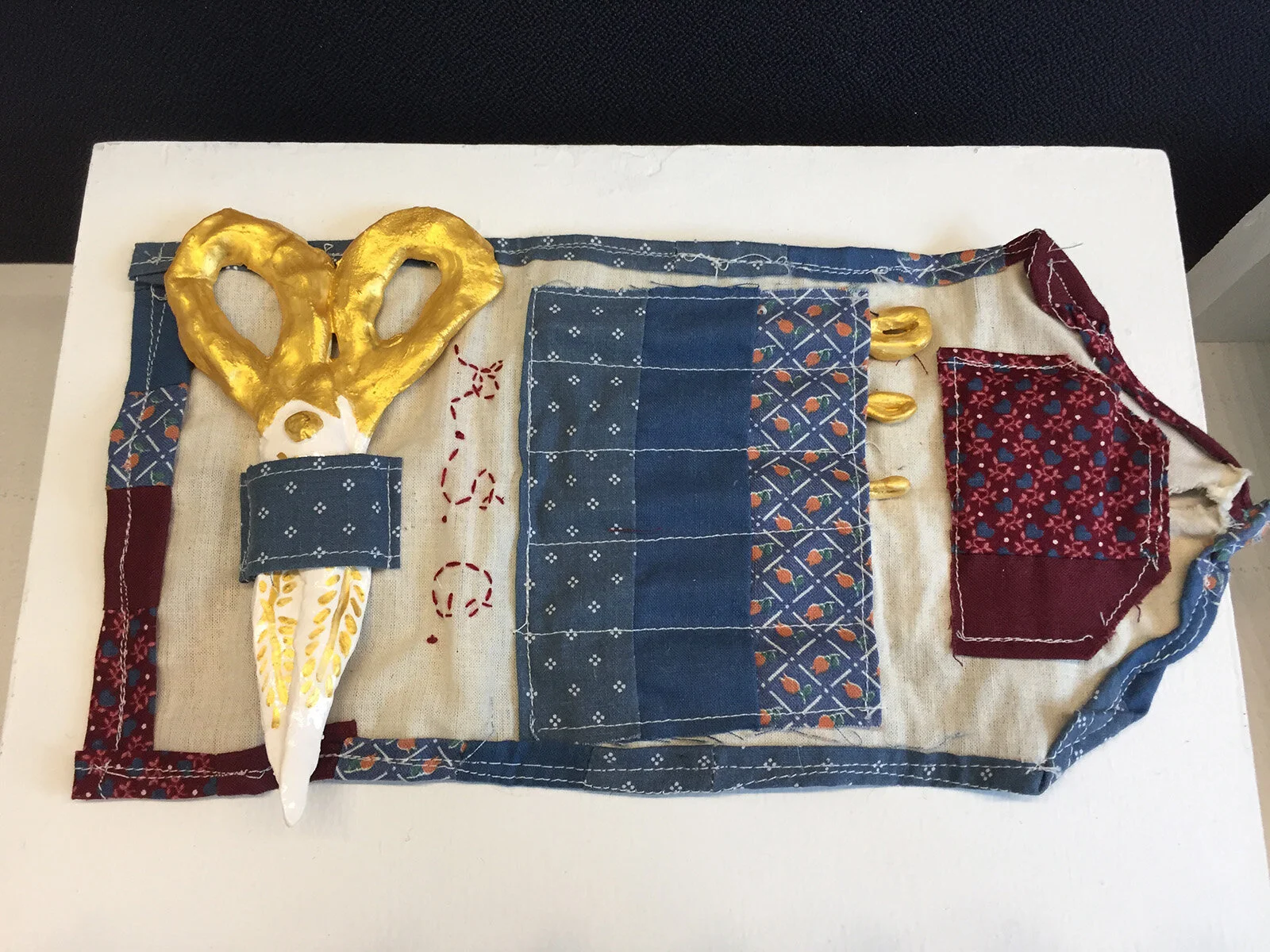
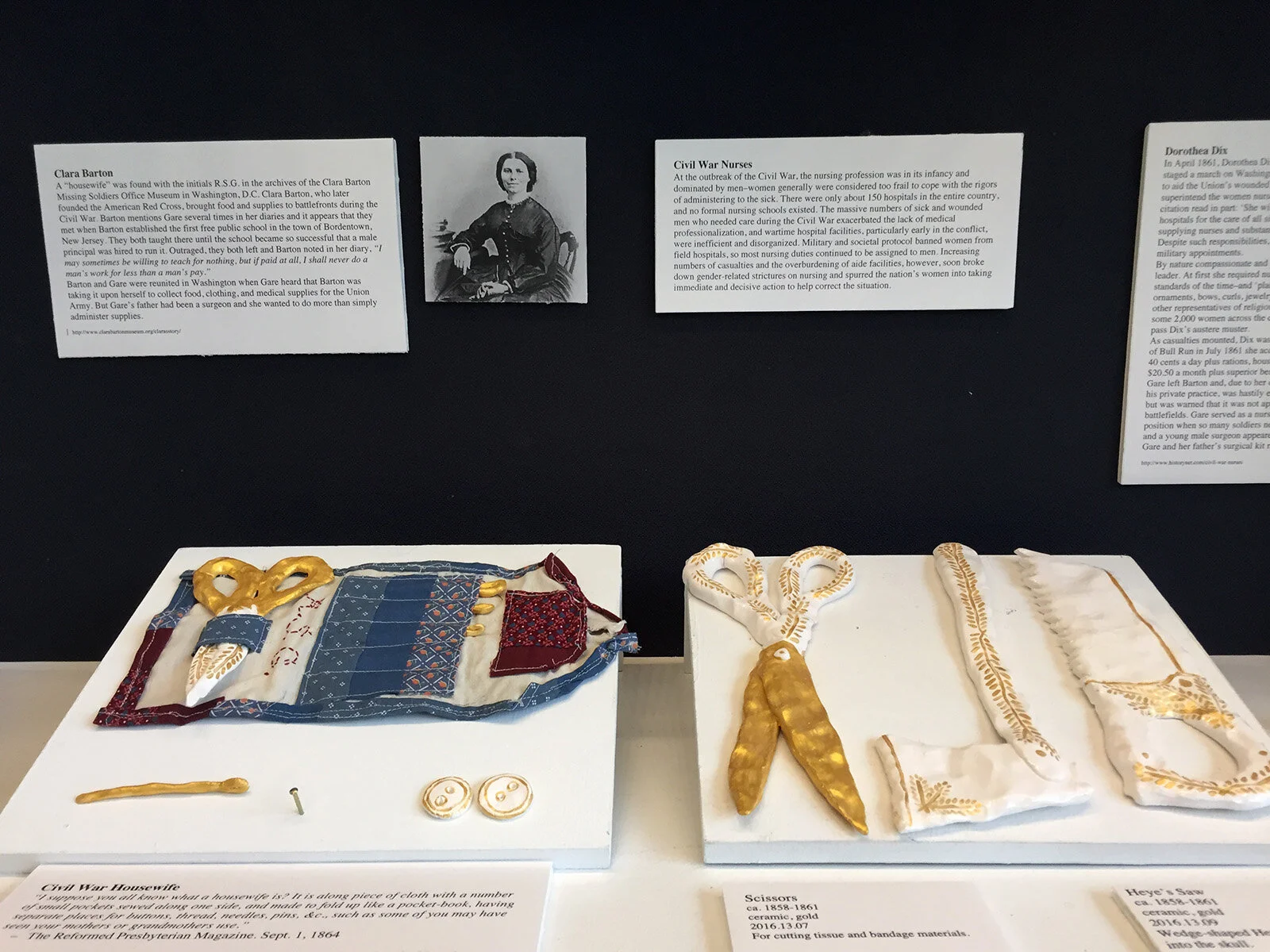
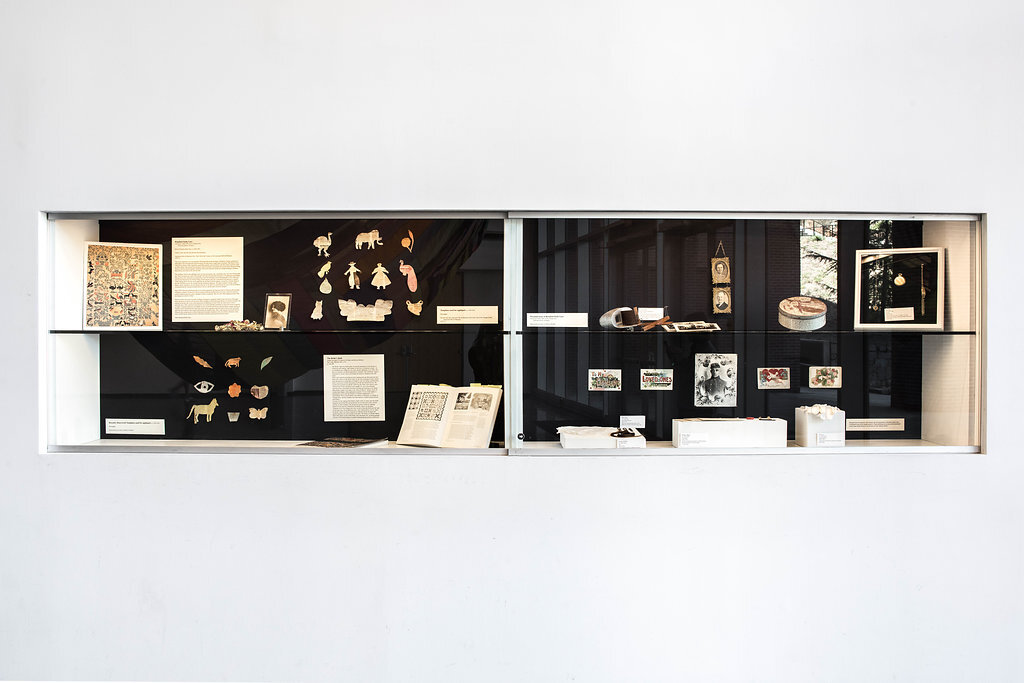
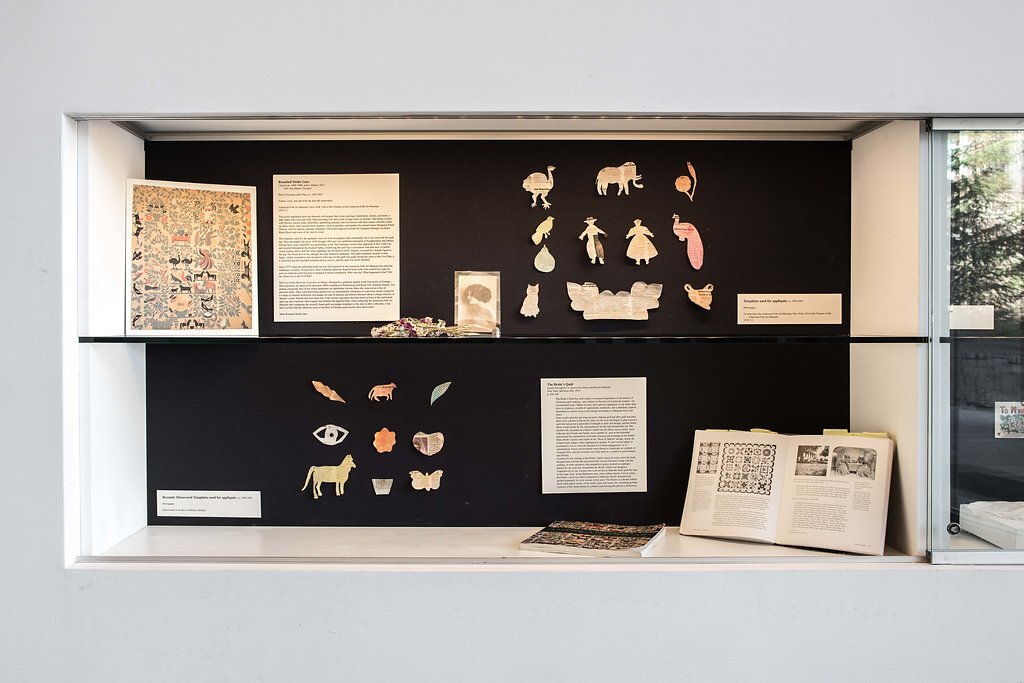
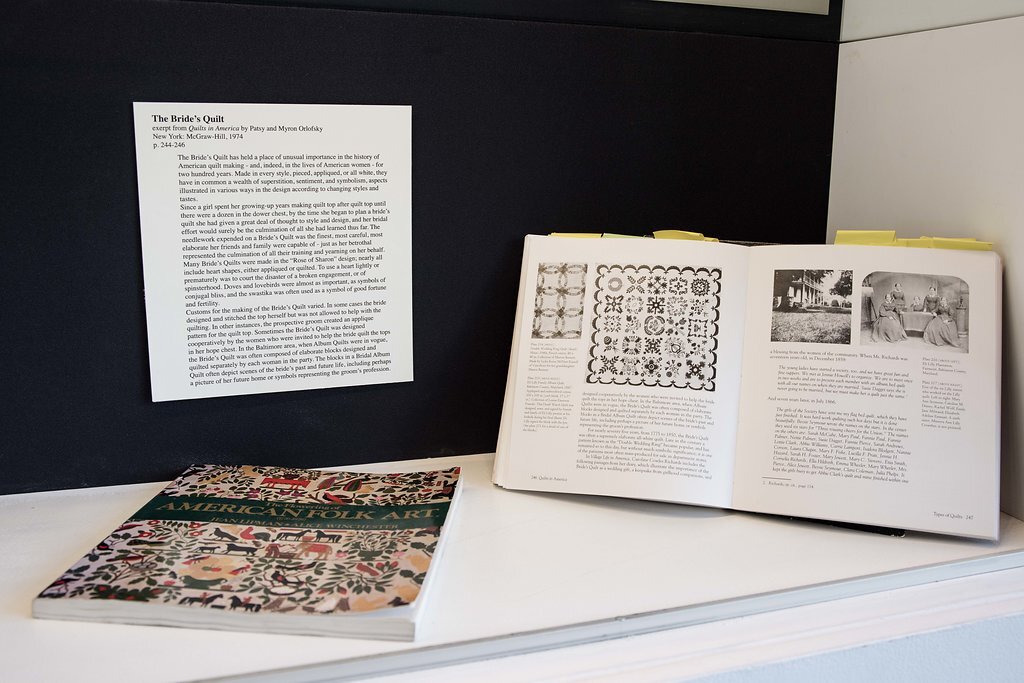
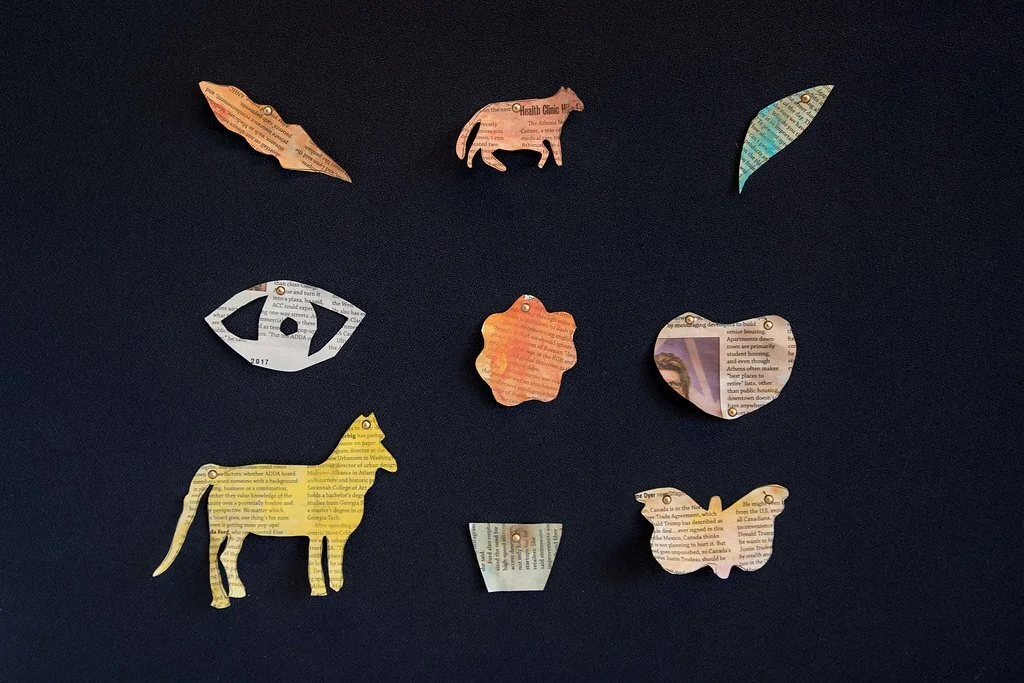
Rosalind Stella Gare (RSG) is a result of my experimentation with parafiction. Since parafictions rely on stylistic mimicry and institutional authority, a window display case in the atrium of the Lamar Dodd School of Art at the University of Georgia served as the perfect place to exhibit objects and information that might be interpreted as non-art. Through printed information and randomly collected objects, I created a material portrait of RSG. Her relationship to the real is an unfinished Bird of Paradise wedding quilt top that was made during the Civil War and displayed at the American Folk Art Museum in New York City. Newspaper templates that were used to construct the quilt pattern were found that place and date the coverlet and also reveal the tragedy of the exclusion of the groom. People have romantic speculations that the quilt is unfinished because the seamstress’s fiancé died in the Civil War and she was too heartbroken to continue.
RSG commenced the new life of the mysterious woman behind the unfinished quilt and I plan to continue to add chapters via experiments with fictional narrative in the guise of museum display. Each segment will endow her with more agency as she is drawn from the inaction of the ashes of her dead fiancé through performative action in the manipulation of objects and information. At the same time, these narratives will bring into the spotlight women’s histories across the ages that are often unwritten or overshadowed by patriarchal accounts.